Showing posts sorted by relevance for query Bellingen hospital. Sort by date Show all posts

Thursday, February 11, 2010

Bellingen organises to save hospital

Save Bellingen Hospital

While I have never lived in Bellingen, I have known the town all my life and written about it on this blog a number of times.

Bellingen now faces a threat to its hospital services and the locals have organised to try to save it. You will find the Save Bellingen Hospital web site here.

The Bellingen Hospital case is an example of the increasing conflict that has arisen between the needs of centralised service delivery on one side, local needs and indeed history on the other.

To health planners concerned about value for health dollars at a time of budget stress, the idea of rationalising services across broader areas appeals greatly and has done so for a number of years. However, there can be a fundamental conflict between this and local aspirations and needs.

To the health planner, a local hospital is a piece on a chess board to be moved or given up in the interests of the greater game. To the local, the hospital is an integral part of their life. They have worked for it, they were born there, their children were born there, family and friends have died there, they have visited it many times, they know the staff.

You can see this clearly if you look at the newly established Save Bellingen Hospital public Facebook page. Just a few quotes:

  • Marguerite: Bellingen Hospital was a very decisive factor in my sea change from Sydney to Bellingen over a decade ago. As a single mother with a young asthmatic child I needed to know that I could access an emergency service, that was close by, no matter what time of day or night. I have indeed used the service many times and wou...ld feel that the community would be robbed of this asset . Although my daughter has since grown up and moved away. I would like to see the hospital survives this senseless closure, ensuring its fantastic care for others with high health risks.
  • Briony: I broke my shoulder bone, from a horse riding accident way back when I was about 12. I was treated at Bellingen hospital, they were very good to me!!
  • Hannah: I had may major asthma attacks at Bello , they saved my life more than once, and there was never a wait x.
  • Laura: My mother and auties were born in Belligen Hospital, all my 7 brothers and
    sisters and I were born at Bellingen Hospital, 2 of my 4 children were
    born at Bellingen, For 1 i was forced to go to coffs due to bellingens
    services being down graded and just 7 months ago I gave birth at home
    because it was the only option that suited my family situation. Neither me or my husband drive and many a time we have needed to catch a taxi to make the 4minute trip to the hospital in
    the middle of the night when our little pumpkins have been ill. Catching a taxi to coffs or having to wait for a ambulance in the middle of the night is not only unnecessary but could be life
    threatening. Please keep the hospital services we have and my wish is
    that they will go back to what they were.
  • Tokana: I know that I've always gone to Bellingen Hospital, even f I needed to be transferred. I will have my children at Bellingen Hospital one day. I love and appreciate the wonderful staff who put in long hours and never complain at what they do -but they do complain about the wages not being enough for the amount of time they put into the hospital and their patients. They also make you feel welcome and important. They're always friendly to patients and each other, and they tend to your needs. SAVE BELLINGEN HOSPITAL!!!!
  • Carol: They should go back and read or listen to the The Elders from the Indiginous people of this land as a lot of our relatives use to walk the back road from Bowraville to Bellingen Hostpital to have there babies. My three grand children were born in Bellingen Hostpital and all the Doctors and Staff have always been there for me when I neeed there help SOOOOOO p[LEASE don't close our wonderful hostpital down as the whole Community needs the doors to be kept opened.
  • David: As we recently had our hospital closed down in Cowes, I feel for you. Can't these idiots get their priorities right?

If you look at these comments, you can see the way people still love and trust their local hospital at a time when distrust in health services and hospitals has been on the rise.

Over time, the inexorable centralisation of health services has weakened local hospitals. All country people know this. They have seen services withdrawn, forcing them to travel increasing distances for service if indeed they can travel. Not everyone has a car, and public transport is often poor.

This has economic and social effects and actually increases the normal dangers of life. If the Bellinger River floods as it does so often, then access to Coffs may be cut. It becomes harder to attract people to live in specific communities. It becomes harder for older people who may need care to stay in their communities.

One might accept some of these outcomes if country health services were delivering better results. However, the reality appears to be a growing gap in health outcomes between country and metro areas.

Given the fundamental disconnect between the models currently used in health planning and community needs and aspirations, the only weapon available to locals is protest. This is the reason why the Bellingen community is looking to attract as much support as possible for the preservation of the local hospital.

You can help them and also follow the cause by joining the Save Bellingen Hospital Facebook page.        

Sunday, November 14, 2010

Update on The Save Bellingen Hospital Campaign

It's been a while since I reported on the campaign to Save Bellingen Hospital.

If I understand the campaign Facebook page and official website correctly, real action on the official side appears to have been in a state of stasis pending the formation  of the area health network, with campaign actions focused there plus continuing efforts to help the hospital.

In the meantime, problems at Coff's Harbour continue the pressure to re-open Bellingen Hospital's Emergency Department. I thought here that I would just quote a recent entry from the Facebook page.

Jenny Edman: Have just read todays Advocate, so a few weeks ago Coffs Campus was inundated with sick people, surely that should send a message to the NCHS that Bellingen needs to open it's ED department, if our locals had to travel all the way from Dorrigo or Bellingen to have to wait up to 9 hrs to be seen by a Dr is ridiculous, shame a 100 fold on NCHS, until next year it is still working for the mid north coast.

Frank Bolte: What do you mean Dorrigo people can't even get to bello or C/h Monday to fridays during the day. Waterfall way is closed. I feel sorry for them

Mary Peters: i waited five hours / ambulance refused to take me to bello hosp! i wasnt seen i got back to bello myself for injection because of anaphalactic reaction! im disgusted... as i could see for myself how many ppl in waiting and in ed / no one saw anyone in that five hours where was the doctors! four nurses pushing an empty bed laughing and police standing there with ambos discussing how bad the system is all in earshot of the patients / simply a disgrace really!

Tasha Lee: What about dundurrabin thats 20 mins from dorrigo. i am due to give birth in febuary thats a looong drive to a woman in labour and i read last week there wasnt even a peadeatrician on duty for a full week they were sending women to john hunter hospital to give birth. now if i even make the hour and a half trip down the mountain into coffs im not going to make it to john hunter especialy considering my last daughter was born in bello 20mins after i arrived total labour time 1hour 20 mins. not knowing where my baby will be born is causing a great deal of anxiety for me

For those who don't know the area at all:

  • When the mountain road is closed, the nearest hospital to Dorrigo is in Armidale, 124k or 1hour 40 away by car. 
  • When the mountain road is open, Dorrigo is 29k, roughly 21 minutes, from Bellingen. If you come from other parts of the Dorrigo such as Dundurrubin, then extra travel time is involved; Dorrigo sits at one side of the Plateau adjacent to the escarpment to the coast.
  • Bellingen is 35k, 32 minutes from Coffs. Dorrigo is 64k from Coffs, 53 minutes, plus any travel time from elsewhere on the Plateau.

All distances and drive times are approximate depending on location and weather.

Some of these drive times may not so sound long to Sydneysiders with the city's traffic congestion. However:

  • Those in the area have seen the closure first of the Dorrigo hospital and then the downgrading of Bellingen Hospital through centralisation of services, adding to the time and difficulty of accessing hospital services. Obviously, those on the Dorrigo plateau have suffered the greatest impact.
  • Coffs Harbour Hospital is large and over-stretched. There are simply not the alternative nearby base hospitals that you would find in Sydney. John Hunter, the other hospital mentioned, is in Newcastle, a five hour drive away. If you have to travel that distance, I would have thought Armidale a better option, although it may not have the capacity.
  • Not everybody has access to cars. Public transport is limited, taxis expensive. I am not sure how many ambulances are available, but I would have thought that the number was not large relative to potential peak demand.

The crux of the Bellingen argument, then, is not just that they have been losing services, but that everybody in the Valley and on the Plateau, and indeed the whole Coffs Harbour hospital catchment area, would be better off if certain services were restored to Bellingen Hospital.

Tuesday, January 18, 2011

Is Bellingen hospital safe?

I received an email during the week from a colleague concerned that the campaign to save/redevelop Bellingen Hospital was losing traction in the face of national changes to health services, apparent promises from the authorities and, I suspect, sheer tiredness.  In this context, the Bellingen Hospital Action Group (BHAG) apparently put out a statement at the end of last year saying they had a commitment from the North Coast Area Health Service to keep the acute beds in the hospital and that the job was done. You will find some of my past posts on this campaign here.

I am not close enough to on-ground issues to make a response on the specifics in the email. However, noting that the BHAG web site is now down, I thought that I should make some general comments based on my own experience. In particular, I feel that now is just the time when those served by the Hospital need to be most focused. This post explains why.

Impact of National Changes  

Back in April last year in Implications for New England from health reforms I took Bellingen Hospital as a case study. There I said in part:

One of the problems for New England from the changes is just what the changes might mean at local level. This is quite complicated, but I think that locals need to watch this like a hawk 

Since that post, I have tried to monitor the on-ground effects of the changes across New England, but it is quite difficult without detailed investigative reporting of a type beyond the resources of a part time blogger. However, my view remains the same. We just don't know how things will work in practice.

Mid North Coast Local Health Network & the formation of Government Policy

The new Mid North Coast Local Health Network came into operation on 1 January 2011. Very little information is yet available on its web site. Members of the Governing Council are listed, but no information is provided that I could find as to their background.

In two Armidale Express columns last year,  Belshaw's World - true wisdom rarely the sum of bland numbers and then Belshaw's World - round holes, square pegs and a region cruelled, I looked at the way Government policy is formed. 

While the new Network is smaller and has its own Council, while there is meant to be greater local input, the reality is that it is still operating in a highly centralised system, all the statistical data and planning reports on which past policies were based are still there, as are the people who made the planning decisions.

All the national agreements governing the new system with their myriad of performance statements were negotiated and will be implemented by just the same officials involved with previous policies. You can think of all this as an inverted pyramid whose point rests on the hospital. It would be unrealistic to expect much to change.

Continuity of Official Memory

Officials have quite long memories. If they fail to get things up one way, they will do so another. Let me illustrate by example.

Some years ago, the Commonwealth Government formed the view that Australia needed fewer but larger tertiary institutions. As so often happens in health, this was applied as a one size fits all approach.

As part of the process, the Government announced that the Armidale College of Advanced Education and the University of New England should merge. There was no justification for any small centre to have two tertiary institutions. Further, merger would save money by reducing the overhead associated with two institutions, the economies of scale argument.

I was opposed to the decision because the culture and missions of the two institutions were different, while I doubted the validity of the policy arguments. A friend and I organised a protest that culminated in a public meeting attended by several thousand people. The proposal was shelved. However, the official view had not gone away.

The proposal was resurrected a little later by the subsequent Hawke Government on advice from the same officials. This time it went through. Since it was intended in part to achieve economies of scale, the combined funding of the two institutions was reduced by an amount equal to the expected savings. No allowance was made for the costs of merger. The end result of all the changes was something of a disaster that almost destroyed the University of New England.

The Importance of Persistence

If what I say is true, why bother? Surely locals are powerless? Not so.

If you want to do something new, if you want to achieve change, then you have to be persistent. It may be that you will fail in the longer term, in which case you only get some short term gains as happened in the Armidale case. Still, in writing the history of the broader New England as I am at the present time, a remarkably large number of things were achieved by local or regional action undertaken in the face of entrenched opposition.

The Problem of Capture

Anybody dealing with Government faces a problem of what we call capture.

Ministers and officials have positions, refined arguments and lots of supporting information. Faced with entrenched opposition on a matter, they try to find find a path through. This includes giving concessions. 

On the other side, those dealing with Government generally cannot help being influenced by discussion and argument. Depending on persistence and relative power positions, the outcome moves towards some form of compromise. One side-effect of this is that the opposition actually ends up being captured by official thinking.

This is not necessarily wrong. However, it carries the risk that people will give up at just the time they should be persistent.

I am not suggesting opposition for the sake of opposition, nor that compromises should not be reached. Indeed, from my experience, one major problem with local activism can be the unwillingness to accept any middle path. Sometimes this works. More often, it can lead to total failure. It's a matter for judgement as to the best path.

The key thing is to be aware of the strategic issues involved. Some issues, a dam for example, may be yes/no. Others like a hospital are much longer term. These issues inevitably involve both compromise and persistence.

Burn-out and the Long Term Activist

Unlike governments, lobby groups or political parties with their full time staff, community activism depends upon volunteers. This makes it very difficult to keep long term pressure up. People, and I am speaking from my own experience, just burn out.

There is no easy answer to this. Sometimes it just happens. At other times, changes in direction are required to give people a break. Bellingen may well be in this position now.

Looking Forward

I think that BHAG has actually done a pretty good job through its own efforts and in providing a centre around which others could coalesce through, among other things, the Facebook page. There is no doubt in my mind that Bellingen Hospital would have lost more services without this effort. However, the story does not end here.

The fight over Bellingen Hospital was never about a single service. Rather, it was an attempt to maintain the best range of possible services. The fact that the old North Coast Area Health Service has given an undertaking re emergency beds is a first step that needs to be monitored. The focus should now shift to other services and the maintenance of community  support for the hospital.

I have written this post just from a Bellingen perspective. However, there is a broader issue.

Australia is short of doctors. The desire of the NSW Government to save money, to gain greater economies, has actually led to a sharp decline in certain types of medical training. The positions have gone.

Here we have a conflict between two objectives, immediate economy and efficiency on one side, longer term doctor supply on the other. Today, there is a fair bit of discussion about the best way of re-building medical training to increase supply. This requires new approaches.

Training cannot be done just at major base hospitals. We need a hierarchy of hospitals linked to different types of training. This is where a hospital like Bellingen could come in.

Friday, February 12, 2010

Bellingen Hospital, Facebook and the costs to the community

Yesterday in Bellingen organises to save hospital I reported on the campaign to save services at Bellingen Hospital.

It's been very interesting watching the unofficial Facebook page formed to support the official campaign site. This was created on Tuesday 9 February. As of this morning, it had 812 fans. That's a very rapid growth in such a short time.

The first challenge in a local campaign of this type is to demonstrate local support. The Facebook provides a tangible measure of this.

The second challenge is to spell out the reasons why people want the particular result, in this case saving the hospital's facilities. The official campaign has been doing this, but the Facebook page provides lots of specific examples. It personalises the general arguments.

It also provides information that can be used directly in scoping need. Let me illustrate this by example.

  Health planners work with the statistical data they have. This includes census data and health system data including hospital admissions. They are concerned not just with the now, but also the future. Here they use projections that by their nature reflect the past.

There are several difficulties with this approach: one lies in the weaknesses of the statistics themselves; a second is the inability to identify and properly analyse the on-ground effects of decisions.

Looking at the Facebook comments, the examples might be used to draw up a table of adverse effects.

It is clear from the comments that Bellingen Hospital serves a catchment extending from Ebor in the west to Urunga in the east. This broadly but probably not exactly equates to the LGA boundary. In broad terms, the catchment boundaries are set by the travel time to Bellingen compared to the bigger hospitals in Armidale on the west, Coffs in the east.

The first effect of any reduction in services will be an increase in travel time. This will be differential across the catchment and can be mapped.

Dorrigo, for example, is roughly 29k or 26 minutes by car from Bellingen, 124k or 1hr 40 from Armidale, 66k or one hour from Coffs. So any reduction in Bellingen services means increased travel time for Dorrigo people of 1hr 14 in the case of Armidale, 74 minutes in the case of Coffs. The extra cost to patients can be calculated. 

Travel times then need to be adjusted for the availability of public transport for those who do not have cars or who must travel by public transport or, alternatively, taxis. Extra time and costs here can also be roughly estimated. Another health cost may be the failure of people to seek treatment when they should, simply because its too difficult.

Travel times also need to be considered in terms of type of illness or accident. Again, the Facebook pages provides personalised examples to be considered. For example, what happens if your child has a sudden asthma attack?

The extra costs of ambulance travel can also be roughly estimated.

This analysis addresses just the direct costs. There are also broader community costs, including access to other Government services. For example, the supply of social housing may be affected because one of the key criteria here is access to services.

No doubt many of these issues have already been picked up by those fighting to save services at Bellingen Hospital. However, the new Facebook page provides extra evidence.

Finally, one of the points that I always try to make in cases like this is that Government policy focuses on the savings to Government on one side, the broad nature of services on the other. The cost shifting to local communities is rarely taken into full account simply because it is harder to measure.   

Wednesday, April 21, 2010

Implications for New England from health reforms

I have just finished a post on my personal blog, Unpacking the Rudd Government health care changes. I wrote it to try to clarify my own thinking.

One of the problems for New England from the changes is just what the changes might mean at local level. This is quite complicated, but I think that locals need to watch this like a hawk. I thought that I might tease this out a little, taking Bellingen Hospital as a case study.

By way of background for those who don't know Bellingen, the services at the local hospital have been cut back. The fight now lies in the best way of recovering some of them, preventing further erosion.

The new health care approach provides for direct funding to local hospital networks. Generally, this will be on an activity basis - a specified price paid for a particular type of service delivered. The more services, the more paid. However, there is provision for bulk funding for regional/rural hospitals in some cases that might otherwise be disadvantaged under the arrangements.

In addition to these changes, the Commonwealth is taking over full responsibility for primary health care and for aged services.

Now what might this mean for Bellingen and the surrounding area? Well, based on my experience we can put forward some tentative conclusions:

  1. The decline in services offered at Bellingen hospital means a decline in the potential revenue from activity based funding.
  2. The ability of a hospital network to access bulk funding depends upon the way the network is defined. A network that includes a relatively large base hospital such a Coffs is less likely to receive bulk funding, more likely to be on a fee for service basis. This applies across the whole network. In this event, the capacity of smaller hospitals to get any extra cash will be reduced because it means taking cash away from bigger hospitals who have "earned" that cash from bigger volumes of services.
  3. This adds to the urgency for Bellingen Hospital to re-build its service offerings in advance of any move to the new arrangements. It's now become an absolutely time critical issue.
  4. The issue of just what local hospital network and the boundaries of that network Bellingen might belong to also becomes quite critical.
  5. Given that the existing area health services are to be abolished, this will affect their planning and willingness to do new things. I do not mean this in any way as a criticism. It's just going to add to inertia.

Tuesday, February 23, 2010

Continuing troubles at Bellingen Hospital

Just a very short one today.

I see that the problems faced by Bellingen Hospital have now made the Sydney Morning Herald. Reading this story and all the previous stories over recent months, I do wonder about the North Coast Area Heath Service.

I don't mean anything sinister by this, nor is it a criticism. It's a genuine question.

Looking back, it's an interesting case of a problem that seems to have spiraled out of control. The Area Heath Service has made several statements and has apparently sent representatives to Bellingen, but things just seem to get worse.

I don't believe that North Coast Area Health Service staff are either incompetent or uncaring, yet they really seem to have been blind-sided. In saying this, I accept that I am working from imperfect information.

The North Coast Area Health Service is a big organisation. I do wonder whether in trying to run a big system under financial constraints that effectively force them to rob Peter to pay Paul, the small Bellingen Hospital was simply so far down the pecking order that they couldn't focus until too late. And then they tried to temporise.

Looking at the newspaper reports on obstetric services, for example, the Area Health Service appears to have stated that it did not intend to close them, but were struggling to find trained staff. There were no reports that I found that explain what they were doing to resolve the problem. In the meantime, obstets at Bellingen has been effectively closed.

From the viewpoint of locals, there appears to have been a constant gap between official statements and the way that things are actually working out on the ground. The result is a loss of trust.

In saying all this, I emphasise again that I am working from limited knowledge. While I know a bit about the world in which the North Coast Area Health Service has been forced to work, I simply don't know enough about its internal workings to be sure of the dynamics.

Monday, February 22, 2010

Tamworth GPs close their books

The Tamworth Statistical District - this includes the main urban area and its immediate surrounds - had a population of 42,499 at the 2006 census, so we are not talking about a small centre.

The Northern Daily Leader now reports that existing Tamworth GPs have effectively closed their books, unable to accept new patients. The story takes place at the same time as debate about the future of Bellingen Hospital reaches a new peak (here and here). As an aside, the Save Bellingen Hospital Facebook page has now reached 2,440 fans!

The NDL story includes some very thoughtful comments from Graeme Kershaw, CEO of the North West Slopes Division of General Practice.

I thought that I might take Graeme's comments as an entry point for some comments of my own, focusing on the different elements of the complicated mess we have created for ourselves. These draw from my own experience as CEO of a specialist medical college, as well as later work force analysis.

Graeme refers to the monumentally stupid decision of the Federal Government to cut back on the number of places for doctors in training back in the 1990s. Then Minister for Health Michael  Michael Wooldridge concluded that there were too many GPs and that this was leading to over-servicing, increasing Medicare costs. Training places were cut as a result.

While this was a silly decision, Graeme is correct to suggest that it is only part of the problem. He says first:

“Many trainee doctors are going into the specialities like surgery and internal medicine – not surprising really; while they are training in hospitals they are taught by these same specialties that encourage them to follow in their footsteps”

“Even in doctors who are raised and trained in rural areas, up to 50 per cent choose not to become GPs.”

Let's disentangle this one a little.

In general, not always, specialists get more money than GPS and attract higher prestige, so it's understandable that doctors, and especially those with an academic bent, should be interested in specialisation.

The attempt to create a speciality of general practice has not, to my mind, worked very well. This "specialisation" has in fact added to the hoops that those interested in general practice have to jump through, without affecting the relativities between general practice and the more traditional specialities. To this extent, it may have actually reduced the incentive to become a GP.

I can't judge the validity of the comment on rural training without knowing the equivalent figures for metro trainees.

The extension of medical training at non-metro universities is actually quite recent. My feeling is that things such as the new rural medicine course run by the Universities of Newcastle and New England in combination will have a positive impact.

A central problem, one that applies even more to longer specialist training, is the interaction between partner and family formation and the location and length of training.

People acquire partners from those they are in contact with. As time passes, it is more likely that partner relationships will become long term, including marriage and kids. Increasingly, locational decisions have to take partner considerations into account.

It seems clear that metro born kids are less willing to move to regional areas than country kids. The longer the training in metro centres with their heavy preponderance of metro students, the more partnerships form, the less likely subsequent movement.

This actually affects less prestigious areas in the metro centres as well, with surpluses of doctors and other health professionals in some areas, major deficits in others.

Graeme continues:    

Doctors from the “baby boomer” generation received their medical education for free.

“Generations X and Y come out of their training with large HECS debts to repay and they won’t feel the same obligation to the give back to the community that ‘boomers’ once did,” Mr Kershaw said.

This one is hard to measure, although I suspect that Graeme is right. People are influenced by a sense of altruism and community obligation. If you have paid for yourself, the obligation is reduced.

Graeme then looks at service cut backs in local hospitals:

A lot of hospitals in small communities no longer provide obstetric services locally, so they won’t attract the type of rural doctor they once would; someone who wants to deliver babies as well as look after the diabetes and the heart problems.

This is part of the Bellingen Hospital case. Take obstetrics away, and you reduce the practice range of local doctors. However, there is a broader issue as well.

The "specialisation' of medicine in combination with changing approaches to medical indemnity has reduced the willingness and probably capacity of GPs to provide certain services. My tonsils were removed by a GP. Today my parents would have taken me to a specialist. That's fine, but doesn't help much if a specialist is not available.

Graeme finishes:    

“GPs are treating much more complex problems, often associated with long-term diseases, than they were 10-20 years ago,” Mr Kershaw said.

“They are doing this at a time when hospitals are developing therapies that mean that people are not in hospital as long as they used to be, and they are discharged back into the care of their GP.

“As a result, GPs cannot see as many people per day as they may have been able to 20 years ago and so, with less people seen and less doctors available, waiting times are increasing.

“GPs realise that they have an ongoing obligation to their existing patients and because of this, have to stop taking new patients.”

Again, I suspect that Graeme is right and the that the problem is going to get worse with an aging population. This adds to the complications, especially in inland areas with limited doctors and an aging population. 

Friday, May 21, 2010

Round the New England blogging tracks 15 - protests, politics and a taste of nostalgia

Starting with matters political, at Bellingen, the Save Bellingen Hospital Campaign continues to gather strength. That is one energised community! Bellingen young people have now composed their own protest song. I quote just the chorus:

Because a town is built of wood and stone
But it takes commitment to build a home
The river changes, but it still flows on
Community grows, but it still stays strong

You can see the full words and hear the song here. The Bellingen Hospital Action group also organised a very successful 350 strong protest demonstration. The video follows, showing also the young composers singing part of their song. 

For those who don't know Bellingen, Lynne's new (well, relatively new) Bellingen blog provides a picture of a slice of life in Bellingen Shire.

Continuing with matters political, the New England New State Movement Facebook Page and indeed this blog are now generating a bit of discussion on matters new state. Mark Zaicos picked up a reference to the registration of a new political party in North Queensland dedicated to gaining statehood for that part of Queensland. The new party's web site can be found here.

Peter Firminger also provided a link to an a very well done protest video from Gloucester opposing the extension of coal mining, one of the environmental wars now raging across New England. I provided one perspective on these in four consecutive Armidale Express columns.

There are no easy answers. What we can say, I think, is they have become further complicated as a consequence of the Federal Government's proposed resources tax.

Staying with linked matters, North Coast Voices has been much concerned with the proposal to build a McDonalds in Yamba.You can read NCV's reaction to the go-ahead decision by Council here; it includes a link to the various NCV pieces on the issue.

In McCaffery says councils don’t buy Minister’s Joint Regional Planning Panels spin, NCV also picks up Sydney's decision to wind back to some extent the role of the Joint Regional Planning Panels.

Turning to other matters, congratulations to Archives Outside on turning one. This NSW State Records blog, one much to be praised, has run a lot of stories with New England connections, including Bill Oates material on the New State Movement. Some of their stories include:

Paul Barratt had a nostalgic piece, What a privilege it was ..., remembering his time at the University of New England. My own post Walking down nostalgia lane had a similar feel to it.

It's hard now to remember the days before the mass universities when so few New England students had access to university education. The establishment first of the New England University College and then Newcastle University College, gave many students their first real access to university. Even now, the proportion of regional young going to university is below the city average.

Staying with Paul, he has begun investigating the remarkable war story of Jock McDairmid, school sergeant at The Armidale School (here and here), who was in the SAS. Digging around for some material that might help Paul, a lead from Harry Pidgeon led me to the story of Popski's Private Army. This has absolutely nothing to do with this post or probably with Jock, but is quite fun to read!

Dear me, I have run out of time this round and have barely scratched the surface!

Sunday, February 14, 2010

Round the New England blogging traps 12 - peace and protest

It's been a while since I did a blog round-up.

Since starting last Tuesday, the Save Bellingen Facebook page has reached 1,444 fans as of 10.22am Sunday morning. Quite remarkable, really.

I noticed several familiar blogging names appear among the fans: my old friend Sydney blogger Neil Whitfield, Lynne Sander Braithwaite who actually started the Facebook page in the first place because her daughter lives in Bellingen and has just had a baby and Bellingen based blogger Pip Wilson.

  Pip has several sites in addition to Wilson's Blogmanac -    Wilson's almanac and the Feel Good Manual. He is a member of the Rainbow Region Flikr group.

Pip, who describes his role as web content provision, writing, journalism, editing, came to Bellingen in 1971 attracted by the alternative life style. He has very firm views:

The hospital drama is part of the strategy to make Bello (Repton, Mylestom, etc) suburbs of Coffs, through shire amalgamation, for $$$$$. The battle to save our hospital is SO important. Bello's not Coffs in culture, climate, history & BIOREGION. Coffs was built on a swamp only recently. Less than 100 yrs ago, Coffs people came to Bello to do their shopping at Hammond & Wheatley's. We MUSTN'T let the sharks Californicate our valley. Population explosion/subdivisions is part of the macro strategy - we must wake up to this. Save the hospital, & save Bello.  

I can see his point. In Distant memories of a now vanished North Coast - Bellingen, I mentioned that Bellingen's slight remoteness meant that it escaped the sudden development that affected the nearby coast.  Gordon Smith's views of Bellingen contains a picture of the store Pip is referring to.

Staying with protest, the North Coast Voices collective has been somewhat stricken with illness and injury leaving Clarencegirl alone at the fort. Hard to get the Premier's attention? Well life's like that in regional New South Wales reports on the continuing efforts to gain political support to improve the Pacific Highway.

Driving on this road north of Kempsey can be quite frightening because of the trucks among other things. Prior to the opening of the road bridges across the Clarence some years ago, interstate truck transport used the inland New England Highway route. Now the ever increasing volume of trucks combines with increasing interstate and local traffic to create a real mess.

I am not sure why people actually use the coastal route. The route that I follow to Brisbane from Sydney is just over one hour longer ( 13hrs vs 12 hrs), but is much easier driving because it avoids the heavy traffic. Mind you, it may not be in my interests to provide details!

Turning from protest to peace, I have just discovered The woman on the mountain. Like Pip, Sharyn Munro is a writer who moved for life style reasons. Now she lives in a solar-powered mudbrick cabin on her mountain wildlife refuge in the Hunter Valley. Here she is, and I quote, "regenerating her property’s vegetation at a pace dictated by ageing knees". This is a gentle blog combining photos and short descriptions.

I discovered Sharyn through Wollombi Valley Online.  

Staying in the Hunter, Gaye's Snippets and sentiments continues her exploration of life and nature in the Hunter and Beyond. Like Sharyn and Lynne, Gaye is a grandmother who recorded the birth of her sixth grandchild in January in And Ava makes six. . .. Congratulations.

Mulubinbi Moments, another Hunter bog, does suffer from irregular posting, but is worth checking. I enjoyed the Kakadu posts, while  Blogging, internet search engines and privacy contained some thoughts that I actually need to review in a professional sense.

I see that Newcastle Rugby League player Kurt Gidley has taken his blog off-line, so that's another blog down. Last night's initial and very successful  Australian All Stars vs Indigenous All Stars saw a thundering tackle from Newcastle and Indigenous second-rower Cory Paterson on Kurt Gidley force his club captain to leave the field.     

Craig Wilson's Media Hunter blog continues to provide some remarkably interesting material on media, the internet and advertising.

Finally, Gordon Smith on LookAndSee has been dusting off photos from his archives.

Sunday, September 12, 2010

Welcome to visitor 40,000

Welcome to visitor 40,000 who arrived today. He or she searched on Google for Bellingen blog, found Bellingen organises to save hospital, and appears to have left for the Save Bellingen Hospital face book page.

40,000 is not a bad number. I feel quite pleased! 

Monday, March 08, 2010

Old news from Armidale and New England

My long standing blogging colleague Gordon Smith has added a new blog to join his photo blog lookANDsee and personal blog The MacAlba.

The new blog, Old news from Armidale and New England, provides daily random snippets from newspapers of the past, drawing from the National Library of Australia's Historic Australian Newspapers, 1803 to 1954. Here he is in fact following Lynne Sanders-Braithwaite who used the same source for irregular historical posts.

I am really enjoying Gordon's new blog. Obviously the fact that I know the area helps, but I think that most people will enjoy both the randomness and what the entries say about past life.

I was also pleased that Gordon included on lookANDsee a photo and story, Bellingen: Hospital, on the campaign to save services at the hospital. 

Friday, May 07, 2010

A pause for breath

Blog Performance Just a pause for breath.

The graphic shows the combination of visits and page views on this site. The yellow represents visits, the combination of red and yellow, the number of page views. You can see the big pickup from the start of January.

Two things have happened.

The first is that the blog has started to get a degree of traction among those interested in current New England events. I like that because it means that I am starting to write to a more defined group.

The blog along with its companion history blog is also gaining some traction among those interested in New England History. I like that too because when I started I felt that there was no-one out there who was interested. I was trying to create interest.

In fact, people were interested. I just didn't know who they were. That said, I do think that there has been a growth in interest over the last two years. That's nice.

One of the things about my writing is that a lot of it depends upon my previous research. While I do do some current reporting, I also try to combine this with interpretive material. In all this, I try to make my own views (my biases) clear.

This approach can be rewarding. It's nice, for example, that the Save Pambula Hospital Campaign picked up a health post I wrote using Bellingen Hospital as am example.    

All this takes time. For example, I am a member of the Aboriginal Language Revival Movement Facebook page. I am so because I have a general interest in the topic, with a special focus on New England's Aboriginal languages. Cheryl Riley (creator) asked for greater support. I can provide this, and have some material that I can provide at once. But beyond this, I have to do some research and writing. Consider, for example, Introduction to New England's Aboriginal languages. That took time.

One thing that has suffered in all this is my purely professional writing. This is quite important. Not only do I have to earn a living, but my professional writing forms part of my interpretative strength. So some re-balancing required.

In all this, there is a sense of excitement. I do like the feel that I am making a contribution.  

Saturday, November 10, 2012

Diary of my Armidale trip

I went to Armidale last weekend for one of my now sadly rare visits.

It had been a battle getting away. I had planned to go Saturday, but in the end it was Sunday before I left. I didn't contact many people in advance;  I was just too disorganised!

I arrived in Armidale quite late. I was very tired on the trip, and really had to watch my driving. I kept veering and took lots of stops.

I dropped stuff at the motel, and went down to the White Bull to get a steak, ordering a bottle of New England red.

Chatting to the waitress, I found that she was doing a B.Ed. She came from from the Northern Rivers with Kyogle family connections. I told her what I was doing in Armidale. She was a bit surprised when I started talking about the just held 50 year re-union of the 1962 Kyogle High leaving certificate class!

This is a photo of the class reunion. The black and white photo being held up is that of John Coulter. John came to the Armidale Teachers College and was a member with me of the Armidale Methodist Youth Fellowship. To come from or even go to to New England is to leave it. In John's case, he ended in Beijing. Our diaspora is spread all over the world.

To illustrate the scale, this photo shows John introducing Professor Robert Costanza to John's university class in Beijing. What a world of difference there is between the Kyogle of 1962, the White Bull of Armidale in 2012, and the packed metropolis of Beijing! 

I struggle a little to explain this. My waitress was polite, even interested, but explaining difference and history is still hard. Mind you, I think I gained a reader for my column, and that's good!

Monday morning I went out to UNE. Sat in the union at my old table drinking coffee writing down descriptions of the people around me. I actually felt quite lonely, part of the past's furniture, seeing nobody that I knew. I went up the hill to the Archaeology Department to return a PhD thesis & chatted to the few people around. Then down the hill to the History Department and ditto.

Fellow New England expat Paul Barratt took great pleasure (as I did) in the recent growth in UNE student numbers. The picture from a staff perspective is a little different. Teaching loads are up, pleasure down, and the new e-systems are not yet working properly. There is a story here, for the pattern fits with the things that I have been writing about on this and my other blogs.

I went back Into town and my obligatory visit to Boo Books. There really is a wonderful collection of real books, all second hand. Armidale is lucky with two great second hand book shops in the area. This photo shows part of the collection. As Paul Barratt commented to me on Facebook, it's a dangerous place!

I didn't have a lot of money with me, this trip was done on a bit of a shoe string, but still came out with three New England books plus one on lay-by! I could have bought twenty more, but as it was I was trying to work out how to fund petrol home!

What did I buy? Aboriginal activist Kevin Blacks' 1977 work Living Black. This is not of itself a New England book, but a significant proportion of the interviews are with new England Aboriginal people. This makes it a New England book after all! Then I bought a history of the Northern Rivers College of Advanced Education and a book By Professor Noel Butlin on the economics of Aboriginal life. With books in my fields, I always check whether or not I have been quoted. And I had in the last! Aren't I an egotist?

From Boo Books I went up to the Express to meet my new editor, Lydia Roberts. I am always interested in seeing production facilities. It seems a very long time since fellow blogger Winton Bates and I were co-editors of the now defunct Neucleus, the UNE student newspaper, and indeed it is. But it does mean that I have been in at least part charge of the production of a newspaper in the pre-computer age. So I[Janene.JPG] watched with interest as my column was set up for print. Then we used scissors and paste to set up pages. Now its so very different!

Lydia introduced me to Janene Carey. Now Janene and I are fellow bloggers, fellow writers, fellow Express people, who have been communication for a number of years. But we had never met. So that was a thrill! I had really wanted to meet Janene. She is a very good writer indeed.

While at the Express office, I was asked whether I had experimented with videos. Apparently Janene is practicing. I fear not. I did have a video camera, but it was stolen! I have never gone back.

Interesting watching the impact of new technology. For me, I am still struggling to master e-publishing! For the present, I will leave daughter Clare with mastery in this area.

Back to the motel to check my notes and review slides for my Monday evening presentation. I needed these for the visuals I was using - political symbols, film stills and posters, paintings, book covers etc.

The whole point of my Armidale trip was a presentation to the Armidale North Rotary Club. When my new column, History Revisited, started appearing in the Express, Mick Duncan contacted me to welcome me back and invite me to speak to the club. I have known Mick for many years. We first met in Queanbeyan when I was a community actQueanbeyan1983completingthethesis5-restoreivist there and Mick was in the local Rotary Club. This drew us together in shared activities. 

This is Jim from those days. Bloody hell. How we change!

The topic I had chosen to speak on was Northern Images: landscape, life and literature through New England eyes. To do this, I needed lots of visual material. But how to present this? That was why I needed to review.

The presentation itself went reasonably well. One surprise was that the Club had got phone calls from people wanting to come and hear me. Talk about balm to my ego! The second, and I should have expected this, was just how many people I knew.

As an example, the Rologas family are a very well known Cypriot Armidale family. I was told that Chris Rogas was coming and was wearing a suit because I always did. And indeed, that had been true! But not this time. When I saw Chris and his wife, he thanked me for the support that I had given through my then Express column for the renaming of the soccer fields as the Rologas fields.

Really, that was a no-brainer. Apart from the general arguments about the substantial Rologas contribution, I simply reminded Chris that the first time I had taken a girl out to dinner was at Nick's Cafe; that later when Clare was born, I had taken Denise out on a leave pass from the hospital to Seven Brothers for dinner; that later still, we as a family had all been to Seven Brothers. My girls won't remember, but I do.

As I looked at the Club members and visitors, I realised that I needed to recast my presentation. I needed to recognise the Rologas contributions. I looked at at Helen Letters that was and realised that I needed to recognise her family with stories. Helen was so kind and enthusiastic. She wanted to know when I was speaking again so that she could video the presentation! 

All this made me remarkably nervous. I realised that it had been eighteen months since my last gig. Presentation is a bit like riding a bike. You don't lose the skills entirely, but you do get rusty.  To think that I used to be able to speak to two hundred people in a hall without a mike! So that is something else that I need to hone. image

One one the things about my writing and presentation is that I try to tell a story. I try to bring things alive.

This shot is a slide from the presentation contrasting the 2010 Newcastle film Bootmen with the 2010 Northern Rivers film Lou. Two very different worlds yet linked by geography and history.

You actually won't get any of this stuff in a world dominated by narrow slice metro media nor their associated cultural structures. They have no knowledge of history nor context.

Based on this and other feedback, I think that I might do some public speaking presentations on some of my work. Literally, the "book venue and hope that people came" variety.

After the presentation, I went back to the motel on something of a high. Next morning I was leaving for Coffs Habour on a work matter. So I tried to get an early night.

As I drove through the New England countryside in the early morning on my way to Coffs Harbour, I thought how gorgeous it was. I was angry with myself. I had my camera, but I had slept in and didn't have time to take shots. I did stop briefly in Bellingen to get Coffs directions from an internet cafe.

Bellingen really was superb, very mixed, very cosmopolitan. As I sat, I thought of Lynne Sanders-Braithwaite. You see Lynne, apart from your general connections with the place, the night before I had been asked in questions how small local groups (the questioner was concerned about disability services) might access support in a world where Government support was both totally unstable and focused on the big. In trying to answer, I used Save Bellingen Hospital as an example.

By the time I drove on to Sydney from Coffs I was very tired. Again, I had to be very careful. But as I drove, I thought that Jim the story teller was not a bad role. I can't change the world. But being able to tell the stories of people back to people, isn't bad. I can't solve the big, but if I can do small things, then I am doing something positive measured by direct contribution to particular people. 

Saturday, March 27, 2010

Round the New England blogging traps 14 - a media focus

I fear that the University of New England's Senior Management blog remains in suspended animation. The last post was 27 November last year!

Congratulations to Armidale writer Bronwyn Parry for the short listing of Dark Country for the Romance Writers of America's RITA Awards. Bron's partner Gordon Smith's Old news from Armidale and New England continues to distract me far more than it should. I keep wanting to write companion pieces!

The Save Bellingen Hospital Facebook page has now reached 3,120 fans! I am conscious that I have to do an update story here.

Just for the sake of discussion, I created a New England New State Movement Group on Facebook. I don't expect this to become a huge group in the short term - there are two members at this point! - but over the next few months I would like to think that this might build to at least a small discussion group.

I have already mentioned my gratitude to North Coast Voices for alerting me to the death of Patricia Wrightson.  One of the points I made in my response is the need I have to find out more about North Coast writers in a general sense. Do you have any names of writers that I should be aware of? 

Sticking with NCV, I have nothing but sympathy for Clarence Girl's reaction to the tasteless joke in Pushing that misogynistic boulder up Mount Everest. I also liked Imelda Jennings' guest post Brolgas fly into the Clarence Valley.

Turning now to Craig Wilson's Media Hunter. There were several recent posts there of interest.

While I agree in general with Has marketing entered the specialist era?, I have very specific problems with the idea put forward in the following quote:

A few days ago Marc Andreesen advised the old media to “burn the boats”. In particular he was referring to the print media who have been attempting to straddle print and online for the last decade. Andressen feels that these guys need to commit to one or the other, ideally burning their original platform to wholeheartedly embrace their digital futures. Unfortunately too many of these organisations are finding it impossible to let go of their old business model, and perhaps they can’t.

I spend a fair bit of time monitoring the on-line versions of the New England media. My charge, one that I have put to Christian Knight as editor of the Armidale Express, is that I don't think that they manage their on-line presence well. However, to suggest doing away with the print version strikes me as not very sensible.

I say this for three reasons.

First, a fair number of country readers at least either do not use on-line or prefer a print version. So you write these readers off for a start. Then, too, the use of supplements and special editions often carried in several newspapers is a major revenue source not easily available on-line. Finally, on-line and print readers are not same. The on-line readership is broader and needs to be specially targeted. It is this area that I think the papers are especially failing.

Another post that I found especially interesting was Are television networks feeling the digital effects?. I had been wondering what impact the new free-to-air run digital channels had been having on their parents. Cannibalisation seems to be part of the answer. I suspect that there is a nasty side-effect here from a regional perspective. The more audiences are fragmented, the lower the commercial returns from regionalisation.

Well, I am out of time. More later.   

Thursday, July 19, 2012

Keeping the New England dream alive

In a post on the New England New State Movement Face Book page, Paul Barratt reminded me of one of his past posts - Booloominbah. Pauls' post reminds us that the things that make New England special were not created by the governments in Sydney or Canberra acting in the state or national interest, but by the actions of individuals. David Drummond cared.

If New England is to grow or even survive over coming decades, it will be because we as individuals care. And care we must. Without that, there will be nothing left of those things that make New England New England.

I know that I struggle sometimes to keep the faith. I struggle more to actually deliver in the sometimes turmoil of my personal life. Yet as I study our history, I am reminded every day about people, about individuals. Often imperfect, even sometimes unpleasant, their efforts built what we inherited.

Today, our history is turned too, at best, a footnote. Yet that history is of national and even international importance. Sound extreme, even grandiose? Well, consider this.

Without the new state agitation, we wouldn't have had a university in Armidale. Without that, we wouldn't have had the academic work on all aspects of New England life. Sure, many UNE academics now play modern games and have forgotten their broad regional past, as has the university itself. But think about prehistorian Isabel McBryde.  

The citation for her award in 2003 of the Rhys Jones Medal for Outstanding Contribution to Australian Archaeology justly summarised her work this way:

Her work in New England was remarkable for its extent and depth, and Isabel's examination of the interface of archaeology and ethnography in the region shaped not only the approach taken by many later researchers but also prepared the basis for the arguments about upland regions created by archaeologists such as Sandra Bowdler and Luke Godwin.

That's not a small tribute. And it wouldn't have happened if those of us who cared in the past and now hadn't cared.

Sometimes, our dream seem lost.

As clouds swirl around me, when things seem just so hard, I remind myself that we have a magnificent story to tell, that it is up to us to write the next page in our history.

This story will not be written by the big wigs or fat cats in Sydney or Canberra. It won't be told by prominent individuals. It will be told by thousands of people who care at their level within their constraints. It will be told by a Rod who cares about New England geology, by a Lynne who documents New England life and who cares about Bellingen hospital, by a Janene whose friends don't understand why she wants to work for a local newspaper, by a Paul who retains his links even though the world has taken him far away, by a Greg or Mark who try to keep the new state dream alive.     

We care. We count. Individually, we don't matter. We can be forgotten, ignored. Collectively, we will change things. Forget us at your risk, for we are not going away. You won't see what we do unless you look; both local and social media interactions continue below the horizon. Yet the interaction goes on.

And the photo? This shows a New England archaeologists, in this case me, up a tree!

Monday, August 13, 2012

Round the New England blogging traps 27 - crowd sourcing and the survival of New England

Almost three months since my last New England blog round-up.

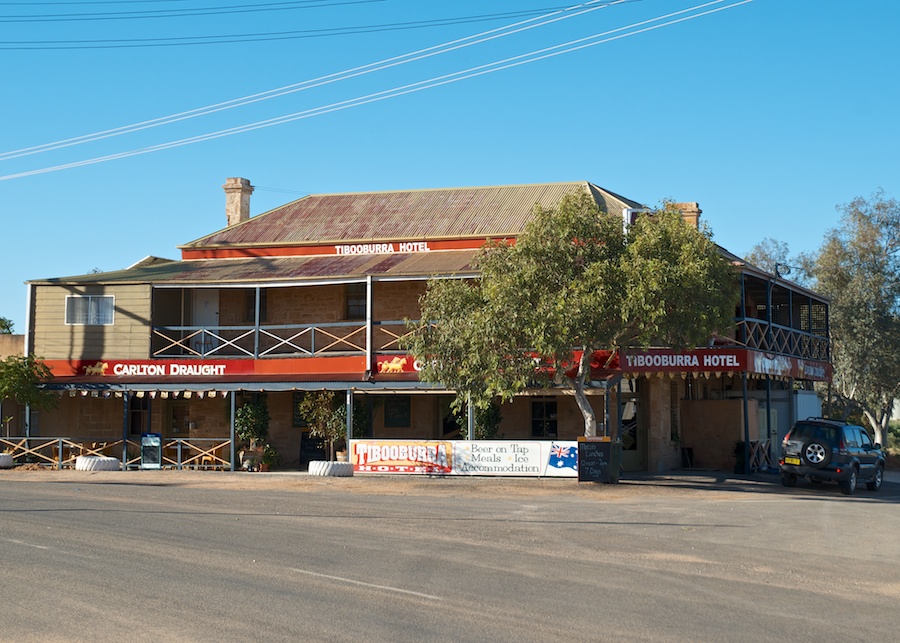
Tonight we start with Outback 2012: Tibooburra Hotel, for Gordon Smith from lookANDsee is back on his outback adventures.

Over on Mind the Gap, Sarah Thorneycroft uses this cartoon to illustrate her post Says who? The post says in part:

We have in place in society at large, education particularly and academia specifically, an assumption that knowledge cannot exist of its own accord, it must be verified by others. Which, generally, is fair enough because the world is full of idiots who will happily believe anything sans any sort of critical thinking. However – when this assumption is so pervasive that it manifests itself in systems like peer review and beliefs like ‘Wikipedia is not a reliable source’, we have a problem. It strikes me that several of the component assumptions that contribute to this are completely spurious.

The assumptions are, and I quote,

  • ‘knowledge must be reviewed by experts’
  • ‘experts must come from institutions’
  • ‘experts must be verified by an authority’
  • ‘crowdsourced knowledge cannot be accurate’

Now there are some aspects of Sarah's line of argument that I disagree with. I might pick those up in my next Belshaw's World's column. Others I agree with. Those that I agree with provide me a unifying theme in today's selection of New England blogs.

The idea that only academics or at least those from institutions can be experts is actually quite new. It certainly wasn't held as a universal view by those in the early days at either the New England or Newcastle University Colleges. It really began to emerge in the explosion in university numbers during the 1970s, in the rise of "professionalisation" in the 1980s. It's a very silly view.

Consider Keith Burgess's A Woodsrunner's Diary. Yes, the topic is a narrow one in some ways -  "18TH CENTURY LIVING HISTORY, HISTORICAL TREKKING, & LONG TERM SURVIVAL" . But could anyone deny that Keith is not an expert in his area? After all, he is involved with it all the time. He also adds to the texture that is New England blogging life.

Or consider Rod Holland's Northern Rivers Geology. Congratulations, by the way Rod, on visitor 10,000. Now Rod's topic and area specific focus actually makes him the single most important source of accessible public information about the geology of the Northern Rivers. To someone like me, that's very valuable.

As a former co-editor of the now defunct student newspaper Neucleus, Winton Bates (Freedom and Flourishing) occupies a feature spot in the centenary history of UNE. His blog deals with some pretty serious stuff. It also reflects not just his academic interests, but also his experience as a senior official with what is now the Productivity Commission. Winton writes outside the groves of the academy, but could anyone deny the deep thought and research imbedded in his writing?

Paul Barratt (Australian Observer) is very different again.  In May 1999, Paul accompanied Defence Minister John Moore on an official visit to China, Korea and Japan. This photo from the trip was taken in Shanghai.

Sadly, Paul is one of those partially sidetracked by Twitter, so his blog has suffered. Paul writes on many things including defence and immigration and is frequently interviewed on ABC. He is no academic slouch. He is also a major advocate of New England causes, of its history and is a member of the New England New State Movement Facebook page.

I could give other examples such as Sophie Masson (A la mode frangourou) on food and writing. Still, I have probably said enough to make my point.

I now want to turn to a second point, that crowdsourced knowledge cannot be accurate. Now if you look at the Wikipedia definition of crowdsourcing, you will see a pretty academic definition. Let me simplify.

Crowdsourcing is a form of collaborative working and checking where the internet allows those writing to access a broad set of views on particular topics and to collaborate in ways not otherwise possible.

Crowdsourcing is actually central to the continued survival of the very concept of New England.

In a way, I dealt with all this in Keeping the New England dream alive. There I said:

This story will not be written by the big wigs or fat cats in Sydney or Canberra. It won't be told by prominent individuals. It will be told by thousands of people who care at their level within their constraints. It will be told by a Rod who cares about New England geology, by a Lynne who documents New England life and who cares about Bellingen hospital, by a Janene whose friends don't understand why she wants to work for a local newspaper, by a Paul who retains his links even though the world has taken him far away, by a Greg or Mark who try to keep the new state dream alive.

What I didn't articulate because I hadn't thought of it in that way is that New England is crowdsourcing.

New England has been deserted by the local media who have lost the ability to even see the broader whole. New England has been deserted by most, not all, of the academics who once focused on New England issues for, sadly, those issues now lack academic sex appeal and certainly do not help careers. New England has been deserted, too, by local politicians who no longer see relevance of the concept of a broader North in the pecking order games of Sydney or Canberra. 

In its place and however imperfectly, crowdsourcing has come to provide a substitute. At a time when all the traditional formal mechanisms deny or at least ignore the validity of the North as an entity, our history is being recorded via the internet; our geology is discussed there; the tenor of daily life is recorded there. In that last post, I also said:

We care. We count. Individually, we don't matter. We can be forgotten, ignored. Collectively, we will change things. Forget us at your risk, for we are not going away. You won't see what we do unless you look; both local and social media interactions continue below the horizon. Yet the interaction goes on.

Again, this is actually crowdsourcing.  I suppose that we often think of political movements in formal and macro terms. Yet what the internet and especially blogging and the various specialist fora have done is to provide a vehicle for sharing at the a wide variety of micro-levels.

I hadn't expected when i began writing what was meant to be a blog review that it would carry me back to that earlier post. I accept that there is a degree of repetition. Yet that's no bad thing.

I do promise, however, to return in my next blog review to a more detailed report on just what our fellow bloggers are actually writing!  

Tuesday, May 04, 2010

Round the New England media 4 May 10

Another of my periodic New England media round-ups.

ABC New England North West is on Twitter. Mind you, there are some frustrations. One twitt read:

The state government has denied access the records surrounding the death of Bush ranger Captain Thunderbolt - stay listening after ten.

I couldn't listen, so am still wondering what all this was about. I knew that there had been a request for official papers from the period, but I would have thought that this was archival material open to the public.

In Lismore, the Northern Star reports that the Northern Region Community Services NSW - this runs from Tweed Heads down to Port Macquarie, has seen an influx of reports filed by police, teachers, community workers and others that swamped any capacity to respond. The paper says in part: 

With no emergency youth accommodation and no adolescent foster care programs in Lismore, young people between 10 and 16 years old included in these rising statistics are taking to sleeping it rough in an attempt to leave their dysfunctional homes.

“I’m horrified at the kind of things kids go through,” Lismore City Council youth development officer Lizette Twistleton said.

I have written a little on this one. I will give a summary with links in another post. Following the introduction of mandatory reporting and the subsequent effective collapse of the child welfare system, then an official inquiry,  Sydney introduced new approaches.

The stats quoted in the story are 08-09 stats. I wonder how much has changed since. Perhaps not a lot form Lizette's words.

Staying with the Northern Star, there was a rather nice story on a get together of isolated students from different parts of the Northern Rivers. In all, there are about 60 primary-aged students whose families are from isolated areas enrolled in the distance education program across the Northern Rivers.

In Grafton, the Daily Examiner had a story that surprised me. This said that The Clarence had not experienced the recent Sydney real estate price surge; the market was flat. Why did this surprise?

Well, while it has been true that country real estate price changes lag Sydney, inland centres such as Armidale and Tamworth have recently experienced considerable price surges. This was influenced by first home buyer grants under the stimulus program that essentially stripped out lower price homes, but then spread to other house categories. Part of the reason, I think, is that parts of inland New England are experiencing faster population growth than has been the case in recent years.

Just at present, the North Coast Area Health Service cannot take a trick. After the troubles further south at Bellingen, the Examiner reports trouble at Grafton and Maclean Hospitals (here and here). I cannot comment on the detail. However, we should not assume that the abolition of the NCAHS and its replacement by local hospital networks will solve problems.

Jumping up that beautiful if winding mountain road to Armidale, that university city has been experiencing some remarkable successes with major sporting events, beginning with the Koori Knockout.

Now here I have a frustration, one that I have shared previously with Armidale Express Editor Christian Knight. It is difficult to write about these things because so many of the stories are not on-line and I cannot therefore give links.

These are not small events. The NSW Academy Games attracted 1,000 participants, the smaller TAS Rugby Knockout Carnival attracted forty teams.   

I guess that Christian and I will continue to chat about these issues. In the meantime, I just note that Armidale's superb sporting facilities continue to bear fruit.

The decision by the the Rudd Government attracted a fair bit of press coverage.

On the New England New State Movement Facebook Page, Nathan wrote:

Maybe the Hunter be its own Country after the Government has announced it's Super Profits tax. With the state and federal Governments getting in on the action there will still be nothing for the Hunter except chicken feed plus will distroy a lot of the new investments that could occur in the Hunter.

Nathan put his concerns quite strongly, but there is a fair bit of confusion and concern. The Northern Daily Leader reports that Gunnedah Shire Mayor Adam Marshall is still trying to ascertain what the government’s response to the Henry tax review means for the mining industry and the Gunnedah basin. The heading of the story - Not a dollar of mining tax would go to region: mayor - is a little stronger than the story itself, but presumably reflects the Mayor's views.

The Mayor is not alone in his concerns. Down south at Singleton, the Singleton Argus reports:  

Mayor of Singleton Sue Moore said she is concerned that the money is being taken from mining and distributed Australia wide for infrastructure purposes.

“It is not what we have been fighting for and until I learn more, I am at this stage a little concerned about what benefits Singleton will get,” she said.

“I am concerned for the mines and any impact this tax might have on employment in our area.”

The difficulty is that all the councils affected by mining have been fighting for a greater share of royalties to address local costs and increase local benefits. Once money is redistributed across Australia, local areas lose their chance of getting a greater share.

In the meantime, mining continues to create environmental conflict. Here I was fascinated by two stories in the Northern Daily Leader (here and then here) about an apparent gaffe by a Chinese executive on mining in the Mooki River area. I blinked!

One of my difficulties is that even though I know New England quite well, its such a large area (bigger than England) that I sometimes simply don't know local geography well enough to make sensible comments. It's also quite hard to integrate things when everything is so fragmented.

Environmental issues are always difficult, more so when government constructs make it difficult to compensate those directly affected.

I am trying to pull some of this together in a three part series in my Armidale Express column on Nee England's current environmental wars.

Finally, down in Newcastle, dispute over CBD development continues. I must say that the anger of locals against Sydney on this and other issues is quite remarkable. The number of comments that the Newcastle Herald attracts on its stories is also quite remarkable.           

Saturday, April 30, 2011

Round the New England blogging traps 22 - a few personal blogs

A while since my last full blog round-up, although I have referred to a number of blogs since then.

On Canons of Medicine 2.0 my first experience with death in hospital ... records just that. I have been following this blog for a little while. It's simply a record of the life of a medical student at the University of Newcastle. It's unusual as a student blog, and is also a blog written from the perspective of the Muslim faith. 

John George Archer's blog is a relatively new one on my list. John is from somewhere on the North Coast. Short posts with a high visual content.

Sophie Masson's A la mode frangourou, another new one on my list, is an absolutely luscious blog, perhaps one of the best in Australia. French-Australian, Sophie is one of the better known New England writers and writes about food and lifestyle from a French and New England perspective.

All her posts are good. However, I want to mention one because it bears upon something that I have been writing about on and off for several years, the failure of regional areas to develop their own cuisines for both life style and tourism purposes.

The best French-style cheese outside of France looks at food in Tasmania where, to Sophie's mind, a regional cuisine is evolving. I won't go on at this point, but will come back to the issue later.

Denis Wright's My Unwelcome Stranger is another new blog on my list. I knew Denis at UNE, but did not know that he had a blog until very recently. Have a look at More Calliope tales (pt 4): Aunty Anne’s TV for a rewarding look at Australia's past. Denis is fighting am aggressive brain tumour; his writing is one response. 

Mother and son Shayrn Munros'  The woman on the mountain continues to provide a picture of nature and life in the countryside of the Hunter Valley.

This photo shows a rather large Eastern Grey Joey having a feed. I have to say mum looks very patient!

Moving to the Mid North Coast, Paula's life perchance is?

I don't quite know how to describe this blog, it's sort of a moving somewhat surreal story involving a cast of strange characters.

You are either going to like it or hate it! If you haven't visited before, I suggest you go back a few pages and then read forward.

Finally, some time ago I mentioned that Bellingen blogger Pip Wilson had been badly bashed in an apparently random attack, so badly bashed that recovery was uncertain. Pip is still suffering from the effects of the bashing, but has resumed posting on Wilson's Blogmanac