Showing posts with label writing. Show all posts

Friday, November 22, 2019

Introducing Armidale Diaries

One ABC National Radio programs that I really like is The Fitzroy Diaries: Dispatches from the inner-city suburbs of Melbourne. The ABC describes the program in this way:
Award-winning audio fiction series from the ABC. Walk the streets of Fitzroy, Melbourne, shaped by gangsters, migrants, Aboriginal activists, the working poor. Now, it’s fancy shops and hipster bars. Until you really look.
Now I'm not totally sure about the fiction part. I think that its more observations, imaginings and anecdotes that paint a vivid picture of life in Fitzroy. I find it fun. Having just moved back to Armidale, I thought that it might be fun to try the same thing here. I also thought that it might be a break from the historical or analytical stuff I normally write, something that would give me more freedom to experiment and roam.

The first episode, Armidale Diaries 1 the smoke rolls in, appeared yesterday on my personal blog. My old friend Noric Dilanchian wrote on my public face book page:
Jim’s mise en scène. The style works. Recalls quirky French rural townlife films of old, one from the 1980s that I recall by Claude Chabrol. Awaiting this style’s evolution. 
Stretch target, find a videography and music researcher to deliver audiovisual justice for the smoky scene you set.
Mise en scène literally means the arrangement of the scenery, props, etc. on the stage of a theatrical production or on the set of a film or, alternatively, the setting or surroundings of an event. That's not a bad definition, but I think of it in terms of the texture of life within a frame. 

I am going to try to run the series every Thursday. in terms of Noric's challenge, think of it as something like a script that audio can be added later.  

Thursday, February 07, 2019

New England Writers' Centre You Tube Channel - an introduction to publishing and writing at the smaller independent end


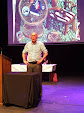
Sophie Masson, French Australian writer and chair, New England Writers' Centre
I received an email today from Sophie Masson, writer and chair of the New England Writers' Centre. The heading to the letter email read: "Watch great interviews with fantastic Pitch Independent publishers on the brand-new NEWC You Tube channel!

The email went on:
Dear members, 
A new year, and we have a new and exciting initiative! The brand-new New England Writers' Centre You Tube channel is now up and running, and features 13 fantastic interviews with 12 of the fabulous publishers and editors who visited our region during Pitch Independent in August last year. There's also a video interview with Michael Webster, Chair of the Small Press Network, who also travelled to Armidale specifically for Pitch Independent, from his base in Melbourne. 
The School of Arts in the Faculty of Humanities, Arts, Social Sciences and Education(HASSE) at UNE partnered with us in Pitch Independent, with the Small Press Network giving in-kind support. Dr Ariella van Luyn and Dr Beck Wise of UNE, who work within its Writing program, interviewed, recorded and edited the interviews, with the approval of all the interviewees. Many thanks to them for all their hard work, and to all our Pitch Independent for giving so generously of their time and expertise. 
This is an absolutely fantastic resource not only for NEWC and our region's writers and illustrators, but also for anyone interested in the publishing industry in Australia and its thriving small and independent sector. 
So head over to the channel, and have a look and a listen, there is much to enjoy and learn:
I did indeed head.to the new channel and think that it is valuable. I think, too, that it illustrates a little of the variety in modern writing, in part because of the thing the series misses out. We live in a world that has ever more opportunities for writers, but diminished opportunities for actually making a living. Listening to the various pod casts, I did think that we were missing out on some of the things in youngest's world, the world of YA and beyond.

This is a world of the merger of media. Still, at the end you have to get published and a book is the tangible form.    

Sunday, November 27, 2016

New England Travels - A visit to Dalwood part one

Some time ago, I started writing New England Travels, subtitled journeys through space and time. Part history, part travel, part personal reminiscences,  the book gave me an opportunity to write beyond the usual confines set by the need to record sources, to sit within boundaries. Like so many of my projects, it is only part written, but I thought that I might share some of it with you. 
Dalwood House lies on the Hunter River near Branxton.  
Dalwood House stands on a rise. From the side verandah, mown grass runs down to the old vineyard. The Hunter River lies beyond, hidden within its high banks. It was hot and still, the silence broken only by the distant sound of a crow. Even the working properties on the hills on the other side of the River were still, remote in the faint heat haze.

This was only my second visit to Dalwood House. Many years before I had read Australian writer and poet Judith Wright’s Generations of Men, the story of her grandparents and the establishment of the Wyndham and then Wright pastoral dynasties; the book gripped me. I was especially caught by the almost lyrical descriptions of Dalwood House as seen through the eyes of Charlotte May Wright nee Mackenzie, Judith’s grandmother.

By chance, I had just finished the book when I went out to dinner in Canberra. Talking about the book over dinner, my hostess, herself a member of the Wright family, said “The house is still there, you know, although it’s a ruin now.” I got directions and visited it with a friend on my next trip to Armidale.

Many parts of Australia now claim Judith Wright as their own. Up in Queensland, the State Government has expropriated her for a performing arts centre. Her New England connection is dismissed in just a few words: “Judith Wright was a Queensland resident for over thirty years. She was born in New England, in regional New South Wales, and came to Brisbane as a young woman”. Later, Canberra and Braidwood would claim her too.

In all this, Judith remained a quintessentially New England writer. That was where her views were first formed, although her later experiences and especially her relationship with the older novelist and philosopher Jack McKinney would exercise a powerful influence over her. Judith met Jack McKinney when she moved to Brisbane. He was a much older man, some twenty four years her senior, only two years younger than her father. They fell in love, moving to Mount Tamborine in 1950; daughter Meredith was born in that year. In 1962, Jack and Judith finally married. Four years later Jack died, leaving a hole in Judith’s life.

Jack McKinney was the second of three powerful men in Judith Wright’s life. The first was her father, Phillip Arundell Wright, with whom she shared a middle name. The third was H C “Nugget” Coombs, a noted Australian economist and public servant, with whom she had a twenty five year love affair. Coombs was again an older man, in this case by nine years. Both were major public figures. Judith was a widow, Coombs long separated from his wife. Both shared common interests, including Aboriginal advancement and the environment. Judith moved to Braidwood to be closer to the Canberra based Coombs, but the affair was kept secret, if open to their friends and the Canberra network within which they moved.

Each man had a powerful impact on Judith, but I think that it was the father that formed her core views. It was he that gave her that love of the environment and of the country. It was he that gave her that love, affection and unstinting support that seems to shine through in the letters between them.

I knew her father as a much older man. PA, we all spoke of him as PA, was my grandfather’s friend; my grandfather was godfather to his son who bore the same first name; my copy of Generations of Men carries my grandfather’s signature, bought in the year the book first came out. To me, PA was a somewhat remote figure. I saw him at events and at the New England New State Movement Executive meetings that he sometimes chaired. I and my fellow students at the University of New England where he was chancellor poked gentle fun at him for his sometimes mangled English. It would be a number of years before I came to properly understand his contribution to Northern life and the causes he supported.

Judith loved her father, she loved the Falls country in which she grew up, she loved the life on the family properties. Her earlier works reflect that love, and then the joy she found in her relationship with Jack McKinney. Later, there would come a darkening of spirit, an erosion in optimism, a rejection of elements of her past. “You ask me to read those poems I wrote in my thirties?” she wrote in Skins. “They dropped off several incarnations back.”

Judith had the misfortune to be born a girl in an age when men inherited. Especially after the death of PA, she became separated from the properties and life she had loved, although the family ties remained close. Towards the end of her life, she saw the end of the Wright family empire that had been carefully built by her grandparents and especially grandmother May Wright. The ABC TV Dynasties program recorded the event in this rather dramatic way:
By December 2000, he (brother David) had lost it all – his properties, his cattle and his wife to cancer. His sister, the poet Judith Wright, watched in despair and died soon after.
That’s dramatic, but the loss was a profound one. Generations of Men is dedicated to the children of May and Albert, to her father and his brothers and sisters. The phrase generations of men comes from Blake’s Milton; the verse is quoted on the book’s title page:
The generations of men run on in the tide of time
But their destn’d lineaments permanent for ever and ever.
If you look at those words, you can get a feel for Judith’s sense of loss.

Six years after Judith’s death, David, my grandfather’s namesake, died suddenly. On his death, University of New England Professor Bernie Bindon described David as one of the pioneers of the scientific research underpinning today's Australian beef industry. "I can't think of a beef industry person” Professor Bindon said, “who's made a bigger contribution to not only the growth of the beef industry but the science that underpins the beef business," The Herefords .that formed the base of the V1V and V2V Wright brands began their life at Dalwood. It was Judith’s grandparents, the core characters in Generations of Men, who began the breeding program that created the Wright cattle.

Not long before David’s. death, Aunt Helen and I revisited my grandfather’s old property, Foreglen, for the first time for many years. It was Christmas, and the family had gathered together in Armidale for what would prove to be one of our last family Christmases. I was perhaps four or five when the property was sold. My last visit had been the clearance sale. That’s a long time ago, yet I had very clear memories of the place. I remember the clearance sale in particular because I still felt that the place belonged to us. I remember playing with other kids, clambering over the machinery and playing on the ancient Model T Ford, telling my companions about the place. I don’t think that I properly realised what had happened.

After that Christmas lunch, I said let’s go out to Foreglen. Everybody groaned, too full of food and wine to want to move. However, Aunt Helen finally agreed to come with me and also acted as pilot. I couldn’t quite remember how to get there!

Foreglen was now owned by David Wright. The old homestead had been vacant, we thought that it still was, but we found it occupied by a nice Chinese couple with two young kids. They agreed to let us look round. Our host was an accountant employed by David to work on ways of restructuring the pastoral business. Both he and his wife had grown up in the crowded world of Hong Kong. This was their first exposure to the Australian countryside. At first, they found it difficult to cope with the quiet and absence of people. Now with a vegetable garden, their own chooks and with the kids settled in school, they were trying to encourage their Chinese friends in Brisbane to go bush.

David lost Foreglen with his other assets. I have always wondered about that Chinese couple. Did they go back to Brisbane? I will probably never know.

In 1959 when Generations of Men was first published, all these events lay in the distant future. They still were when I first visited Dalwood House. Then I wandered around trying to fit the now decrepit reality into the vivid images created in my mind by the book. Now I looked again with the knowledge of what was to happen fresh in my mind.

Monday, February 03, 2014

Round the New England blogging traps 29 - writing and rates

I suddenly realised just how long it had been since my last run around the New England blogging scene, fifteen months! I have been monitoring, but not reporting.

In Clarence Valley Council rating by the numbers, North Coast Voices had an interesting discussion on the rate setting process and especially the use of the index of relative socio-economic disadvantage as one factor in rate setting. The piece includes a link to the council minutes, as well as the ABS statistical series presenting the latest indices.

Reading the Council minutes, I was struck by just how complex the rate setting process can be in largish geographical areas with their variety in local conditions. I was also struck by the apparent decline in land values within the Council area. The latest Valuer General valuations placed a value of $4.2 billion on rateable land, down from $4.8 billion three years before. That's a fall of 12 per cent.

North Coast Voices continues its environmental campaigning, including Screenshot from Metgasco Limited proposed unconventional gas drill site at Bentley, NSW. For those not familiar with the intensity of on-ground feeling, click through the link to the story in the Northern Rivers Echo.

Meanwhile, on Northern Rivers Geology, Rod Holland has put together a consolidated List of Natural Gas Posts. These provide a factual geological analysis of the different types of gas and gas extraction.

Up the mountain road from the Clarence, last year saw the death of one of Denis Wright, one of New England's best known bloggers. The last post on My Unwelcome Stranger carries Denis' final message, as well as the eulogy by friend and colleague David Kent. Denis really was a remarkable man.

Staying in Armidale, Janene Carey's Turkish Delights describes a recent trip to Turkey. Janene is a very good writer and a fellow board member of the New England Writers' Center. On Saturday, I had coffee with her in the Mall before my return to Sydney. We chatted about writing, including the difficulty of actually making a living from the craft. I described the overall trip in a post on my personal blog, A fleeting visit to Armidale.Sunset Ridge

Still in Armidale, Paul Barratt's On final for Armidale describes his flight into town. Paul has been on something of a nostalgia trip recently (A day trip to Dangar Falls, Those were the days). A bit dangerous from my viewpoint because of our shared links.

Some of my favourite New England photo blogs have gone into extended recess. That's a pity, because they were an invaluable source of ideas and inspiration. However, Julia's Newcastle Photo continues, again with an environmental theme.

Moving back to the Northern Rivers, Jan's A Tapestry of Life continues to give, as she says, "glimpses of an active, contented life in country Australia." That's true! 

Moving to the far west and back to writing, Nicole Alexander (blog here) was born and raised on New England's northwest plains. She calls it NSW, but I don't know that place! Her family property is located north-west of Moree near the Queensland border. Her new book, Sunset Ridge, is now out.

New England has a remarkable number of writers. Of course, the questions of just who is a New England writer or what New England writing is are open questions.

I must stop here. I am out of time!

Friday, November 23, 2012

The deracination of New England poetry

From time to time on this blog I have talked about New England poetry and poets.

There is a common view around about the death of poetry. Newsweek announced it in 2003. Now Newsweek, or at least the printed version, is on its deathbed too.

Is New England poetry dead?

No, not if measured by output. There are more New England poets or poets with New England connections than at any time in our history. And yet much New England poetry has become deracinated, pulled out by the roots from its native environment.

Some of our poets and especially those from the Armidale school are themselves deracinated, bought to Armidale by circumstance, removed from their original homes, rebels against society, not at home in their new environment. Their writing forms one theme in New England’s cultural history, part of that history but also part of the poets’ isolation from their previous world. The isolation was formed then; Armidale accentuated it.

Beyond them, there is a problem not unique to New England but part of a broader malaise in which poetry has become an element in social angst, statements about the poet’s perception of the universals of life. Beyond that still are two further problems: poets have become disconnected from their area, while those living in the area no longer have access to the poetry.

The greatest New England poets, Judith Wright and Les Murray come to mind, have a deep emotional connection to the area’s geography. In a broad sense, their poems survive because they are such good writers that someone without context can still enjoy them. In a narrower sense, their words have continuing power at a much more local level because they resonate in our guts.

One of our challenges, one that has been partly met by people such as Julian Croft and Michael Sharkey, lies in just knowing who our poets are and how they fit in our own literary tradition.

The poets themselves may not see themselves that way. George James Macdonald, the Commissioner of Crown Lands who named Armidale, wrote poetry for his own pleasure and to ease his loneliness. He did not see himself as a New England poet. The concept of New England that I use as a frame did not exist. Yet he is part of our cultural history.

Outside the work of people like Julian or Michael or, to a lesser extent myself, no mechanism exists to describe our poetry to those living in New England. We have become as deracinated as some of the Armidale poets, cut of from our past.

I think that’s a bit sad, for it means that we are cut off from the words and emotions that give context to our own areas and life. Our deeper roots have been removed.

Postscript

Denis Wright pointed out in a comment that Kardoorair Press was still a going concern. They are indeed and long may they continue! Our joint blogging friend Neil Whitfield mentioned one of their recent books in his post Our River Days and the Croker Island kids.

The problem lies not in the content - there are more published writers in the broader New England that at any time in our history. The problems lie in access and the absence of a common frame. Access in that distribution channels for small run publications have decayed. A common frame in that the rising output is simply not seen in any context.

Kadoorair itself is part of the New England cultural and intellectual tradition. Again, who knows?  The Press's web site states:

Kardoorair's first publication, Loose Federation, was released in January 1980 and featured the work of Michael Sharkey and Julian Croft. Croft subsequently was a Commonwealth Poetry Prize winner and Sharkey a much published poet and respected literary critic. Kardoorair now has over 60 publications.

I mentioned Michael and Julian in the post. Living in Armidale, they and the other local poets including Anthony Bennett rebelled against what they saw as the dominance of the Balmain set. This is New England poetry and other writing, the need to assert against the dominance of perceived (and actual) small cliques who control key outlets and funding sources not because of quality, but of location.

Perhaps another post? 

Monday, February 15, 2010

Page and Pooaraar's The Great Forgetting

In an earlier post on my personal blog, Train Reading - S H Roberts the Squatting Age in Australia, 1835-1847, I reviewed this pioneering study of the emergence of the Australian wool industry. Then Janine Rizzeti wrote a rather nice companion piece, ‘The Squatting Age in Australia 1835-1847′.

In that piece, Janine included a link to a book by New England poet Geoff Page and Aboriginal print maker Pooaraar (Bevan Hayward), The Great Forgetting (1996) . I had not seen the book before. Janine included the book because it had a poem entitled The Classic Text that dealt with  S H Robert's book.

The poems and supporting illustrations look at the interaction between Aborigines and new settlers over time. They can be read at several levels.

At one level, Page and Pooarar's joint work brings out aspects of post European settlement Aboriginal history in a powerful way. I may quibble with aspects from a historical perspective, but it is quite a powerful book.

At a second level, the specific location of some of the poems means that they are likely to be understood by and appeal to many of those from the broader New England. We all like to read work set in our own country. For example, I think that Lynne or for that matter the broader North Coast Voices collective will find them interesting.

Then there is a third level, the linkage between Geoff Page himself, country and New England history.

There are aspects here that I find fascinating and am slowly teasing through.

Geoff is Earle Page's grandson. I am David Drummond's grandson. Judith Wright is PA Wright's daughter. Page, Drummond and Wright were all actively involved in the same New England causes. From somewhat different generations and sometimes different perspectives, their children and grandchildren have all written on Aboriginal issues.

I would not put myself as a writer in the same class as either Geoff or Judith. I am not. I just find the linkage between us all and country and our respective histories fascinating.

One of the huge pleasures I get in writing about New England history lies in the fact that I can sometimes shine light on linkages and relationships that might otherwise get lost.

I do not know whether Geoff Page and Pooaraar's book is still in print. I doubt it. If not, I would love to see it reprinted. In the meantime, please browse the Google Book entry. 

Saturday, February 06, 2010

Welcome to Jeremy Smith, problems with writing

Email today from a writer - in this case presently US based - who is writing a novel partly set in New England (Armidale and Coffs Harbour) during the period from about 1890 and 1920. I won't give the plot away except to mention that it involves music.   

I have said before what a remarkable number of writers have come from or moved to New England. Of course, since my New England doesn't exist in any formal sense, the presence of those writers and of the differences between writers from different areas is essentially a blank sheet.

Here I would like to welcome a new writer to New England. Jeremy Smith, previously Executive Director at the Australian Society of Authors, is coming to Armidale to teach writing at the University of New England. Jeremy is also a blogger. Welcome, Jeremy, and hat tip to Gordon Smith for the lead.

I think that everybody who writes sometimes suffers from writer's block. I also think that this is far worse for fiction writers. Those bloody characters simply won't do as they are told!

I mention this because Gordon Smith partner's, Bronwyn Parry romance writer extraordinaire, has just written an entertaining post, Knit 1, Write 2,  on the writing process.

Some years ago I did actually start to write a novel, a commercial thriller.

At the time I was working in a position that brought me into direct and extensive contact with the Australian and global defence and aerospace industries. I started keeping a writer's log: scenes from the minister's office; plant visits including descriptions of people, machinery and processes; the physical security processes involved in entering a US defence plant; what the offices looked like; details of an official ministerial visit to Indonesia; the words people used; and specific commercial negotiations. The actual details were disguised, but the aim was to create the texture required to support the main story. The background would sound true because it was true.

I suspect that it would have been quite a good novel. However, inconstant person that I am, my ordinary career intervened and I put the project aside. I then lost all my notes in a move.

I am not sure that I will ever return to fiction, although like most writers I still believe that I have a great or, at least, successful novel within me. But it has left me with a better understanding of the agonies and challenges that fiction writer's face.            

Friday, September 25, 2009

Welcome to visitor 25,000 - and the colours of New England

Well, this blog has finally clicked over 25,000 visitors. I have two counters on this blog, but the second higher one includes my own visits. Visitor 25,000 came from the US via a link on from 18th Century Historical Trekking,1680-1760 (Australia). One thing that is nice is that I now have a small number of regular visitors. Not a lot, but at least some people come back.

Yesterday having finished Harry Pidgeon's Naturally Touched Cooks Hill Gallery, I found myself on the bus jotting down notes on the colours of New England. Within limits of space and especially time, I am constantly looking for new ways to bring New England alive, especially for those who do not know the place.

Did you know that the colour gradients in New England run west-east? Or, if you prefer, east-west.     I have to think about the best way of presenting this. In the meantime, another painting from Harry Pidgeon's current exhibition at the Cooks Hill Gallery. Called simply edge of town, this painting would be instantly recognisable to most Australian. But it is only one scene from New England's variety.

Harry Pidgeon edgeoftown

Sunday, August 16, 2009

Introducing the Armidale poets

In Sunday Essay - obsessions with reading I reported on my growing obsession with reading and then writing. This was not my first post on this topic nor, I suspect, will it be my last!

Today I had to take youngest to hockey at Little Bay. To help while away the time in breaks in the game I grabbed three small poetry books of my shelf, all published in Armidale in 1980 or 1981. Between them, they provide a snapshot of a part of New England poetry at a point in time.

One of the problems an area like New England faces is that its cultural life is rarely re-presented. There are few local publishers, few journals analysing cultural activities, no platforms. Even within local areas people do not get to see patterns, to re-interpret past material in the light of current events. The problem becomes greater as we look at the broader New England. Similarities and indeed differences are lost within the melange of metro or national models.

At the time these books were published the Armidale poets were consciously challenging what they saw as the metro dominance. More precisely, I should say, the dominance of Sydney's Balmain push with its often contemptuous rejection of anything outside their own collective or, more broadly Sydney, as provincial, second rate.

What do I mean by Armidale poets? They came from many places and to some degree had different interests and approaches. The unifying element lay in the fact that they were in Armidale at that time. This created a shared bond.

You will not find material on the Armidale poets if you Google search, although you will find material on poets from Armidale. There have been a lot.

Over the next few posts I thought that it might be fun to explore the world of the Armidale poets, using the three small poetry books I grabbed from my shelf as a base. Who were they? What did they write about?

I hope that you enjoy the series.

The Books

Wilfred Belmont, A J Bennett & Michael Sharkey, No Standing :12 Poets, Kardoorair/Fat Possum Press, Armidale, 1980.

Gwen Kelly & A J Bennett, Fossils and Stray Cats, Selected Poems, Kardoorair Press, Armidale 1080?.

Michael Sharkey, Barbarians, Fat Possum Press Armidale & Canberra, One Eyed Press, Auckland, 1980.

The Posts

Linked Posts

Monday, April 13, 2009

Pause for reflection

I must say that I am quite fagged out this morning, not really feeling like writing anything. I had intended to follow up The importance of the local press - why it's lost it's way with a further post extending the argument, but after all the writing I have done recently I really don't feel like intense thought.

Still, in all this I did complete and email my next Express column, as well as finishing a major post Sunday and now Monday Essay - personal reflections on Australia's Indigenous peoples on Personal Reflections. When you come to think about it, that's 5,500 or so words over the weekend. Quite a lot.

For a number of reasons I am writing as hard as I can just at present. I write on many topics because that's the way I'm built. I am interested in a lot of things.

One of our cats just came and sat on my lap. Poor Avenger, that name is a real misnomer, has been upset since we moved. Now he is sitting on my foot!

I am quite excited about my writing at the moment because I seem to be making progress. It's still hard because I have so little real time, but I begin to feel that I am getting there, at least in spots.

I write because I have too, but I also try to write with purpose.

Part of it lies in capturing my own slice of the past. This will be lost if no-one records it. Part of it lies in my continued belief in certain causes, in the desire to improve things.

I don't know how many more years I have to write. I am frightened some times that if I die things will be lost. In that event, I know that I am unlikely to care. However, I care now. 

I like to think that by year's end I will have my first rough draft of a history of New England in place. Even if rough, I can ensure that copies are in place elsewhere for later use.