I am having another round of computer problems. Posting will be limited until I sort this one out.
Wednesday, September 26, 2012


Monday, September 24, 2012
Bike riders on a mountain road
Sunday 16 September 2012. Nowendoc-Gloucester Road.
On my way back from Sydney, I stopped at the lookout at the start of the run down into the Upper Hastings Valley below. There are some rather good views.
Now I had noticed before that the mountain road down to the coastal strip had constant motor bike signs. I also noticed the road bikes themselves. Sometimes, they outnumbered the cars and trucks.
At the lookout, every notice on the notice board was bike related. This is an example of one sign. 
After driving down the mountain, I stopped at Barrington for a coffee. I always stop here when travelling alone. There I found another set of bikes.
You see dirt bikes all the time on this road. Sometimes driven, sometimes on the back of cars or on trailers, they are heading for the excitement of wild country driving in the New England escarpments to the west.
Sitting listening to the conversation at this cafe among a group of dirt or mountain bike riders, I wondered how they get on with the road bike riders. They are two very different worlds.
I would like to have stayed and introduced myself, but time was pressing. Grabbing the remnants of my chips, I drove on.
Saturday, September 22, 2012
Armidale - the sounds of distant bagpipe music
Saturday 15 September 2012. I was sitting on the balcony outsi
I suppose that it's the Scottish connection, for my grandfather was very proud of his Scottish ancestry, I remember one Christmas he arranged for a piper to come in and play. We sat on the verandah after Christmas lunch watching and listening as the piper strode the lawns below.
Distracted, I put away my notes. I had to be back at TAS (The Armidale School) for a school reunion anyway, so I walked down to nearby Central Park through the bright light. It was one of those superb Armidale Spring days. In the distance, I could see the band on the rotunda.
For those who don't know Armidale, Central Park occupies a block next to the CBD and is a very pretty park indeed.
As I got nearer, I could see the small crowd gathered. It wasn't a big group, just people enjoying themselves in the sun.
Curious, I rushed around taking photos. Then I realised that the band was from Sydney's Scots College. Reporter Jim kicked in. "What's Scots College doing in town", I asked. "It's PLC's 125th anniversary", I was told. "Didn't you go to the procession?" "No", I said. "Didn't know that it was on."
PLC stands for the Presbyterian Ladies College, one of Armidale's many schools. "You must meet the head", my friendly informant said and promptly dragged me across to do just that. "My aunt used to teach at PLC", I explained. "Brother David and I used to line up in the afternoon with the borders for bread and jam."
I do so love these random things! She allowed me to take her photo, but I think that the following photo with the Scots boys better captures the event.

Now the Armidale Pipe Band was gearing up to take it's place on the rotunda. I stood back to watch as they marched down.

Suddenly a voice said "Hullo Jim. What are you doing in town?" I was startled, but shook the outstretched hand. There wasn't time to talk. I watched as the band took its place on the rotunda. I couldn't stay to watch. I had to be back at TAS.
Walking the few blocks east to my old school, I thought about the wonders of serendipity. I had really enjoyed the whole thing.
Thursday, September 20, 2012
Belshaw's World returns to Express in new form
Back in February Belshaw's World, my long running column in the Armidale Express got suddenly and abruptly axed by the new editor. I wasn't alone. In my case, the column was replaced by a new one, the Views of Gen Y.
The wheel turns. That editor is gone, there is a new editor, I am back. It won't be quite the same column. It's in the magazine section and will have a stronger focus on history. It probably won't appear in the public on-line version of the paper. If that's the case, I will repost it here with a week's lag.
I missed the old column, so I am rather glad to be doing it again even if the focus is a little different.
Wednesday, September 19, 2012
Return to Gunnedah 2 - wine, women & local politics

I finishe Return to Gunnedah 1 - Introduction with this remark: Gunnedah has become a fascinating melange of past and present. Since then, I have written two posts on my personal blog connected to Gunnedah.
Saturday Morning Musings - Coal, Gunnedah & that boom is pretty much as the title says. Cultural change in Australia - a dearth of bookshops, Gunnedah & the rise of the olive uses Gunnedah in part to explore aspects of change.
This wine list shows an aspect of change in Gunnedah. The most expensive wine is $110!
Since I wrote the first post, I must have met or re-met a dozen people, mainly women, from Gunnedah. Gunnedah's spread is quite remarkable.
I also received a tweet from Adam Marshall (@A_J_Marshall), then retiring Mayor of Gunnedah, suggesting coffee. Now I'm just not sure when I will be back in Gunnedah (maybe two months?), so we left it on that basis. Then I learned something new.
Mentioning the tweet at the TAS reunion (Old boys, young boys & a bright, sunny day - TAS OBU weekend September 2012), the wife of one of my class mates said "Adam has stood down, he is going to Armidale to study. Then she added "Young Adam", her words, "has done a pretty good job." Apparently Adam was elected to Council at twenty two, became Deputy Mayor a few years later and then Mayor. There were doubts because of his age, but he proved his doubters wrong. So congratulations Adam!
Now that Adam is in Armidale as well as Gunnedah, we have two choices for coffee.
I have one more post to go to complete the Gunnedah series.
Monday, September 17, 2012
Coal, congestion & environmental protest
It was mid-morning Friday before I finally left Sydney for Armidal
Years ago before the opening of Waterfall Way, I used the Wollombi-Broke road as a short cut between Armidale and Sydney. There were long stretches of dirt and the road was very rough. I didn't mind driving on gravel although it was rough on the car. The country was pretty and the route saved up to an hour in busy times on on the main highway.
Initially, the route takes you along George Downes Drive and then onto the historic convict built Great North Road. The country was just as pretty as I remembered it, although the road was better and there were far more signs of development.
I stopped briefly at the historic Wollombi village. 
Both here and in Broke, I was struck by the growth of the vineyards and the wine trails. These did not exist when I last drove this route. I knew that they were there, I have written a little about them, but I hadn't actually seen them.
Driving on on what had been a dirt road, I suddenly had a shock. I have written on the mine developments in the Upper Hunter and on the protest movements. At spots along the Wollombi-Broke road, the anti-mining or coal seam gas protest signs were to be seen every hundred metres or so. Now I struck the first of the big mines with the new roads and overpasses.
Driving on towards Singleton, I almost got lost. I was driving a road that I had known very well indeed, but where was I? I knew in geographic terms from the shape of the hills, but nothing else was familiar.
Getting through Singleton was a bit of a nightmare. The traffic was horrendous on narrow roads with every second vehicle a mine vehicle. I am not anti-mining, far from it, but you can see why people get so upset.
The scale of development has been just so big, the contrast between that and alternative industries and life styles so great, the stress on local infrastructure great, that you can see why people get so upset, Some of the protests may not be rational, but they are understandable.

Going further north, you can see why mining industry representatives have been trying to reassure Liverpool Plains residents that the same thing would not happen there. You can also see why they don't believe it since they drive through the Hunter to get to Sydney.
Things would have been easier if Sydney had diverted some of the royalty stream to local development. But this was too much to ask of a cash-strapped Sydney Government presented with golden royalties.
The problem we have now is that, in a way, the golden goose has bolted. Yes, I know that is a dreadful English mixture, but it captures the problem. Local demands and resentments continue, new infrastructure and services are needed, but the boil has come off mining with coal prices well down. There just isn't the cash to meet needs.
To put the problem at a very micro level, road traffic on the New England Highway north of the mining belt appears well down. Who would go this route now because of the delays? Easier to go another route if you can. That affects incomes.
Some of this could have been avoided with more creative thinking, But that's difficult to achieve in the present system. Meantime, the clashes go on. The protestors aren't irrational, although some of their arguments may be. You can see their point.
Thursday, September 06, 2012
Return to Gunnedah 1 - Introduction

Back last night from a visit to Gunnedah. This was my first visit in quite a while, and I wanted to see how the town had changed as a consequence of the mining boom. In May I reported that the airport in nearby Narrabri had gone from from 13 to 52 flights a week because of fly in, fly out workers!
I will report properly later. For the moment, this real estate poster tells part of the story.
Real estate prices are up, up. Rents have skyrocketed. The long coal trains are also creating havoc, while there is great strain on the local infrastructure. Yet the story is not all bad. Gunnedah has become a fascinating melange of past and present.
Tuesday, September 04, 2012
Nicholas, Fisher Library & a sense of sadness

Mathew Endacott's Is it best to let sleeping states lie? made me a little sad. Not sad because it shows that new state agitation continues - the New England New State Movement Facebook page is up to 131 members with 62 new. Sad as a New England historian.
The Nicholas Report is one of the seminal documents in New England's history. It lives today in the continuing debate about boundaries, about one state or two. For a long dead report, it's actually mentioned remarkably often in posts and comments threads. It's not available on-line, so it is often misreported. It also has a small place in the history of the University of Sydney. At the time, academics like Professors Bland and MacDonald Holmes were active proponents for new states and supporters of the New England cause.
In throwing it out to clear space, Sydney University's Fisher Library took away another little piece of our own history. See why I'm sad?
Sunday, September 02, 2012
Social change, footloose industries and the closure of the Goonellabah Call Centre
In my writing on the social and economic history of New England I traced some of the economic and social changes that swept across the broader New England over the second half of the twentieth century. The pace of change accelerated with the passage of time and has continued to accelerate.
In July, we had the protests over the threatened closure of Grafton Jail. The photo from the Daily Examiner shows one part of the protest. Now we have the decision by Telstra to close its Lismore Goonellabah Call Centre on October 23 this year with the loss of 116 positions. North Coast Voices has reproduced a copy of the combined letter of protest to Telstra from the Mayor and State and Federal members.
One of the features of the changes over time is the constant claims that these changes will offer benefits in terms of improved services and new local business opportunities and yet, somehow, it never seems to happen. The call centre case is especially interesting in that call centre operations were seen as the new holy grail to replace other losses. Get a call centre to compensate. Now as a consequence of continuing change in the on-line world, the rise of self-service internet transactions, that holy grail has proved to have a very short half life indeed.
Call centres are examples of what I call migratory or footloose economic activities, activities that are actually location independent and rise, fall and shift with changes in relative economics. The rise of these activities was a central feature of the last two decades of the twentieth century.
I don't have an answer. I don't think there is a complete answer. But I do know that it is very difficult for any form of purely local response or protest to have a real impact.

Further south over the escarpment from Lismore, the NBN (National Broadband Network) is seen as one solution to Armidale's problems and, more broadly, the solution to service delivery problems created by distance. A lot of us have doubts.
You will get a feel of this from a post I did on my personal blog, Saturday Morning Musings - UNE alumni dinner. Will on-line delivery provide a growth opportunity for UNE or will it become another step in the progressive decline of the North? This photo from that post shows VC Barber under alumni questioning.
In the years that I have been writing this blog, I have consistently argued that the rise of localism, the fall in the broader sense of Northern identity, limits our capacity to respond to the challenge of constant change.
Outside the Northern Rivers and perhaps even Lismore itself, there is no appetite for support. The closure is seen as a local problem, one without relevance to concerns elsewhere. That's a problem. United we may fall, but divided we shall surely hang.
One of the difficulties that people have, one that I know that I have despite my own knowledge and experience, is simply the difficulty in understanding just what is happening.
In my professional capacity, I first wrote on the rise of footloose industries in the 1980s. I didn't believe that the outcomes of the new technologies would be as so commonly presented. As best I could, I posed a blunt question to those in Sydney and Melbourne who talked so glibly of the opportunities opening up. What made them believe that in the absence of effective planning, Australia would benefit? Surely it was more likely that Australia as a whole would go through the experiences that South Australia or New England had already experienced, a decline in relevance?
I don't want to discuss the detailed economics of it all in this post, just to record another New England loss and to make a continuing plea for the need for a broader vision.
Monday, August 13, 2012
Round the New England blogging traps 27 - crowd sourcing and the survival of New England
Almost three months since my last New England blog round-up.
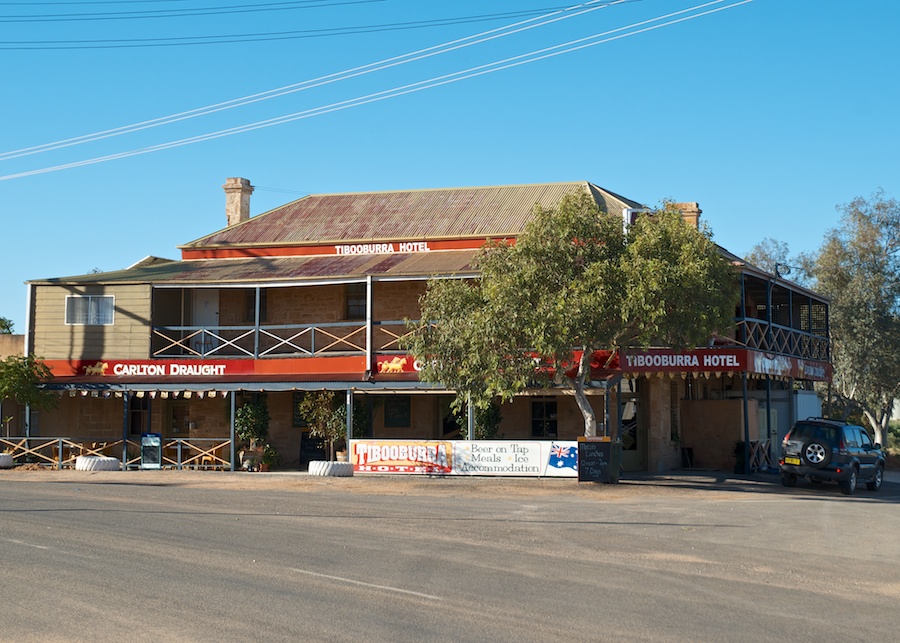
Tonight we start with Outback 2012: Tibooburra Hotel, for Gordon Smith from lookANDsee is back on his outback adventures.
Over on Mind the 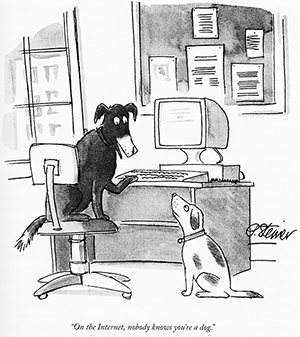 Gap, Sarah Thorneycroft uses this cartoon to illustrate her post Says who? The post says in part:
We have in place in society at large, education particularly and academia specifically, an assumption that knowledge cannot exist of its own accord, it must be verified by others. Which, generally, is fair enough because the world is full of idiots who will happily believe anything sans any sort of critical thinking. However – when this assumption is so pervasive that it manifests itself in systems like peer review and beliefs like ‘Wikipedia is not a reliable source’, we have a problem. It strikes me that several of the component assumptions that contribute to this are completely spurious.
The assumptions are, and I quote,
- ‘knowledge must be reviewed by experts’
- ‘experts must come from institutions’
- ‘experts must be verified by an authority’
- ‘crowdsourced knowledge cannot be accurate’
Now there are some aspects of Sarah's line of argument that I disagree with. I might pick those up in my next Belshaw's World's column. Others I agree with. Those that I agree with provide me a unifying theme in today's selection of New England blogs.
The idea that only academics or at least those from institutions can be experts is actually quite new. It certainly wasn't held as a universal view by those in the early days at either the New England or Newcastle University Colleges. It really began to emerge in the explosion in university numbers during the 1970s, in the rise of "professionalisation" in the 1980s. It's a very silly view.
Consider Keith Burgess's A Woodsrunner's Diary. Yes, the topic is a narrow one in some w ays - "18TH CENTURY LIVING HISTORY, HISTORICAL TREKKING, & LONG TERM SURVIVAL" . But could anyone deny that Keith is not an expert in his area? After all, he is involved with it all the time. He also adds to the texture that is New England blogging life.
Or consider Rod Holland's Northern Rivers Geology. Congratulations, by the way Rod, on visitor 10,000. Now Rod's topic and area specific focus actually makes him the single most important source of accessible public information about the geology of the Northern Rivers. To someone like me, that's very valuable.
As a former co-editor of the now defunct student newspaper Neucleus, Winton Bates (Freedom and Flourishing) occupies a feature spot in the centenary history of UNE. His blog deals with some pretty serious stuff. It also reflects not just his academic interests, but also his experience as a senior official with what is now the Productivity Commission. Winton writes outside the groves of the academy, but could anyone deny the deep thought and research imbedded in his writing?
 Paul Barratt (Australian Observer) is very different again. In May 1999, Paul accompanied Defence Minister John Moore on an official visit to China, Korea and Japan. This photo from the trip was taken in Shanghai.
Sadly, Paul is one of those partially sidetracked by Twitter, so his blog has suffered. Paul writes on many things including defence and immigration and is frequently interviewed on ABC. He is no academic slouch. He is also a major advocate of New England causes, of its history and is a member of the New England New State Movement Facebook page.
I could give other examples such as Sophie Masson (A la mode frangourou) on food and writing. Still, I have probably said enough to make my point.
I now want to turn to a second point, that crowdsourced knowledge cannot be accurate. Now if you look at the Wikipedia definition of crowdsourcing, you will see a pretty academic definition. Let me simplify.
Crowdsourcing is a form of collaborative working and checking where the internet allows those writing to access a broad set of views on particular topics and to collaborate in ways not otherwise possible.
Crowdsourcing is actually central to the continued survival of the very concept of New England.
In a way, I dealt with all this in Keeping the New England dream alive. There I said:
This story will not be written by the big wigs or fat cats in Sydney or Canberra. It won't be told by prominent individuals. It will be told by thousands of people who care at their level within their constraints. It will be told by a Rod who cares about New England geology, by a Lynne who documents New England life and who cares about Bellingen hospital, by a Janene whose friends don't understand why she wants to work for a local newspaper, by a Paul who retains his links even though the world has taken him far away, by a Greg or Mark who try to keep the new state dream alive.
What I didn't articulate because I hadn't thought of it in that way is that New England is crowdsourcing.
New England has been deserted by the local media who have lost the ability to even see the broader whole. New England has been deserted by most, not all, of the academics who once focused on New England issues for, sadly, those issues now lack academic sex appeal and certainly do not help careers. New England has been deserted, too, by local politicians who no longer see relevance of the concept of a broader North in the pecking order games of Sydney or Canberra.
In its place and however imperfectly, crowdsourcing has come to provide a substitute. At a time when all the traditional formal mechanisms deny or at least ignore the validity of the North as an entity, our history is being recorded via the internet; our geology is discussed there; the tenor of daily life is recorded there. In that last post, I also said:
We care. We count. Individually, we don't matter. We can be forgotten, ignored. Collectively, we will change things. Forget us at your risk, for we are not going away. You won't see what we do unless you look; both local and social media interactions continue below the horizon. Yet the interaction goes on.
Again, this is actually crowdsourcing. I suppose that we often think of political movements in formal and macro terms. Yet what the internet and especially blogging and the various specialist fora have done is to provide a vehicle for sharing at the a wide variety of micro-levels.
I hadn't expected when i began writing what was meant to be a blog review that it would carry me back to that earlier post. I accept that there is a degree of repetition. Yet that's no bad thing.
I do promise, however, to return in my next blog review to a more detailed report on just what our fellow bloggers are actually writing!
Subscribe to:
Posts (Atom)