Listening to ABC 702 in Sydney I discovered that Bob Herbert's play No Names ... No Pack Drill was being produced again. I was also fascinated to discover that Richard Glover had had a small cameo part in what I think was the first production of the play in Armidale in 1979.
John McCallum's review of the play in The Australian notes that this was already a nostalgic play when first produced. Set in 1942 when Sydney was awash with sailors, it tells the story of a young Australian war widow, Kathy, who harbours an American marine deserter, Rebel, and falls in love with him. The play is being produced by the NIDA Company, Parade Theatre, Sydney and is on until September 3.
I was in Canberra when the play was first produced, but remember reading about it in the Armidale Express. I was surprised at the time because I did not know that Bob was a writer. When my interest was triggered by the ABC story and I did some research on his life, I was surprised again simply because it showed me how little I knew.
Bob was born at Yea in Victoria on 6 April 1923. During the Second World War he served in the RAAF and the Second AIF. After the war he became a radio officer at sea where he began writing plays. Keen to pursue his interest in theatre, Bob moved to Queensland as an actor and radio station manager.
Bob came to Armidale as Theatres Manager at the University of New England. Here he played a key role in the development of theatre facilities and the provision of technical support for the University's Theatre Studies Department. Bob died in 1999.
Bob's story reminds me that there is still no history, or at least one that I am aware of, of theatre in New England. This is another significant gap in New England historiography, one that I will write about in another post to try to explain why I think it is important.
Returning to New England writers, in my post on the death of David Wright, I mentioned in passing the link between P A Wright and Earle Page. Page (and also here) was one of the pivotal figures in the history of New England in his own right and through his links with others.
Mentioning Page reminded me of another New England writer, Geoff Page, Earle Page's grandson, a writer also linked to a number of my recent stories.
Geoff was born in Grafton on 7 July 1940. Like Alex Buzo, he went to The Armidale School (TAS), in Geoff's case as a boarder. I have never discussed with Geoff where he got his love of English, so I am left wondering whether like Alex he acquired it at school or later while studying at the University of New England.
I first remember meeting Geoff while he was at University because he was courting the daughter of Professor Sommerville. Like my own father, Prof Sommerville had been one of the five original staff members appointed to the newly established New England University College in 1938. Malcolm and Paul, the Sommerville twins, were the same age as me and we were good friends.
In 1964, Geoff moved to Canberra where he taught in Canberra schools and was writer-in-residence at a number of academic institutions. At the end of 2001 he retired from being head of English at Narrabundah College, a position held since 1974.
Geoff has built up a considerable body of work over the years, publishing sixteen collections of poetry, two novels, three verse novels, anthologies, translations and a biography of the jazz musician Bernie McGann published in 1997 by Kardoorair Press, the Armidale publishing house I mentioned in my first post on New England writers. His works have been translated into a number of languages.
Geoff has won several awards, including the ACT Poetry Award, the Grace Leven Prize, the Queensland Premier’s Prize for Poetry and the 2001 Patrick White Literary Award.
Geoff also been active in the literary community, participating in poetry readings, seminars and conferences both in Australia and overseas. The last time I saw Geoff in fact was at a poetry reading in Canberra while I working there.
For those interested in more information, Geoff has his own web site.
Thursday, August 24, 2006


Tuesday, August 22, 2006
Death of David Wright
As my mother grew older, she used to say "it's getting very draughty, dear." By this she simply meant the number of people she knew who had died. I have a strong fellow feeling for her.
In an earlier post I reported the death of Alex Buzo. Now I have to report the death of David Wright at the age of 73. I did not know David so well. For reasons I will explain in a moment, there was a strong family connection. But David was much older than me and we mainly met at meetings, functions or at the airport. Often at the airport, because he was always travelling and so was I.
Judith Wright, David's sister, described the early days of the Wyndham and Wright families in Generations of Men. I spoke of the part played by George Wyndham in establishing the Australian wine industry in my posts on wine in the Hunter and on the New England Tablelands.
The Wrights were one of the pastoral dynasties that played a major role in New England history. Unlike Victoria where, I think, the pastoral dynasties were simply absorbed into the Melbourne establishment, New England families like the Wrights saw their public role in local and regional terms.
David's dad, Philip (PA) Wright, was born on 20 July 1889. As he grew older and took over control of Wallamumbi he extended the pastoral interests established by his mother Charlotte May. But his focus extended well beyond the properties, playing an active role in the evolution of the vision of a broader New England. Among other things, PA:
In an earlier post I reported the death of Alex Buzo. Now I have to report the death of David Wright at the age of 73. I did not know David so well. For reasons I will explain in a moment, there was a strong family connection. But David was much older than me and we mainly met at meetings, functions or at the airport. Often at the airport, because he was always travelling and so was I.
Judith Wright, David's sister, described the early days of the Wyndham and Wright families in Generations of Men. I spoke of the part played by George Wyndham in establishing the Australian wine industry in my posts on wine in the Hunter and on the New England Tablelands.
The Wrights were one of the pastoral dynasties that played a major role in New England history. Unlike Victoria where, I think, the pastoral dynasties were simply absorbed into the Melbourne establishment, New England families like the Wrights saw their public role in local and regional terms.
David's dad, Philip (PA) Wright, was born on 20 July 1889. As he grew older and took over control of Wallamumbi he extended the pastoral interests established by his mother Charlotte May. But his focus extended well beyond the properties, playing an active role in the evolution of the vision of a broader New England. Among other things, PA:
- played the key role in the establishment of the New England National Park, I think the second National Park in NSW
- played a major role in the establishment of wool selling at Newcastle in the face of determined opposition from the Sydney wool brokers
- played an active role from the twenties in the New England New State Movement
- actively supported Don Shand in the establishment of East-West Airlines.
- was a major benefactor to the University of New England from its establishment as a College of Sydney University in 1938 and was a member of the College's advisory committee and then of Council, succeeding Earle Page as Chancellor in 1960. Wright College was named after him.
My grandfather David Drummond came to Armidale as a farm labourer in 1907. He and PA became friends after Fah entered State Parliament in 1920. They shared a common vision for New England including separation and each helped the other. As I remember it, and I cannot easily check this following the death of my aunts, David Wright was in fact named after my grandfather who was also his god-father.
It is no easy task growing up in a well-known family, seeking to carve out your own position. David had a passion for the development of the beef industry, a belief in the importance of the underpinning role of science, a passion he shared with other Wright family members. He built up the V2V herd and brand, looking for new ways of selling including objective measurement.
According to Professor Bernie Bindon, David was one of the pioneers of the scientific research which underpins today's beef industry.
"I can't think of a beef industry person who's made a bigger contribution to not only the growth of the beef industry but the science that underpins the beef business," Professor Bindon said.
David also pursued broader business interests , but with much less success. Finally, and after a long-running and bitter legal battle with the banks, his cattle empire was dismantled with debts of $50 million. The blow was enormous.
Foreglen, the property that my grandfather had finally purchased in pursuit of his own dream of a place of his own but then had to sell because he could not manage it and his parliamentary career, had later become one of David's properties, was the home of David's son and was lost with the rest.
In 2002, the ABC Dynasties TV program looked at the Wright family story including the loss of Wallamumbi.
David soldiered on, maintaining his local involvements. The last time I saw him, quite recently and by accident, was on television attending an Armidale dinner. Our thoughts are with the family.
Wednesday, August 16, 2006
Death of Alex Buzo
In my post on New England Australia - Writers I spoke of Alex Buzo.
I learned today that he had died. My sense of loss can be nothing compared to that of Adrian, Merelyn and the family, but I thought that I should record my feelings. Added force is given to this because my wife has just left to take daughter Clare to school for the opening of the Wizard of Oz, a performance that Alex's youngest daughter is taking part in.
ABC radio today has carried initial tributes to Alex as a writer. I cannot add to these without reflection. Many people knew Alex better than me. They will tell their own stories. But Alex has been part of my life since I was very young. So this is a personal reflection on Alex, his family and me.
I mentioned in my writer's post that Zihni, Alex's dad, had come to Armidale for the building of the Oakey Hydro Scheme. As an aside, I spelt Zinhi's name wrongly, failing to add the h. But then, I have always said the name, rarely spelt it!
Zihni Buzo OAM was an Albanian. He used to tell me now he had been in the Boy Scouts with Enver Hoxha who later become communist dictator. Apparently Hoxha was a nasty piece of work even then.
After completing his elementary education in Albania, Zihni studied in Istanbul and the US before returning to Albania to work for the Rockefeller Foundation on a malaria control project. I know that Zihni immigrated to Australia at the outbreak of the Second World War although I am not sure of the exact date. However, Italian troops entered Albania in April 1939 forcing the King into exile, so it was presumably around this time.
Following the war Zihni worked as a lecturer in Civil Engineering at Sydney University before moving wife Elaine and family to Armidale where he established his own practice. Here he designed and supervised the construction of the Oakey Hydro Electric Scheme.
Zihni quickly absorbed the New England ethos and became an active proponent of development schemes for New England water. However, he also continued to work globally especially for UN agencies, working in more than 40 countries.
I do not remember when I first met Alex. His parents and my parents were friends, so he was just around. Because he was a little older than me and in a higher class, we were not close. I do remember that at his parent's request he tried to look after me on my first day at The Armidale School (TAS), a difficult task because I was shy.
Later, and this bears upon his competitive spirit, I also remember playing football against him. I made a break, he ran me down and tackled me just near the try line. What neither of us knew was that the referee had already blown his whistle!
Alex and I had much more contact after we left TAS, again because of the links between our parents.
Alex had acquired a love of English at school. He found Armidale constricting and escaped to Sydney where he worked first in mens wear at David Jones. A keen observer, he collected accents, words and scenes. I am not sure when he actually started writing, but he did I think have a first play workshopped in 1967, with a full production of Norm and Ahmed in 1968.
While Alex had left Armidale he retained his links. Wife Merelyn was an Armidale girl, a good hockey player, so he had family links with the town on both sides. I, too, retained my links with Armidale while working in Canberra.
Up until my father's death, mum and dad used to have open house on Xmas Eve. The Buzos were regular attendees, so that's where Alex, I and later Adrian often met when we were all in town. Alex liked tennis, so during these visits we also played tennis just down the road at Roy and Afra Smith's. For a period Adrian and I also coincided in Canberra.
During the Canberra period I collected Alex's plays as they came out. Then he stopped writing plays, instead pursuing other writing directions. I felt that this was a pity, and asked him why many years later. I think that it was just that he had broad interests and in some ways saw writing as a means to an end.
After my parents died, there was a gap in contact. Then Genny and Clare, our respective youngest daughters, ended up in the same class at St Catherine's at Waverley. They were also in the same hockey team, so I again saw a fair bit of Alex and Merelyn at school functions and standing on the sidelines at hockey.
Talking is easy when you have known someone for so long and have so many shared experiences. In this last period Alex like to talk about shared things, about the days at TAS, about his earlier experiences. He retained his dry wit and positive outlook.
This was a difficult period for the family. Alex was battling cancer, achieving remissions. First Elaine died and then in July this year Zihni died aged 94. I felt with Zihni's death that this was the loss of another of the links with New England's past. But there were compensations among the troubles for Alex and the family.
I was especially pleased that Alex was receiving some recognition for his long career and writing achievements.
There were interviews, Currency Press put on a private reading of two of his plays that I was lucky enough to be able to attend with daughter Helen. The first play on the escape from a country town was clearly autobiographical. Alex expected me to recognise the allusions, and indeed I did. Alex also received an honorary doctorate from his old university, the University of New South Wales.
I knew that Alex was again very sick. But I still hoped that his fighting spirit would carry him through as it had done before, so the news of his death came as a shock.
I was not as close to Alex as some of his friends and I know that there are many more stories. I just wanted to provide a very personal perspective on someone who has been there to greater or lesser extent my whole life. My thoughts are with the family.
I learned today that he had died. My sense of loss can be nothing compared to that of Adrian, Merelyn and the family, but I thought that I should record my feelings. Added force is given to this because my wife has just left to take daughter Clare to school for the opening of the Wizard of Oz, a performance that Alex's youngest daughter is taking part in.
ABC radio today has carried initial tributes to Alex as a writer. I cannot add to these without reflection. Many people knew Alex better than me. They will tell their own stories. But Alex has been part of my life since I was very young. So this is a personal reflection on Alex, his family and me.
I mentioned in my writer's post that Zihni, Alex's dad, had come to Armidale for the building of the Oakey Hydro Scheme. As an aside, I spelt Zinhi's name wrongly, failing to add the h. But then, I have always said the name, rarely spelt it!
Zihni Buzo OAM was an Albanian. He used to tell me now he had been in the Boy Scouts with Enver Hoxha who later become communist dictator. Apparently Hoxha was a nasty piece of work even then.
After completing his elementary education in Albania, Zihni studied in Istanbul and the US before returning to Albania to work for the Rockefeller Foundation on a malaria control project. I know that Zihni immigrated to Australia at the outbreak of the Second World War although I am not sure of the exact date. However, Italian troops entered Albania in April 1939 forcing the King into exile, so it was presumably around this time.
Following the war Zihni worked as a lecturer in Civil Engineering at Sydney University before moving wife Elaine and family to Armidale where he established his own practice. Here he designed and supervised the construction of the Oakey Hydro Electric Scheme.
Zihni quickly absorbed the New England ethos and became an active proponent of development schemes for New England water. However, he also continued to work globally especially for UN agencies, working in more than 40 countries.
I do not remember when I first met Alex. His parents and my parents were friends, so he was just around. Because he was a little older than me and in a higher class, we were not close. I do remember that at his parent's request he tried to look after me on my first day at The Armidale School (TAS), a difficult task because I was shy.
Later, and this bears upon his competitive spirit, I also remember playing football against him. I made a break, he ran me down and tackled me just near the try line. What neither of us knew was that the referee had already blown his whistle!
Alex and I had much more contact after we left TAS, again because of the links between our parents.
Alex had acquired a love of English at school. He found Armidale constricting and escaped to Sydney where he worked first in mens wear at David Jones. A keen observer, he collected accents, words and scenes. I am not sure when he actually started writing, but he did I think have a first play workshopped in 1967, with a full production of Norm and Ahmed in 1968.
While Alex had left Armidale he retained his links. Wife Merelyn was an Armidale girl, a good hockey player, so he had family links with the town on both sides. I, too, retained my links with Armidale while working in Canberra.
Up until my father's death, mum and dad used to have open house on Xmas Eve. The Buzos were regular attendees, so that's where Alex, I and later Adrian often met when we were all in town. Alex liked tennis, so during these visits we also played tennis just down the road at Roy and Afra Smith's. For a period Adrian and I also coincided in Canberra.
During the Canberra period I collected Alex's plays as they came out. Then he stopped writing plays, instead pursuing other writing directions. I felt that this was a pity, and asked him why many years later. I think that it was just that he had broad interests and in some ways saw writing as a means to an end.
After my parents died, there was a gap in contact. Then Genny and Clare, our respective youngest daughters, ended up in the same class at St Catherine's at Waverley. They were also in the same hockey team, so I again saw a fair bit of Alex and Merelyn at school functions and standing on the sidelines at hockey.
Talking is easy when you have known someone for so long and have so many shared experiences. In this last period Alex like to talk about shared things, about the days at TAS, about his earlier experiences. He retained his dry wit and positive outlook.
This was a difficult period for the family. Alex was battling cancer, achieving remissions. First Elaine died and then in July this year Zihni died aged 94. I felt with Zihni's death that this was the loss of another of the links with New England's past. But there were compensations among the troubles for Alex and the family.
I was especially pleased that Alex was receiving some recognition for his long career and writing achievements.
There were interviews, Currency Press put on a private reading of two of his plays that I was lucky enough to be able to attend with daughter Helen. The first play on the escape from a country town was clearly autobiographical. Alex expected me to recognise the allusions, and indeed I did. Alex also received an honorary doctorate from his old university, the University of New South Wales.
I knew that Alex was again very sick. But I still hoped that his fighting spirit would carry him through as it had done before, so the news of his death came as a shock.
I was not as close to Alex as some of his friends and I know that there are many more stories. I just wanted to provide a very personal perspective on someone who has been there to greater or lesser extent my whole life. My thoughts are with the family.
Monday, August 14, 2006
In praise of Patrice Newell
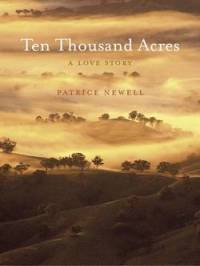
In my last post on New England Australia - writers I mentioned that I was reading Patrice Newell's book the River, the story of the Pages River in the Upper Hunter. I can hardly wait to finish to read her next book, Ten Thousand Acres.
I did not realise when I started reading that Patrice was quite famous. I bought the book because it was another book on my New England. Now I am loving it.
It's not just that she writes well, and she does. It's not just that I am learning new things, and I am. Here, and so far, I especially like her catchment stories. But her writing is (unexpectedly) like an old and familiar friend.
I began this blog because I wanted to save and present the broader New England that I loved, a New England that I feared was becoming lost. While Patrice may not realise it, her writing is saturated with that New England, reminding me also of just how integrated that New England was.
I may not always agree with her. I have a more positive view of former State National Party Leader George Souris, and not only because we went to the same school. But whether I agree or not, so much of her writing creates particular resonances.
Patrice writes of the architect Horbury Hunt who designed a number of buildings in her immediate area. Hunt's building across New England include St Mathias's Church, Denman (1871), St John's, Branxton (1873), the Anglican Cathedrals at Armidale (1871) and Grafton (1880) and Booloominbah at Armidale (1888). Along with the Maitland Pender family who designed buildings such as Belltees and Saumarez, Hunt has left an indelible imprint on New England's built landscape.
Patrice also speaks of the Burning Mountain near Wingen where a long burning underground coal seam creates a volcano like area. I first read of this in a 19th century news magazine held in The Armidale School Library, then a repository of many ancient publications that today would be antiquarian finds. Many years later I dragged my then young daughters up the hill, standing in the spot Patrice describes looking over the Pages.
She describes the Wright family graves. I have not seen these, but years ago after having read Judith Wright's Generations of Men for the first time I searched for and found Dalwood, the family home described in the book. It was then semi-derelict, but enough remained to give a real feel. Patrice also mentions Ric Wright, someone I also knew.
She mentions excursions with Helen Brayshaw to find Aboriginal sites along the Pages.
Many years ago I trained with Helen under Isabel McBryde.
In 1960 Isabel was appointed to Australia's first titled position in Prehistory and Ancient History at the University of New England. Up to that point the few pioneering Australian prehistorians had worked in a scatter gun fashion on isolated sites across the country. From these digs they tried to create cross-country cultural sequences. This made sense if but only if the Aborigines were homogeneous across the continent, which was not the case.
Working under the influence of her mentor, John Mulvaney, Isabel pioneered the study of Australian prehistory at regional level. In doing so, she gathered a group of students around her including Helen and myself to provide help. We went on weekend survey missions across the North Coast, Tablelands and Slopes, took part in digs during some vacations, worked as research assistants during others sorting and recording Aboriginal implements. It was fun.
In 1965 Sharon Sullivan completed the first pre-history honours thesis under Isabel's guidance. 1966 saw the first full pre-history honours class. Many of Isabel's students including Helen and Sharon went on to distinguished careers in Australian prehistory and archaeology. My own route was different, taking me into economics and work with the Australian Treasury. But I retained my very fond memories of the earlier period.
Patrice's writing brought this whole past flooding back.
Saturday, August 12, 2006
New England Australia - Writers

I am presently reading Patrice Newell's book the River (Penguin, 2003).
The book is the story of the Pages River, a short Upper Hunter Stream that rises in the mountains near the Capuchin Hermitage, flows south through Murrurundi, Blandford, to the west of Scone and then through Gundy before joining the main Hunter River.
I bought the book at an airport because it looked interesting. At that point, and I admit this is a gap on my part, I had no idea that Patrice Newell had been born in Adelaide, that she and partner Phillip Adams (the Australian writer and commentator) had purchased Elmswood Farms at Gundy to establish a biodynamic farm, that she had already written a best seller, The Olive Grove, on the treachange experience.
This knowledge gap reminded me of one of my long standing hobby horses, the way in which the absence of any formal structures for New England prevents people recognising the existence of New England writers and other creative people. And there have been a remarkable number of New England writers including both those who were born there, Judith Wright is an example, and those such as Patrice who came to live there.
There are two quite different aspects to this problem.
Can we in any meaningful sense talk about a unique New England literary tradition?
I am not sure that we can.
The writers who grew up in New England were certainly influenced by the experience to greater or lesser extent.
The Australian playwright and writer Alex Buzo was born in Sydney in 1944 and came to Armidale as a boy when his dad was appointed by Thiess as engineer on the Oakey Hydro Electric Scheme. His first play, Norm and Ahmed was produced in, I think, 1968. Alex loved Sydney life and escaped back as soon as he could, but his Armidale experience including his time at The Armidale School had an enduring influence on him and he retained his links to New England.
Some writers also tried to create unique literature in the face of what they saw as dominance by narrow Sydney intellectual elites such as the Balmain school.
In 1979 Kardoorair Press was established primarily as an outlet for poets based on the Northern Tablelands region of New England or with an affiliation with the region. Kardoorair's first publication was released in January 1980 and has been followed by sixty more.
Kardoorair along with Fat Possum Press provided an outlet for New England poets and writers such as Michael Sharkey and Julian Croft. Have they been succesful in creating a unique tradition? Perhaps they have, although I am not aware of any studies on the issue.
This brings me to the second aspect of the problem I referred to. The absence of formal structures not only impedes the development of literary traditions, but actually makes it hard for people to access the New England experience, keeping it limited and fragmented.
The poet Les Murray was born at Bunyah on the North Coast and has now returned there. His early life and influences have had a significant impact on his poetry. The writer Bob Ellis was born in Lismore. Again, area and family experiences have had a significant impact on his attitudes and writing. The writer and academic Donald Horne was born at Muswellbrook in the Hunter Valley. Ditto. Judith Wright was born in Armidale into a wealthy squatting family.
Each of these writers has had a different experience depending upon location and date of birth. Our inability to put them into a context, to see the commonalities and differences with other New Englanders, is a real problem. Indeed, many New England writers who have moved on would probably not see themselves as New Englanders or be able to see things outside a local context. Point local, counterpoint Sydney or national, with nothing really in the middle.
I will return to the history of New England in my next post.
Update
RMWB kindly provided this update:
- Michael Sharkey's web page is now located here: http://www.une.edu.au/ect/staff/msharkey.php
- and Julian Croft's is here:http://www.une.edu.au/ect/staff/jcroft.php
Thursday, August 10, 2006
New England Wine Regions - Hastings Valley
The Hastings Valley region is located 390 kilometres north of Sydney, 557 kilometres south from Brisbane, around 230 kilometres south and east from Armidale.
Port Macquarie at the mouth of the Hastings River, now the largest centre with a population of over over 40,000, was founded in 1821 as a penal settlement. Wauchope, for long the Valley's main commercial centre, began as a timber centre and is the site of Timbertown, a major heritage attraction.
The first wines were planted in the 1860s. However, and as happened to the New England Tablelands' wine industry, wine production declined before re-emerging in recent years because of the influence of the Cassegrain family.
The family pioneered the use of the French hybrid and fungus resistant Chambourcin grape along Cabernet Frank, Cabernet Sauvignon, Merlot, Shiraz, Chardonay, Sauvignon Blanc and Semillon. Today the Valley has a number of vineyards.
The combination of quality wines, cellar door facilities, music events, good regional restraurants with surf and other coastal attractions are all building interest in the Hastings' wine industry. Wine Diva provides further information for those who are interested.
Sunday, August 06, 2006
New England Wine Regions - New England Tablelands and Slopes

The second Regional New England Wine Show will be held at Glen Innes in the first week of October 2006. In addition to Tablelands' growers, winemakers from adjacent viticultural areas - Hastings, Northern Slopes outside New England, Western Plains and the Queensland Granite Belt will also be exhibiting.
While the New England Tablelands and adjacent slopes is today classified as a new wine producing region, it is in fact a re-emerging region with a long history.
In my post on New England Wine Regions - Hunter Valley I spoke of the role played by George Wyndham in establishing the Hunter Valley wine industry. I also mentioned that in 1831 he brought the 100,000 acre property "Bukkulla" near Inverell on the edge of the Northern Tablelands and there established another vineyard. Other settlers also planted vineyards and made their own wine.
By 1870 George had 10ha of vines bearing fruit which contributed to the total 11,000 gallons of Wyndham Estate wines being produced. By 1905, wine production from the Inverell area of New England was 227,000 litres from seven or eight larger vineyards and a number of smaller vineyards.
Between 1870 & 1920 wines from the area won many awards at wine shows in Sydney, Amsterdam, London, San Francisco, Chicago & France. A prominent English wine judge of the time wrote of the Bukkulla wines, “(They) have a character and quality above the average of most wine-producing countries. The lowest quality is better than a large proportion of the ordinary wines of Europe, while the best would not suffer in comparison to the finest known growths”.
Thereafter wine production went into decline, re-emerging over the last ten years.
The New England Tablelands area is unlike any other grape growing region in Australia because of its diversity. Vineyards range from cool climate vineyards along the spine of the Great Dividing Range(a good number of vineyards are above a 1,000 metres) to the lower and warmer sites on the western edges of the New England Tablelands.
Wine Diva provides an excellent source of information for those wishing to find out more.
Thursday, August 03, 2006
Snippets
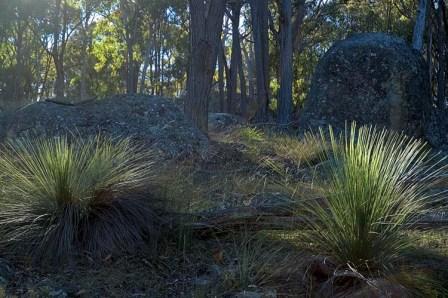
One of my favourite blogs is Look and See. Produced by Gordon Smith, this is a pictorial blog of the landscape and life of rural Australia around Armidale.
Gordon tries to post a daily photograph. They are quite simply wonderful.
Byron Bay blog is another New England blog that I have just found. I have not properly explored this one yet, but it looks interesting.
The University of New England is presently carrying out a full strategic review.
Founded in 1938 as a college of Sydney University, the University is New England's oldest university. Details of the review can be found on here. The review is also being discussed on at least two blogs, Personal Reflections and The Ideal UNE.
Tuesday, August 01, 2006
New England Wine Regions - Hunter Valley
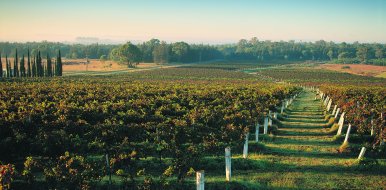
Located approximately 160 kilometers north of Sydney with a population of around 700,000, the Hunter Valley is New England's best known and Australia's oldest wine growing region.
In 183o George and Margaret Wyndham purchased "Annandale" in the Hunter Valley, renaming the property "Dalwood" and building Dalwood House as a home.
In 1828 George had planted his first grapes using 600 cuttings purchased from James Busby. Following the purchase he immediately made the first commercial planting of shiraz at "Dalwood". Then in 1831 he brought the 100,000 acre property "Bukkulla" near Inverell on the edge of the Northern Tablelands and there established another vineyard.
The first "Dalwood" vintage produced in 1831 was not a great success which due to the "extremely hot conditions promised to make good vinegar." Thereafter wine growing expanded rapidly. By 1860, Wyndham's total holdings were producing 11,000 gallons of wine.
The story of these early days can be found in The Generations of Men (Oxford University Press, 1955) by Judith Wright, one of Australia's best know writers and herself a member of New England's Wyndham/Wright pastoral dynasty. "Dalwood" itself is now the home of Wyndham Estate Wines.
The Hunter Valley offers great variety in scenery and activities.These range from the surfing beaches around Newcastle to the mountain country of the Barrington Tops to the Myall Lakes to the open rolling country of the Valley itself.
The Valley is relatively compact in geographic terms.This allows visitors to easily experience a range of scenery and activities. However, time needs to be allowed if you are to really enjoy the variety of wine tasting opportunities!
There are a number of wine growing areas within the Valley, with vineyards ranging from major commercial enterprises to small boutique operations. It's not really possible to visit them all, so you need to plan your trip.
There are many Hunter Valley web sites. One of the best from a wine and food viwepoint is http://www.winecountry.com.au/. Another general site is http://www.huntertourist.com.au/.
Many of the vineyards have their own sites as well.
Thursday, July 27, 2006
New England Australia gorge country
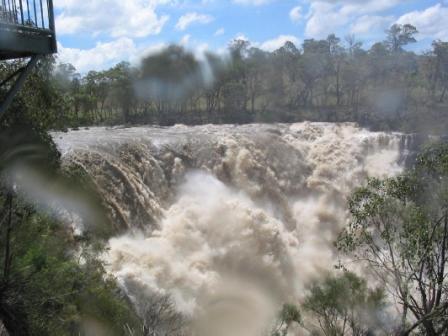
In my last post I provided some references on the Country Party to support my historical analysis.
I was going to continue the historical theme, but an email from Nicole Payne (John Campbell Communication & Marketing - http://www.jccm.com.au/) reminded me that this blog is meant to be about the life and culture of New England, not just its history. Nicole's email contained some wonderful pictures of New England's gorge country plus some supporting information.
In previous posts (see Geography of New England: overview, Geography of New England: impact of Great Diving Range) I have spoken about the region's geography and especially the impact of the the Great Dividing Range and its rugged eastern edge on New England's life and history.
The fast flowing coastal rivers have cut huge gorges through the escarpment, some stretching into the centre of the New England Tablelands. This creates a varied mix of spectacular country including major national parks running from the Barrington Tops in the south up to the Queensland border.
These parks can be accessed from either the coastal valleys or from the various Tablelands cities and towns. Each place offers access to different types of spectacular country.
There is not space in this entry to provide complete information - that deserves a number of entries. However, two examples will give an initial taste.
At Walcha on the Southern New England Tablelands, Oxley Explorer offers tours using "okas", 4WD vehicles seating up to 13 people, of some of the most spectacular of the gorges east of Walcha including the Apsley Gorge of the World Heritage listed Oxley Wild Rivers National Park.
Sixty four kilometres north of Walcha, the Central Tablelands city of Armidale offers access to another set of gorges. There Fleet Helicopters offers a number of helicopter tours across the local gorge country.
This includes Heli Adventure transport, a specialised service for independent travellers and groups who want to be dropped into rugged and wild country. Fleet Helicopters can provide transport, food and equipment drops for camping, hiking, rock climbing, mountain biking, kayaking and fishing.
Subscribe to:
Posts (Atom)





