Showing posts sorted by date for query Robinson. Sort by relevance Show all posts

Sunday, September 03, 2017

The Western Bundjalung Native Title Decision


The photograph from ABC North Coast shows some of the traditional owners gathered to hear the Federal Court’s decision on the Western Bundjalung Native Title Case.

This post discusses the Federal Courts decision on the West Bundjalung application for Native Title under the Commonwealth Native Title Act 1993. I have given some links within the post, with the major media sources I have drawn from listed at the end of the post. The Federal Legislation is different from the NSW Aboriginal Land Right Act 1983 that, among other things, granted NSW Aboriginal peoples certain land rights and provides for the administration of that land including the NSW Aboriginal Land Council and Local Land Councils.

By way of background especially for international readers, the Bundjalung are one of New England’s biggest language groups whose territory stretched from the Clarence River onto the Northern Tablelands and into what is now Queensland. There are a number of Bundjalung dialects whose speakers occupy major territories within the overall territory.

The map gives an indication of the full Bundjalung territory.

The Decision

Tabulam, 29 August 2017.Around 400 people including traditional owners gathered in a crowded marquee erected on the local racecourse as a temporary courthouse to hear the consent determination delivered in the long-running Western Bundjalung Native Title case.

After a Welcome to Country and traditional smoking ceremony, Federal Court Judge Jayne Jagot delivered her consent judgement. This granted the native title claim, legally recognising the rights and interest of the Western Bundjalung people as traditional owners of the land, including the right to camp, hunt, fish, gather resources and conduct their cultural practices on their country, as well as the right to be consulted on matters including mining applications on their land that affect the management of their land. You can find the full decision here.

The Western Bundjalung determination is the 10th in NSW since the Native Title Act came into force in 1993.

While not very clear, the map provides an indication of the scope of country covered by the determination.  

Western Bundjalung territory extends from the Clarence River at Moleville, north of Grafton, to Carpet Snake Creek, north of Tabulam, and from the Hogarth Range in the east to Bald Rock National Park in the west.

It includes the Aboriginal settlements at Baryulgil, Malabugilmah, Jubullam Village and Jubal. The two main water courses of Western Bundjalung country are the Clarence River and the Rocky River.

The claim area covers more than 5,000 square kilometres and contains 24 national parks, nature reserves and state conservation areas. A total of 820 land identification areas have been granted native title within the Western Bundjalung claim boundary.

This includes all national parks and state forests within the claim perimeter. However, there are some lots within the parks and forests that are not having native title recognised because investigation showed that it was freehold land  which extinguishes native title.

A long and arduous process

The path to the consent determination has been long and complicated.

In the 1990s, some six native title claims were lodged for different portions of land within the Western Bundjalung nation. It wasn't until 2011 that the descendants of about 19 apical (literally sitting at the apex) ancestors from the area united to lodge a combined claim.

From that point, the claimants had to establish that they that they were descended from apical ancestors living within the claim area prior to British settlement. They had also to establish a continuing cultural connection with the land handed down over the generations since the Europeans occupied the land.

To achieve this, a research team supported by the NTSCorp conducted anthropological interviews and undertook research to establish genealogy and cultural connection and continuity. 

Dr Ken Lum, NTSCorp Research Manager, said the group's evidence to prove their continuing connection to country was strong.

"Numerous claimants gave affidavits about the connection to country including information about Dreaming stories and continuing cultural practices such as turtle diving," he said.

In addition to the evidence required to establish the basis of claim, land tenure research is required to determine where native title could be established to avoid clashes with freehold titles

Once the evidence has been agreed on between the claimants and the relevant government bodies the claim is determined in the High Court or the Federal Court.

In all, more than 250 people, including indigenous elders and community members, were involved in the native title negotiations for parcels of land within the Western Bundjalung nation..

The process is complex even when all parties agree. A report released by the National Native Title Tribunal in 2009 said native title claims take an average of six years to resolve in the Federal Court when all parties agree.

The high levels of evidence needed to prove native title coupled with lengthy court processes and cost have been cited among the main factors that delay native title determinations.

In delivering her judgement, Federal Court Justice Jagot stated that the native title process was still taking too long in New South Wales.

"It's taken six years to get here from the filing of the claim and many years I know in the lead up to the making of that claim," she said. "They've not been easy years".

"I believe that this does perpetuate injustice by other means."

Reaction

I have drawn together a number of the responses reported in the various media reports.

Gary Brown, a member of one of 10 families who made the joint Western Bundjalung claim, said the unified approach adopted by himself and the other applicants could be the key to getting other claims considered in a more timely manner.

"I think we might set a precedent here," he said. "Where others can be able to look at our claim, and say, pick a few things out of it. So it will be good for them to go ahead."

Applicant Joan Hippi cried tears of joy as the determination was made. "First and foremost, I wish to acknowledge the land we stand on today cause it is a foundation for social, economic and employment outcomes for our future generations," she said. "This is a big thing for us today. This is the start of a new beginning."

Applicant Dave Walker said he would celebrate in the best way he knew how.

"I might just sleep … sleep on my land down here tonight on the side of the river," he said. "I've got no blanket or anything but I'll just go down and make a fire and just sit up and enjoy it, I think. Because it's our land."

The NSW Aboriginal Land Council (NSWALC) welcomed the decision. Tina Williams, NSWALC councillor for the North Coast, said the determination provided rights and recognition for future generations.

‘The Western Bundjalung determination strengthens our connection to country and our ability to teach culture,’ she said. ‘While the claim was lodged in 2011, the fight for land justice and recognition goes back a long way.

‘Our Elders fought tirelessly for this day and I pay respect to those who sadly passed away while the claim was being determined.”

Cr Williams said the determination also showed how Land Rights and Native Title could work together. Today is a great day for Land Rights and Native Title. We may operate under different legislation and systems but we work together.

Jubullum, Baryulgil, Casino Boolange, Grafton Ngerrie, Moombahlene and Jana Ngalee Local Aboriginal Land Councils have been part of this journey.‘When Native Title and Land Rights work together, we can focus on the bigger picture of building our people economically, social and culturally.’

In my introduction, I mentioned that the NSW Land Rights Act and the Federal Native Title legislation both applied in NSW in different ways. The NSWALC and the Local Aboriginal Land Councils are established under the NSW Act.

Terry Robinson is honoured to be looking after his ancestors' country. "Our country, our Jugun, has looked after us and it is now our turn to look after country."

The Native Title Services Corporation (now NTSCorp) has supported the claimants through the processes to gain Native Title. Chief executive Natalie Rotumah, herself a Bundjalung woman, credited the hard work of the western Bundjalung community for their commitment to securing native title.

She paid respect to those original claimants who had passed away since the claim was lodged. “It has been a long fight begun by my grandparents and the other Elders of that generation for recognition as Western Bundjalung Traditional Owners".

Next Steps

This victory is just the first step for the Western Bundjalung. They have to decide how to manage their new rights and responsibilities.

As a first step, the group have established the Ngullingah Jugun (Our Country) Aboriginal Corporation to manage their native title rights and interests. The Corporation will play a key role in representing Western Bundjalung people's interests in negotiations with government and private organisations.

Claimant Graeme Walker said the corporation will be used as a vehicle to have their rightful say about the management of their land. "Any businesses looking to do work in Western Bundjalung country should be coming to us first and we are looking forward to working with them," he said.

There is a difficulty here. While Prescribed Body Corporates are intended to establish an economic base for native title holders on their country, they have not been adequately funded by the Federal Government and has a consequence have struggled to carry out their roles, to maximise the gains that might flow from the native Title decisions.

There is also an issue as to how Ngullingah Jugun Aboriginal Corporation might mesh with the NSW Land Rights system, including the Local Aboriginal Land Council. This will need to be resolved through discussion.

Sunday, April 26, 2015

Hunter Valley v the Southern Highlands: the Hunter Culinary Association's 6th annual 'Food Fight'.

This one isn't cheap but sounds rather fun.

On Tuesday 2 June, chefs from the Hunter Valley will take on newcomers from Canberra and the Southern Highlands in the Hunter Culinary Association's 6th annual 'Food Fight'.

Hosted by celebrity Chef, Matt Kemp, the event will pit the two competing teams against each other as they push themselves to create the best 3-course lunch the regions have to offer. Dishes will be made only from the freshest, locally sourced ingredients and the passion of the Hunter Region and Canberra/Southern Highlands teams will be served on the day. These creations will be presented with an array of matching wines by leading Hunter Valley Wineries.

Guests will judge each of the six dishes, and cast their votes to crown one team the winner of the 6th annual ‘Food Fight.’

Representing the Hunter Region are culinary warriors Troy Rhoades Brown (Muse Dining), Michael Robinson (Margan), and Emerson Rodriguez (Emerson’s). The fresh-faced opponents cooking for Canberra and the Southern Highlands will be lead by a familiar face of the ‘Food Fight’ family, James Viles (Biota Dining), alongside Ben Willis (Aubergine), and Sean McConnell (Monster). 

Celebrity chef Matt Kemp will use his knife-sharp wit and vast knowledge of food to entertain and delight, whilst also hosting a worthy charity auction. The auction’s proceeds will go towards the Brett Graham Scholarship and other initiatives that focus on the growth and development of the region’s young culinary talent. 

I said it wasn't cheap. The price itself is okay. Luncheon costs $120 for Hunter Culinary Association members, $160 for non-members, and $70 for apprentice chefs. That's not too bad. But to really enjoy yourself, you need to stay overnight at the venue, the Crowne Plaza Hunter Valley. Who want to drive after a hopefully extended lunch?

To avoid missing out on this clash of the culinary titans, book early and RSVP to Kirsty on mail@hunterculinary.com.au by Friday 15th of May.

Monday, December 02, 2013

A Robinson service car on the Dorrigo mountain road

00782-Robinsons-Service-Car-on-Dorrigo-Mountain-1920c

This photograph comes from the Bellingen and Urunga Museums. It shows the Robinson service car going down the Dorrigo mountain.

It is historically significant for two reasons.

First, it shows the state of that mountain road in the early days of motor transport. Prior to that bullock drays crawled down that stretch.

Secondly, it is another example of the transport services offered by the Robinsons, an entrepreneurial New England family who had so much impact on New England transport and well beyond.  

Friday, September 06, 2013

Northern Queensland beats Northern NSW in the National Indigenous Under 16s national title

Northern Queensland has successfully defended its National Indigenous Under 16s national title after beating Northern South Wales on the Gold Coast.

An initiative of the Lloyd McDermott Rugby Development Team (LMRDT), the two day Championship, held at Bond University, exposes athletes from across the country to Rugby and life skills.

Executive Officer of LMRDT, Tom Evans, said the two day Championship provided young Indigenous athletes with more than just a weekend of Rugby.

“Ultimately the Rugby objective is selection, but the off-field objective is to encourage these young men to stay in school and continue to become better individuals and community leaders.

“At all of the tournaments the Lloyd McDermott Team run, we try to ensure the Rugby is complemented by education.”

Northern Territory, Northern QLD, Southern QLD, Northern NSW, Southern NSW/ACT and Combined States were represented in the competition, with Northern Queensland defeating Northern New South Wales 38-19 to retain the title and Southern Queensland taking third place with a 38-24 win over Southern NSW/ ACT.

This tournament provided the platform for selection of players to represent the National Indigenous squad at the Australian Rugby Union National Under 16s Championships.

The ARU National Under 16s Championships is a National residential tournament for Under 16 players for National, State or Territory representative teams, conducted annually by the Australian Rugby Union and is another important element of the Player Pathway at National, Provincial, Regional and Affiliate level.

The 2013 ARU National Under 16s Championships will be held at St Ignatius College Riverview from Sunday 29 September until Friday 4 October. Nine of the 23 strong squad come from New England. They are:

  • Cody Walker, Maclean High
  • Kurtis Langdon, Hunter River High
  • Liam Kelly-Wynn, Jetty High, Coffs harbour
  • Dylan Chown, Farrer memorial High School
  • Jakobi Robinson, St Mary's College
  • Ngangarra Barker, Hunter River High
  • Buddy Mumbulla, The Armidale School
  • Jayden Harradine, The Armidale School
  • Keiren Ford, Brewarrina Central School
  • Luke Roberts, Maclean High

Saturday, January 30, 2010

New England Motor Company - Lismore

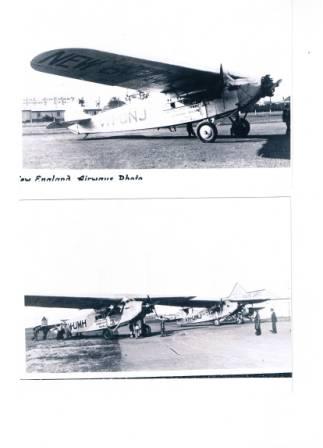
Nemco buses

Over time, I have carried a fair number of posts dealing with New England Airways.

In those posts I picked up references to George A Robinson's motor transport interests. However, I had no idea until I finally read Joan Priest's Virtue in Flying, a biography of pioneer aviator Keith Virtue (Angus & Robertson, Sydney 1975) just how important those transport interests were.

This photo shows two of the buses belonging to Robinson's Lismore based New England Motor Company.

It's not a good reproduction, but it does give you a feel for the time.

NEMCO was a pretty big operation, big enough to provide not just financial support to the unsubsidised New England Airways, but also core technical and logistical support.

Both were critical. NEA was the only major unsubsidised airline, while it began at a time when you had to be able to maintain and sometimes rebuild your planes by yourself independent of outside support. Damage from hard landings had to be fixed, while the engines themselves could be very cranky.

Mechanical knowledge was therefore critical. Here NEMCO's need to maintain its own buses meant that it had the mechanical skills to support the airline and especially in the critical early days before NEA got big enough to establish its own service facilities.

According to scuba on the Bus AustraliaNEW ENGLAND MOTOR CO LISMORE NSW WHITE MO-7390 web site, the first bus in the top picture, the WA 20 White was built by NEMCO in their own garage. I wonder how many current Australian bus lines could actually build a bus?

The second colour photo shows another variant photographed in Kirklands Garage several years after their purchase of NEMCO.

Scuba also reports that the Ranger, the second bus in the top photo, was one of a pair built by Athol Hedges in Northgate (Brisbane). These were purchased for the Lismore - Tenterfield run, but were also used on the Lismore - Brisbane run in later years until the sale of the company in 1970.

The next photo is a more modern photo of one of the Rangers.

The roads these buses travelled along could be quite dreadful, clouds of dust when dry, clinging mud when wet.NEW ENGLAND MOTOR CO LISMORE NSW AEC RANGER MO-347

Now I have discovered just how important the New England Motor Company was, I am keen to learn more. 

Here I discovered from scuba that there is a history of NEMCO - Kevin R Kirkland, comp, Life’s a journey: the Kirkland and New England Motor Company story. Lismore, the author, 1999.

There are two copies in the Lismore Historical Society collection. A trip to Lismore? 

Thursday, January 21, 2010

Belshaw's World - tragedy in New England skies

Note to readers: This post appeared as a column in the Armidale Express on Wednesday  13 January 2010. I am repeating the columns here with a lag because the Express columns are not on line. You can see all the columns by clicking here for 2009, here for 2010.

On Sunday Morning 18 September 1932 a chartered New England Airways Puss Moth took off from Sydney for Brisbane. On board were the pioneer aviator Captain Leslie Holden and his friend Dr George Hamilton, along with pilot Ralph Virtue.

Holden, a member of the pioneering Adelaide motor building firm after whom the car is named, was then thirty seven.

Enlisting in the AIF in May 1915 as a motor driver, he was one of the first batch of 200 volunteers to train in England for the Australian Flying Corps in December 1916. Holden became an ace, famous for his ability to nurse badly damaged aeroplanes home. This earned him the nicknames of 'the homing pigeon' and 'Lucky Les'.

Returning to Australia in June 1919, he became Sydney manager of Holden's Motor Body Builders. However, bitten by aviation bug and with financial support from friends, he bought a D.H.61 biplane in 1928 which he named Canberra.

Flying the Canberra, Holden operated charter flights from Mascot, Sydney.

Holden DH61 Armidale The photo taken by Leslie Henderson, John Caling’s mother's step-brother and a keen amateur photographer, shows the Canberra in Armidale. This was almost certainly the first visit by a passenger plane to Armidale.

In 1926 gold had been discovered at Wau in the then Australian mandated territory of New Guinea. A rush began.

In September 1931, attracted by the aviation opportunities, Holden and the Canberra made what was probably the first flight from Sydney to New Guinea to begin a successful air-freight business.

The second passenger, Dr George Hamilton, was a Macquarie Street skin specialist. Hamilton was a keen aerial photographer and an old friend of Holden’s. They had flown together often, including the famous rescue flight to the Kimberleys where they had found the missing Charles Kingsford Smith and Charles Ulm on a mud bank in the middle of a river.

The pilot, Ralph Virtue, was a member of a pioneering New England aviation family.

His father, Robert Virtue, was an Irishman. Hot-tempered, restless and ambitious, he had bought a diary farm at Bexhill near Lismore. This quickly grew to over 1,000 acres.

Ralph’s brother Keith, the youngest son, had become obsessed with flying. Finally, the old man told Keith that if he could get a licence, he would buy him a plane. Keith did, and the plane (a Gypsy Moth DH 60) was purchased.

As soon as Keith had obtained his commercial license, Keith and Ralph set up Virtue’s Air Travel. The new business made a precarious living out of barnstorming flights, flying training and charter along the coast and onto the Tablelands.

In 1930 after purchasing a second plane, Keith went to the New England Motor Company in Lismore to make arrangements for them to become his booking agents.

The proprietor, George A Robinson, had first founded a motor coach service at Kempsey with his brother. He then moved to Lismore to set up New England Motor Co. By 1930 this was a substantial business with services from Brisbane to Nowra.

Robinson agreed to join the Virtues and New England Airways was born, backed by the New England Motor Co.

In early September 1932, Leslie Holden arrived in Brisbane by boat from New Guinea with his wife and three young daughters. The trip was partly holiday, partly to buy new planes for the New Guinea business. On arrival, the family caught the New England Airways flight to Sydney.

In Sydney, Holden and Hamilton decided to join with friends in a holiday cruise along the Barrier Reef. The chartered New England Airways Puss Moth was therefore loaded with fishing gear, camera film, luggage and a small mail bag.

The weather was not good, but all three were used to that.

The craft arrived at Lismore for refuelling at 1.30 pm and took off again.

Crossing the Coorabell Ridge at low height to keep below the clouds, the plane was caught in a sudden downdraught. Half a dozen witnesses saw the plane appear to turn a somersault and then right itself before the left wing broke off, causing it to crash. All three men were killed instantly.

At first, the media blamed the crash on pilot error. However, while the Puss Moth was a beautiful plane to fly, it would be established that the plane had a fatal design flaw that made it prone to break up in certain circumstances.

Note on sources: This post is largely drawn Jane Priest’s great biography of Keith Virtue, Virtue in Flying, along with Carl Bridge’s ADB entry on L J Holden.

Wednesday, January 28, 2009

Belshaw’s World: why are we crushing our schools?

We presently live in a measurement obsessed world, a world of inputs, outputs and outcomes, of key performance indicators. This is a world of league tables, of standardization and uniformity, of professionalisation and accreditation.

We live in a world obsessed with risk avoidance with its associated concepts of informed consent, duty of care and risk management or mitigation strategies.

I was a strong supporter of the education reforms that began in 1988 spear-headed by Commonwealth Education Minister Dawkins because I saw them as a way of freeing up the education and training sector.

I still support many of the concepts. However, I now think that the practical effects have become quite pernicious.

Over the last few years of my daughters’ schooling, I watched what I saw as the erosion of the ethos of their school with sadness and a degree of anger.

This process stands out in my mind as a series of events.

The circulars from the school telling us of new Government requirements increased. We were required to provide new information and sign new forms.

The range of activities open to our daughters began to contract because of perceived risk. We went to our first information session on a forthcoming excursion.

A confused parent said to me “well, that was a waste of time. We know all that. Why are we here?”

“It’s got nothing to do with us”, I replied. “It’s for the school’s legal protection, so that they can say that we have given informed consent.”

Teachers began to complain privately about the new loads placed upon them. The school suddenly demanded that parents sign in at the office before going onto school grounds.

Those of us at the school all of the time for meetings or to attend sporting events simply ignored this. However, I noticed that new parents were beginning to comply.

New security cameras were introduced, followed by guards. Then came a new central security system with various alarms and self locking doors. Lock down and lock out had arrived.

This was being done, the school explained in a circular, “for the protection of your daughters.” You could be forgiven for thinking that the school had a significant security problem. It did not.

Fees continued to rise faster than inflation to pay for the new administrative staff required to meet increasing Government reporting requirements, as well as all the new security arrangements.

On legal grounds, the school decided that it could no longer coordinate the preparation of the traditional year 12 annual. The students would have to do this for themselves.

At eldest’s year 12 formal in 2005, students were banded with hospital style bands that allowed those over 18 to buy single drinks. Parents were allowed to have wine on their tables.

Two years later youngest’s year 12 formal was held at a posh Sydney hotel.

The event had to be completely dry for all. There were the usual pre-formal parties. However, upon arrival at the hotel, the kids were not just bag searched but also breathalysed. Any recording a positive reading were not allowed to enter.

Parents went ballistic. The security guards explained that they had no choice; they must comply with new NSW Government legislation.

By nine o’clock most parents had adjourned to the bar. By 11.30, half an hour before the official close, the ball room was empty as kids moved off to the after-formal parties.

Last year to the fury of my daughters and their friends, the school abolished muck-up day. This had been a pretty mild affair run under tight controls. Even this was now seen as too dangerous.

I could, perhaps, live with all this if the standard of education had improved. It declined, crushed by the growing burden of compliance and risk avoidance.

To answer my last question.

New England’s first major airline was, appropriately, called New England Airways.

Formed by George A Robinson, the Lismore headquartered company began a bi-weekly Lismore-Brisbane service in August 1931. This was later extended to a Lismore-Sydney service, creating the first Brisbane- Sydney service. The company grew to be one of the first national carriers.

Now for my next question. What is the connection between Dorrigo, cattle ranching in Wyoming and the imperial courts of Europe?

Note to readers

This column appeared in the Armidale Express on Wednesday 21 January 2009. This post brings my columns up to date with exception of the column appearing in today's Express.

In future I will publish them on a Wednesday, thus lagging them by one week after publication.

Saturday, December 06, 2008

End of Historic Toorale Station

Tooralee Station

Today (Friday 5 December) saw the clearance sale on Toorale Station, a 91,000 plus hectare property at the junction of the Darling and Warrego Rivers 60k downstream from Bourke. The sale followed Toorale's purchase by the NSW Government with Federal assistance for a reported $23.7 million dollars.

This was one big sale. The station's 30,000 strong merino stud plus its 1,500 cattle had to be dispersed, the last wheat crop harvested and sent to silo, over 900 lots of farm machinery etc collected and presented for sale. All this has seen trucks scurrying across New England and beyond in one last big burst of economic activity.

Toorale HomesteadToorale Station occupies a special place in Australian history. It was first taken up by the Europeans in 1857. From 1880 to 1913 it was owned by the legendary Samuel (later Sir Samuel) McCaughey. At various times McCaughey owned or shared in twelve stations in New South Wales and three in Queensland with a total area of about 3,250,000 acres (1,315,242 ha).

The old shearing shed on Toorale was built in 1873 and in 1894, 265,000 sheep were shorn there. Until 1880, Toorale wool was taken to Adelaide by river barge.

In 1896, Sir Samuel McCaughey built a large homestead on Toorale for his favourite niece, Louisa, who was married to his manager, Mathew Robinson. The imported Italian marble fireplace in the Toorale Room at the Port of Bourke Hotel was "rescued" from the homestead which is now in ruins.

The Australian writer Henry Lawson (and here) arrived in Bourke by train in September 1892, his one way ticket plus 5 pounds having been proved by J F Archibald of 'The Bulletin'. He spent two months living in Bourke, then walked to Toorale with his mate, Jim Gordon, where they signed on as rouseabouts for the latter part of general shearing.

After about one month in the Toorale Shed, they walked back to Bourke via Gumbalie for Christmas 1892. They then spent six weeks walking to Hungerford on the Paroo River on the Queensland border, and back to Bourke. A round journey of 450 kilometres! Lawson then worked in Bourke for about four months, principally as a house painter, writing in his 'spare time'. He returned to Sydney on a train drover's ticket in June 1893, in charge of five trucks of cattle.

Some of Henry Lawson's works from this time include "A Stranger on the Darling", "The Darling River", "In the Storm That Is To Come", and "Bourke".

This is not going to make much difference in how much water is going to flow into the darling. I have lived at toorale my whole life and know how much water the property can store. The government buying this and letting the water flow through is only going to make the town of bourke suffer and many people will lose their jobs. It all sounds so good on paper and through the media but until you go out there you will never understand how little of a difference this will make... it is a bad move. Local blog comment from Ed.

The sale, the first major land and water purchase under the Federal Government's $3 billion National Water Plan, will see the station turned into a national park, its water entitlements returned to the Darling River, and dams on the Warrego River removed.

Toorale presently holds yearly extraction entitlements for 14 billion litres of water and proponents claim that the deal means an average of 20 gigalitres will be returned to the Darling River each year.

All this has generated very mixed views.

According to Federal Climate Change and Water Minister Penny Wong, it is a deal for the environment.

Well, this is all about taking action in the Murray-Darling Basin. We know that the rivers of the Murray-Darling Basin are in difficulty.

We know that we need to do more to return water to the river for the benefit of all of the communities which rely on these rivers for their livelihoods.

We also need to do more to improve the environmental health of these rivers.

The Minister's views are echoed by environmental groups, as well as some graziers down stream who hope to benefit. However, this support far from universal.

Some doubt that the sale will have any real impact on water flows in the river.

Prior to the sale, property manager Tony McManus argued that the quantity of water he's using for irrigation is minimal.

The amount of water we store here and we take here I think would have very little impact on the lower Darling and the Murray River.

I think it would only make the river run for a little bit longer and a little bit further and I think it would have more detrimental damage done to the district than the benefits to the environment.

I think it's just a knee-jerk reaction to something that's caused by drought and low rainfall.

Others argue that there are better approaches anyway, and that the whole deal is flawed.

The government is seriously in the process of incorporating cropping land in a national park. So any pretence that this might involve even the most rudimentary need to conserve the existing ecological or habitat values of that crop land is absurd in the extreme as there are few enduring habitat attributes of a ploughed field.

And all we are left with is a very unambiguous demonstration that the underlying intention is to remove humanity from that landscape at any and every opportunity.

There is more than 14 million hectares of vigorous regrowth in the NSW part of the MDB and many more millions of hectares of thickenned woodland in both public and private tenure.

The prudent thinning of this vegetation, to return the percentage canopy cover to its pre-settlement levels, will, according to the well tested science of Zhang and Vertessy et al, deliver significantly more than the claimed requirement for 1.5 million megalitres of additional river flow. Blog comment, Ian Mott

Locals worry about the impact on the town and district economy. Bourke's population has been falling, while the town has a large indigenous population. The sale means the loss of over $5 million in agricultural production, along with an estimated 100 jobs. This is roughly equivalent to Sydney losing 750,000 jobs.

Quoting Mr McManus again prior to the sale:

It's a wonderful property and we're producing food and fibre and I would hate to see it sold off and locked up as a national park.

I think it's such a magnificent property that can produce some magnificent food crops, some wool, beef, mutton.

I just think it's too good a property to be shut down and not used for Australia's production.

It is very difficult for to balance all these arguments in the absence of proper information. Certainly some of the reporting does not help:

THE NSW and federal governments have taken the unprecedented step of buying a massive water-hungry outback cotton station to transform it into a national park as part of an ambitious multi-billion-dollar plan to save the dying Murray-Darling Basin.

NSW last night paid $23.75million, with substantial commonwealth assistance, for the Toorale cotton station in northwest NSW, in a move that will boost flows to the parched Murray-Darling Basin by up to 80 gigalitres a year. Media report on sale. Bold added.

I think that we can say the following with a degree of certainty.

The phrase "Murray Darling Basin" is misleading. The biggest problems lie in the south along the bigger Murray River. The extent to which environmental flows far up stream on the Darling will have any effect on the water position down stream in South Australia is uncertain.

If we focus just on the Darling, it may be (as Minister Wong argues) that the agreement delivers a significant boost to environmental flows in the Darling River, whilst also providing a boost to the NSW reserve system. However, I haven't really seen any compelling evidence for this. I am not saying that it isn't there, just that I have not seen it.

The NSW Government recently introduced a horror mini-budget cutting services throughout regional NSW. It has been struggling even to pay day-to-day bills in the public hospital system. So its commitment comes at a big opportunity cost.

Very roughly speaking, the purchase cost $23.75 million. To this has to be added the cost of removing the dams on the Warrego and creating minimal national park facilities. Say for rough estimating purposes, $500,000, bringing the all-up capital cost to $24.25 million. At a conservative cost of funds of 6%, this equals an annual cost of $1.94 million.

The new National Park has to be maintained. Yes, I know that NSW is already struggling to maintain its national parks, but we have to assume that they are going to spend something. There may be some income from Park fees, but this is likely to be small. Just for rough calculation purposes, assume annual Park costs are about $200,000. This brings annual costs to $2.14 million.

Cessation of rural production on the property will reduce rural production by $5 million. Add this, and the annual cost of the purchase increases to $7.14 million.

At least some of those previously directly or indirectly employed will go onto benefits. This number will decline with time as either new jobs are created or more people leave the district.

Just for rough back of envelope purposes, lets add $300,000 in additional benefits payments for the first three years. Now we have an annual cost of $7.44 million, falling to $7.14 million after three years.

Is the value of water returned to the river worth this annual cost? I have no idea. I have never seen a cost-benefit analysis.

These numbers are not mean to be precise. They do indicate the need to be cautious in simply assuming that things like this purchase make sense.

Sources

This story has been mainly drawn from the following sources.

Monday, November 24, 2008

UNE passings - death of Erle Robinson

My thanks to Gordon Smith for drawing my attention to the passing of Erle Robinson. Erle's death on Tuesday 18 November 2008 at the age of 84 marked the severing of another link with UNE's past.

I did not know Erle well, although he has been a familiar figure for much of my life. For that reason, the story that follows is largely drawn from the report in UNE News and Events with some additional comments.

Erle Robinson was born and educated in New Zealand, where he gained a law degree and practised law before developing – through a Master of Arts degree – his vocational interest in philosophy.

In 1954, the year the University of New England gained autonomy, he arrived in Armidale as a lecturer in Philosophy. From then until his retirement in 1989, he devoted his academic career to the education and welfare of his students and the health of the institution.

The UNE report notes that he is remembered by his former colleagues at the University of New England for his untiring pursuit of justice.

“He was the sort of ‘thorn in the side’ of Administration that every administration should be grateful to have,” said UNE’s current Professor of Philosophy, Peter Forrest.

I grinned at this. Erle could be a very serious person, although he also had a very broad smile and a characteristic shift of his glasses. Once he decided that matters of principle were involved, he could be remarkably stubborn. He also liked dissecting things. This sometimes made him a very difficult person at meetings!

Those who remember Erle will find the photo heading the story very familiar. It appears to be a student demonstration, with Erle standing there in characteristic clothes and stance.

Professor Forrest said he had encountered former students whose most vivid memory of their university days was “Erle teaching them ethics”. And Mr Robinson’s colleagues – even those who were his antagonists in one or other of his campaigns for institutional justice – all remember him with fondness and respect.

I was one of the students who studied ethics as part of my Philosophy I course. This whole course was one of the most profoundly influential courses that I did. It taught me to dissect and clarify issues. The ethics course itself with its focus on different ethical schools made me cautious about absolute external ethical values of any type - the derivation of values was central.

As a leading figure in UNE’s development of philosophy programs for external students, Erle upheld the principle that external students should be taught and examined according to the same standards as internal students. It was his “pragmatic advice” (as one former colleague put it) that “helped to shape the University’s external Bachelor of Arts degree”.

This principle of equality of standards was deeply held within the University and important in gaining broader acceptance that external degrees were as good as internal. At the time there was considerable opposition to external studies in Australia's older universities including Sydney, centred on the argument that a university education required continuing on-campus contact. The UNE approach combined external teaching with direct staff-student contact through things such as residential schools.

In 1957 Erle was elected to represent undergraduate students on the UNE Council, and he continued to serve in that role until 1960, when he took a year’s study leave. From 1976 to 1980, and then again from 1982 to 1984, he served as a member of Council elected by the academic staff. He served as President of the UNE Teachers’ Association, and was active in the Student Christian Movement, another organisation that I was a member of as a student.

Erle retained is interests (and causes!) following his retirement. He continued his interests in ethics and ethical issues, participated in forums and was a member of the Council of Civil Liberties.

In 2003 he delivered a paper at the 50th annual Australasian Association of Philosophy conference (photo), just as he had delivered a paper at the first one in 1953!

The UNE story suggests that his life-long pursuit of justice was remarkable for its integrity: his determined opposition to what he believed to be wrong was balanced by a lack of personal rancour. “He never bore malice,” one of his colleagues recalled.

I think that that's right from my own experience.

Erle Robinson’s unique contribution to UNE over 35 years was a product of that integrity.

He is survived by his wife Marcia (whom he married in 1960), their daughter Christine, and their grandchildren Timothy and Genevieve. Their son Stephen was killed in an ice avalanche on Mount Cook, New Zealand, in 1997, something that I had not known.

Sunday, June 17, 2007

The North Coast's Robinson Family - a note

I have referred to the Robinson family a number of times because of their pioneering role in the development of transport within New England.

A web search led me to notes prepared by Andrew Lancaster on the early history of the family, recorded here so that I do not lose later track of them.

Sunday, April 22, 2007

New England Australia - what brings people to this site

I have been reviewing visitor patterns to see what brings people to this site.

Of the last ten hits, one was a direct hit, one a referral from the New England History blog, eight came in through search engines.

The first search on Google Australia but whole web was on nsw election 2007. The story I did on the New England results came up on the first page and drew the visitor. The search also picked up two broader posts I did on Personal Reflections , so three of the top ten items picked up by Google were in fact written by me.

I write from a personal perspective, but I also try to give both links and data, so I hope that the visitor found the material of some use.

The next search, again on Google Australia and whole web, was on "G A Robinson" Lismore. I have mentioned Mr Robinson a number of times in the context of the foundation of New England Airways (list of posts here), so these posts came up in the first ten hits.

I had not done this exact search myself before, so picked up a few more references myself. One was a short factual note on oldbeacon, a second a passing reference in John Gunn's book on Amazon.

The third search on Google was buzo, alex. This picked up, again in the first ten references, the story I wrote about his death. I have noticed over time a steady interest in Alex. The story on him on Wikipedia is very short. I hope that someone with more literary knowledge than I have will extend it at some point.

There were two searches, different IPs, on Google Australia but whole web on Slim Dusty. Both picked up the story on the Slim Dusty Centre project in Kempsey.

Interestingly, the first search on slim dusty history brought the story in among the first ten. In the second on just slim dusty the story came in at number 43, so my visitor had to go through a few pages to find it.

History birpai tribe on Google Australia whole web brought this blog up in the first ten. I am sure that whoever was searching was disappointed because I have only one passing reference. I can do something about this.

A ninemsn search on the university of new england's centre for local government brought this blog up number one. A totally undeserved result brought about by the way the search engine robots combine words.

Finally, a Google search on towns in new england nsw captured the story I wrote on New England's poor towns at number 3.

This result made me a bit uncomfortable. That story was sparked by Professor Vinson's study of disadvantage and addressed a failure in public policy. I would not want the post to be seen as a total story of all New England towns.

I have written about a fair number of places. I wonder how I can make this more accessible?

A few late additions

I had just finished this post when a few new hits appeared.

Still on the weird and wonderful was the search on Google on number of children per Morman family 2007. I have one reference in one post to the Morman Church, the story on my year five class at the Armidale Demonstration School that somehow bringing the site up in the first ten.

Next came a search on ninemsn on stats youth crime in cessnock nsw australia. I think from the words on the search page that my post on the NSW State Plan was the trigger here, but when I followed the msnsearch link back it bought up a number of posts in a series, some form of consolidation brought about by the msn search robots.

Then there was the search on king family at bingara. Here my story on the death of David Armstrong who was born in Bingara and was known as the king came up as the second item. I hope that my visitor found the story of some interest, although it had nothing to do with the King family as such.

I am always interested in New England families, so followed some of the links myself.

The first click led me to Message Stick on the National Indigenous Times (19 April 07) focused on finding missing relatives. Nothing on the King family, but interesting.

Then a click took me to the Peerage.com, a genealogical survey of the peerage of Britain as well as the royal families of Europe. This is a somewhat eccentric but interesting site maintained by Daryyl Lundy in New Zealand.

Here I learned that D'hrie King, the daughter of Frank R King of Bingara, married Sir William Windsor Broun of Colstoun, 13th Bt. Here I found a list of people with some connection to the peerage grouped by NSW town or suburb. The list is not complete, the Crofts are not on it as a New England example, but it is still an interesting byway.

Another link led me to Joyce and Neville Bryant's home page.

While they now live in Stanthorpe just over the New England border in Queensland, Joyce was born in Glen Innes and then boraded in Armidale to complete her secondary education at the Armidale High School in the early 1950s. The site includes some interesting material on the Hartman family of Glen Innes.

Yet another link led me to Aussie Rhonda's Geneology site. This is a very good site with a strong focus on the western New England Tablelands and slopes. It includes a useful page of resources. Saddly, when I went to leave a message in the guest book I found that this section of the site had been closed because of, you guessed it, the impact of spammers.

Saturday, April 07, 2007

New England Airways - two more photos

My thanks to Bruce Robinson for sending me some more photos of New England Airways, New England's first major airline. For those interested in the history of New England Airways, a list of previous posts on NEA can be found at the end of this post.

I normally compress photos to save space and speed loading. However, if I load the full photo you can then see the detail by clicking on it, so that is what I have done in this case. Later: This does not appear to work in this case. Not sure why.

Photo: The following photo shows a Shell tanker fuelling the Ryan. Bruce advises that the vehicle is a Crossley and was converted from the limo that was used by the Duke of Gloustershire during his visit to Australia.The guy in the seat of the Crossley was Ralph Virtue (Keith's brother) who was killed in the Puss Moth crash near Byron Bay.


Photos: The first photo shows the Ryan outside the NEA hangar, the second shows a Stinson flying over Sydney.


Previous Posts

11 September 2006. New England Australia - Aviation introduces the story of the founding of New England Airways by George A Robinson.

12 September 2006. New England Airways - Postscript provides access to some very good early photos of NEA passengers.

14 September 2006. New England Airways - Follow Up contains some further musings plus photos.

17 October 2006. New England Australia Aviation Pioneers - the Virtues introduces another pioneering New England family closely associated with the history of New England Airways.

4 January 2007. Transport Pioneers - The Robinson Family; a further note outlines the early story of the Robinson family as transport pioneers in the Macleay Valley.

Thursday, January 04, 2007

Transport Pioneers - The Robinson Family: a further note


Photo: Passenger vehicle used by Robinson Bros Motor Service, Kempsey.

As I dig into New England's past, I find it interesting that the influence of certain families keeps on recurring in particular sectors.

In earlier posts I spoke of the Robinsons and Virtues in the context of New England Airways and the development of civil aviation in New England and beyond (see stocktake on transport posts). Now reading Marie Neil's Valley of the Macleay (Wentworth Book, Sydney 1972 pp-79-80) I found out that the Robinson family's connection with New England actually began in the Macleay Valley.

Around 1859 George Robinson came to the Macleay Valley, soon after selecting land at Jerseyville in the Macleay delta downstream from Kempsey. He and his brother John ran a river boat service for some years (river transport was critical to Valley transport and communication) until the partnership was dissolved and George became a storekeeper at Jerseyville.

No less than four of George's sons were to become well-known in the early days of motor transport on the North Coast.

George A Robinson who was to go on to found New England Airways began conveying passengers in a sulky or buggy. In 1910 he began a charter service using a two cylinder Talbot car (and here) followed by a four cylinder Clement Bayard (here, in French I'm afraid) used to provide a twice weekly passenger service to Taree.

In 1911 George A acquired a vehicle capable of carrying ten to twelve passengers on the run and was joined in the venture by brother William T Robinson. George A was to move to Lismore and leave the partnership, although I am not sure of the exact chronology of events since Robinson Bros also (I think) operated out of Lismore.

William carried the business on, adding more vehicles and extending runs to Newcastle and Grafton before he too left the district, moving to Grafton where he later became mayor.

In addition to George and William, Walter and Albert Robinson also became involved in land transport, running early mail and passenger services between Kempsey and South West Rocks.

These early days of motor transport could be strenuous and adventurous. The often heavily laden cars travelled over unformed dirt roads that were often rough, dusty when dry, boggy when wet.

Tuesday, October 17, 2006

New England Australia Aviation Pioneers - the Virtues


Photo: Australian National Airways Captain Keith Virtue posing with DC-3 VH-ANR "Oana". Keith Virtue was the first Australian pilot to accumulate 20,000 hours.

Source Virtue family collection, from the Cuskelly site. This site includes a range of aviation related material, including the story of Adastra, another of Australia's pioneer aviation companies. The Sydney based Adastra was founded in 1931, finishing its life in the 1970's shortly after its acquisition by East West Airlines and the relocation of its HQ to Tamworth.

My thanks to Bruce Robinson and to John Lee from Chicago for more material on New England Airways and those associated with the company. I am still absorbing this. In the meantime, a brief snippet on another part of the pioneer story, Keith Virtue, who was a pilot with New England and went on to a long and distinguished career in Australian civil aviation.

Thanks to Bruce and John I now know that there is a biography of Keith that also covers the early days on New England Airways and of Airlines of Australia, Joan Priest's Virtue in Flying. (Angus and Roberston, 1975). So I have put this on my list to find, read and report back.

As I presently understand it, Keith was the youngest of ten boys and grew up near Lismore. An elder brother Ralph was also a pilot with New England and was killed in the NEA plane crash that also saw the death of pioneer aviator Leslie Holden plus another. I understand that there is a memorial near the crash site.

Again as I understand it, Keith married one of G A Robinson's daughters. By the end of his flying career Keith had established what was probably a world record of around 40,000 commercial flying hours, a title later taken over by his nephew Jason Hassard, 42,000 hours. I think that Jason was also a pilot with Airlines of Australia.

I will write more later. In the meantime, checking material reminded me that one of Australia's most famous air crashes involved an Airline of Australia Stinson flying btween Brisbane and Sydney in 1937. The plane crashed on the Lamington Ranges shortly after take-off from Brisbane. A search failed to find the wreckage.

Nine days after the crash, Beaudesert grazier Bernard O'Reilly set out on foot to find the plane. Through his superior bush skills he found the crash site and, to his surprise, two survivors in desperate need of medical attention. After making them comfortable, he left them to organise a rescue party. The full story can be found in the Queensland Government archives.

Saturday, October 14, 2006

New England Airways - Follow Up


Photo: New England Airways, Avro10s, photo courtesy of Bruce Robinson.

While this blog has a historical focus, one of the nice things about it is that I am not bound by the canons of academic discipline. Yes, I do try to observe proper standards, but because I do not want an academic career (it's a bit late for that!), I do not have to subject myself to the whole rigmarole. I can go where I like.

My aim when I started was to capture and document the New England experience before it was lost, hopefully drawing others in. I am starting to get there.

In earlier posts I spoke of New England Airways (here(1) and here(2)).

I first came across a reference to New England Airways back in 1982 when I was doing my PhD thesis. I was fascinated. I knew Don Shand and the story of East West Airlines (story), but I had never heard of New England Airways. Yet here was a pioneer airline of some substance holding the Sydney-Brisbane mail contract that had somehow vanished. I could not do anything about it at the time, so put it aside.

When I launched this blog and came to write something for the first time on New England aviation I made finding out something about New England Airways my first priority. While the on-line historical record was skimpy it did allow me to fill in some gaps. In turn, this led Bruce Robinson, the grandson son of New England's founder George A Robinson, to contact me. Now we may be able to fill in some gaps.

Does this matter? I think that it does very much and not just from a New England perspective.

Today when airlines are the bus lines of the sky, we forget the romance and the physical and commercial risks associated with this early period. Nevile Shute, one of my favourite authors, brings this early period alive in many of his books. New England Airways was a major player in this early period and deserves to be remembered for that fact alone.

Monday, September 11, 2006

New England Australia - Aviation


Photo. New England Airways Avro parked at Archerfield, Brisbane c 1933.

New England has had more than its fair share of pioneer aviators. Unfortunately, like so much of New England's history, this has become submerged in the mists of time.

When I started at TAS (The Armidale School), a former senior prefect Sir P G Taylor was one of the school hero's.

Taylor was involved with flying since at least 1916. Perhaps his most famous exploit came in 1935. The story that follows is drawn from Keith Isaacs' ADB entry on Taylor given in the previous link.

Taylor was Kingsford Smith's navigator in the Southern Cross for the King George V jubilee airmail flight (Australia-New Zealand). After flying for six hours, the heavily-laden aircraft had almost reached half-way when part of the centre engine's exhaust manifold broke off and severely damaged the starboard propeller. 'Smithy' closed down the vibrating starboard engine, applied full power to the other two, turned back to Australia and jettisoned the cargo. The oil pressure on the port engine began to fall alarmingly.

Climbing out of the fuselage, Taylor edged his way against the strong slipstream along the engine connecting strut and collected oil from the disabled starboard engine in the casing of a thermos flask. He then transferred it to the port engine. With assistance from the wireless operator, John Stannage, he carried out this procedure six times before the aircraft landed safely at Mascot some nine hours later. For his resourcefulness and courage, Taylor was awarded the Empire Gallantry Medal.

This episode was portrayed in Ken Hall's 1946 film, Smithy, a film I saw later in the TAS Assembly Hall where films were held every Saturday night for the boarders. I was one of a small number of day boys, but always used to go.

The first New England based airline that I have found was called, appropriately enough, New England Airways. It appears that there have in fact been three New England Airways at different points in New England's history.

Headquartered in Lismore, the first New England Airways (NEA) was formed in 1931 by George A Robinson with Sydney solicitor Arthur Allen as chair.

In August 1931 NEA began a bi-weekly Lismore-Archerfield (Brisbane) service, later extended to a Lismore-Mascot (Sydney) service, thus creating a Brisbane- Sydney service. The popularity of the service was such that NEA purchased a tri-motor Avro 10 and extended the service to a daily one.

Flying had real dangers in these early days of civil aviation. On 18 September 1932 an NEA Puss Moth flying from Sydney to Brisbane crashed near Byron Bay. Among those killed was the pioneer Australian aviator Leslie Holden.

The industry was also very unstable in financial terms, with companies emerging, closing or merging all the time. G A Robinson took advantage of this, acquiring other airline assets including those of Murray Valley Aviation as well as Australian National Airlines' (the airline founded by Kingsford Smith) Mascot hangar and workshop and one of its planes. With broadening horizons and national ambitions, New England Airways was renamed Airlines of Australia in 1935. Then, in 1942 the second ANA formed by the Holyman family in 1937 acquired Airlines of Australia, giving ANA a dominant position in Australian civil aviation.

As we shall see later, this first New England Airways established what was to be the dominant pattern in New England civil aviation, regional growth followed by broader expansion, acquisition, and ultimate disappearance.

Tuesday, July 04, 2006

The past is always present

In a comment on my last post on the rise and fall of the paddle steamer, Geoff Robinson spoke of the change in electoral fortunes around Echuca. I commented that I found it interesting the way traditional patterns hold on, just as interesting the way they sometimes change quickly.

In cultural terms, the past is always with us even if we do not recognise it. Sometimes the past takes the form of a granite outcrop, the current Australian fascination with ANZAC day is an example, that all can see. At other times, its influence is far more subtle, largely unseen. Yet it can still be important. In other cases still such as the British empire, the granite that has marked the horizon for generations can suddenly erode in a few short decades.

Over most twentieth century New England the two dominant political parties have been the Labor and Country Parties.

Labor Party influence has been centred on the industrial city of Newcastle and surrounding mining areas. Makes sense, after all, that this should be so in traditional industrial terms. But somehow, at least as I see it, New England Labor has never quite fitted into NSW Labor. The reason for this is simple.

NSW Labor had a strong Irish Catholic influence. This stream controlled the party. By contrast, the immigrants who fed the industrial establishments in Newcastle and the surrounding mines, largely came from England and were Anglican or protestant. They shared the working class tradition, but still belonged to a different group.

There was another factor as well, the continuing conflict between Sydney and Newcastle over trade and commerce. The views of Newcastle Labor could conflict with the interests of the Sydney (Sussex Street) machine. Acute conflict or sense of neglect translated into support for independents.

In my next post I will look at the Country Party.