Monday, August 13, 2012

Round the New England blogging traps 27 - crowd sourcing and the survival of New England

Almost three months since my last New England blog round-up.

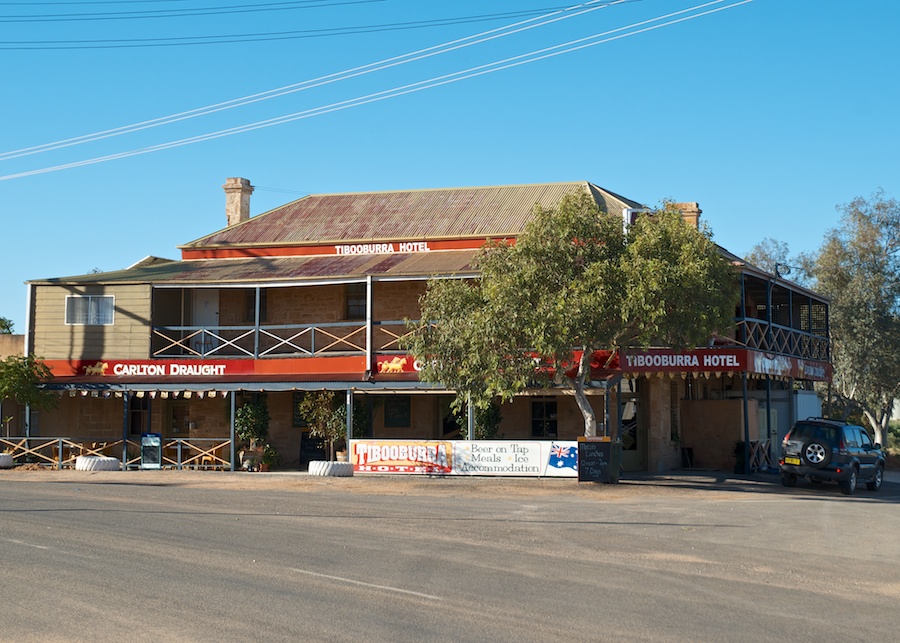
Tonight we start with Outback 2012: Tibooburra Hotel, for Gordon Smith from lookANDsee is back on his outback adventures.
Over on Mind the Gap, Sarah Thorneycroft uses this cartoon to illustrate her post Says who? The post says in part:

We have in place in society at large, education particularly and academia specifically, an assumption that knowledge cannot exist of its own accord, it must be verified by others. Which, generally, is fair enough because the world is full of idiots who will happily believe anything sans any sort of critical thinking. However – when this assumption is so pervasive that it manifests itself in systems like peer review and beliefs like ‘Wikipedia is not a reliable source’, we have a problem. It strikes me that several of the component assumptions that contribute to this are completely spurious.

The assumptions are, and I quote,

  • ‘knowledge must be reviewed by experts’
  • ‘experts must come from institutions’
  • ‘experts must be verified by an authority’
  • ‘crowdsourced knowledge cannot be accurate’

Now there are some aspects of Sarah's line of argument that I disagree with. I might pick those up in my next Belshaw's World's column. Others I agree with. Those that I agree with provide me a unifying theme in today's selection of New England blogs.

The idea that only academics or at least those from institutions can be experts is actually quite new. It certainly wasn't held as a universal view by those in the early days at either the New England or Newcastle University Colleges. It really began to emerge in the explosion in university numbers during the 1970s, in the rise of "professionalisation" in the 1980s. It's a very silly view.

Consider Keith Burgess's A Woodsrunner's Diary. Yes, the topic is a narrow one in some ways -  "18TH CENTURY LIVING HISTORY, HISTORICAL TREKKING, & LONG TERM SURVIVAL" . But could anyone deny that Keith is not an expert in his area? After all, he is involved with it all the time. He also adds to the texture that is New England blogging life.

Or consider Rod Holland's Northern Rivers Geology. Congratulations, by the way Rod, on visitor 10,000. Now Rod's topic and area specific focus actually makes him the single most important source of accessible public information about the geology of the Northern Rivers. To someone like me, that's very valuable.

As a former co-editor of the now defunct student newspaper Neucleus, Winton Bates (Freedom and Flourishing) occupies a feature spot in the centenary history of UNE. His blog deals with some pretty serious stuff. It also reflects not just his academic interests, but also his experience as a senior official with what is now the Productivity Commission. Winton writes outside the groves of the academy, but could anyone deny the deep thought and research imbedded in his writing?

Paul Barratt (Australian Observer) is very different again.  In May 1999, Paul accompanied Defence Minister John Moore on an official visit to China, Korea and Japan. This photo from the trip was taken in Shanghai.

Sadly, Paul is one of those partially sidetracked by Twitter, so his blog has suffered. Paul writes on many things including defence and immigration and is frequently interviewed on ABC. He is no academic slouch. He is also a major advocate of New England causes, of its history and is a member of the New England New State Movement Facebook page.

I could give other examples such as Sophie Masson (A la mode frangourou) on food and writing. Still, I have probably said enough to make my point.

I now want to turn to a second point, that crowdsourced knowledge cannot be accurate. Now if you look at the Wikipedia definition of crowdsourcing, you will see a pretty academic definition. Let me simplify.

Crowdsourcing is a form of collaborative working and checking where the internet allows those writing to access a broad set of views on particular topics and to collaborate in ways not otherwise possible.

Crowdsourcing is actually central to the continued survival of the very concept of New England.

In a way, I dealt with all this in Keeping the New England dream alive. There I said:

This story will not be written by the big wigs or fat cats in Sydney or Canberra. It won't be told by prominent individuals. It will be told by thousands of people who care at their level within their constraints. It will be told by a Rod who cares about New England geology, by a Lynne who documents New England life and who cares about Bellingen hospital, by a Janene whose friends don't understand why she wants to work for a local newspaper, by a Paul who retains his links even though the world has taken him far away, by a Greg or Mark who try to keep the new state dream alive.

What I didn't articulate because I hadn't thought of it in that way is that New England is crowdsourcing.

New England has been deserted by the local media who have lost the ability to even see the broader whole. New England has been deserted by most, not all, of the academics who once focused on New England issues for, sadly, those issues now lack academic sex appeal and certainly do not help careers. New England has been deserted, too, by local politicians who no longer see relevance of the concept of a broader North in the pecking order games of Sydney or Canberra. 

In its place and however imperfectly, crowdsourcing has come to provide a substitute. At a time when all the traditional formal mechanisms deny or at least ignore the validity of the North as an entity, our history is being recorded via the internet; our geology is discussed there; the tenor of daily life is recorded there. In that last post, I also said:

We care. We count. Individually, we don't matter. We can be forgotten, ignored. Collectively, we will change things. Forget us at your risk, for we are not going away. You won't see what we do unless you look; both local and social media interactions continue below the horizon. Yet the interaction goes on.

Again, this is actually crowdsourcing.  I suppose that we often think of political movements in formal and macro terms. Yet what the internet and especially blogging and the various specialist fora have done is to provide a vehicle for sharing at the a wide variety of micro-levels.

I hadn't expected when i began writing what was meant to be a blog review that it would carry me back to that earlier post. I accept that there is a degree of repetition. Yet that's no bad thing.

I do promise, however, to return in my next blog review to a more detailed report on just what our fellow bloggers are actually writing!  

Saturday, August 11, 2012

Fairfax rolls out new web format across its New England papers

As part of its move to digital, Fairfax has been progressively rolling out its new standard web format across its New England papers. The Armidale Express web site is an example. It's quite a clean format, but oh so standardised - cross platform, to use the jargon.

The biggest change I noticed because it affects me, is the complete absence of any form of broader regional linkages. This used to occur in two ways: via links to other papers in the immediate local area plus a link at the top that allowed you to follow through and check all Rural Press newspapers. This was invaluable to me in terms of my monitoring of stories across New England. Both have gone.

All the papers are now introducing e-editions as well. I don't have a problem with this. However, I do fear that the end result will be loss of access to content.

Overall, I fear that the end result will be further fragmentation within New England, the continued chopping up of the place into little bits. What do you think? 

Thursday, August 09, 2012

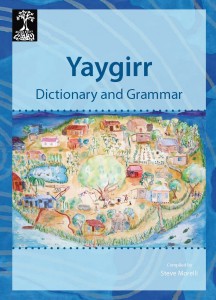
Muurbay launches Yagirr dictionary and grammar

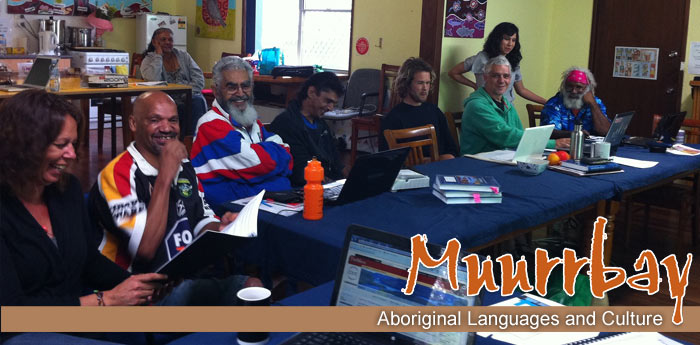
Last Friday 3 August at Maclean TAFE, the Muurrbay Aboriginal Language and Culture Co-operative launched a Yaygirr Dictionary and Grammar.  Muurrbay was founded in 1986 when Gumbaynggirr Elders got together to revive their language and hand it down. Muurrbay means ‘white fig tree’ in the Gumbaynggirr language. Muurrbay aims to support Aboriginal people, particularly Gumbaynggirr, in the revival and maintenance of their language and culture, and so strengthen their sense of identity, self esteem and links to country. Further comments follow the photo. slider-languages

For those who have no idea what Yaygirr is, it is the language spoken by the Aborigines who occupied territory around the mouth of the Clarence.It is a Gumbaynggirric language. 

Now there is a link here with two recent posts, Belshaw’s World – New England’s Blaxland’s Flat girl dies just eight hundred years ago and  Blaxland Flat's girl and the remarkable contribution of Isabel McBryde. In those posts I drew from, focused on, Isabel's work. Now I want to mention Bill Hoddinott, someone I spoke of back in December 2006 in William G (Bill) Hoddinott & New England Aboriginal Languages.

Bill came to the University of New England in 1960, the same  year as Isabel. There he began to record details of New England's Aboriginal languages. Bill died suddenly and sadly in 1984. Now, twenty eight years later, his work forms one element in the launch of a new part of the Aboriginal language revitalisation movement.

Isabel gave us, among other things, Blaxland Flat's girl. Bill, among other things, helped give us a Yaygirr dictionary and grammar. That's not bad.

Now when I myself write all those many years after I first became involved with Isabel's work in 1963 as a young student, I think of the tradition that I am trying to carry on. That's not bad. Just looking at the purely personal, I think of the Yaygirr woman who did not know the dictionary was being launched until I told her. Again, that's not bad.

On a purely objective basis, I doubt that my work on New England can ever measure up to Isabel or Bill. Still, I carry the touch. That's not bad either. 

Wednesday, August 08, 2012

Belshaw’s World – New England’s Blaxland’s Flat girl dies just eight hundred years ago

Some eight hundred years ago a girl died in the area that would be later called New England.

Her family was camping in an area now known as Blaxland’s Flat some 15 miles south west of modern Grafton. This is hilly country with long deep narrow valleys running north-south between sandstone ridges down which rush creeks often turbulent after heavy rain ending in the Orara River. It was also country with a high sacred value to the people of that time.

Six miles to the north are a series of stone arrangements on the western side of Skinner’s Swamp. Nearby are artworks including a three foot long fish like figure and a large goanna. A mile to the north east, we enter rougher country. Here in the many rock shelters we find one of the largest concentrations of Aboriginal art in the Northern River.

While the evidence is still uncertain, all these sites appear to belong to the same period, the centuries surrounding the death of Blaxland’s Flat girl.

We do not know why she died, although there is no evidence of foul play. We do know that she was loved. On her death, her family cut a shroud from the bark of a bloodwood tree and wrapped her in it. They then carried her to what could well have been the family deposition site.

Aboriginal people interred their dead at different ways at different times over the millennia. Sometimes, bodies were placed in trees to allow the flesh to rot for later burial. Sometimes, bodies were cremated and the bones then broken and deposited. At other times, the dead were tied up in sitting positions with their legs bent so that they could leap to the future chase. They were then buried in shallow graves, covered by brush. 

In Blaxland’s Flat girl’s case, they carried her from the camp to a low hung rock shelter set back in a cliff a bit under eight feet from the ground. This height was probably intended to protect the site from predators. There they deposited her body, protected at some point by a sandstone wall.

I say that we know that this was probably a family site, for at least fifteen people were deposited there.

Blaxland’s Flat Girl rested for the next eight hundred years, although family hopes about disturbance proved illusory. It is clear that that the site was visited, probably by one of the large tree goannas found in the area. These tear the flesh with long claws, feeding on the remains. They could certainly have entered the site.

Late in 1963, dingo hunters found the site. This was reported to Isabel McBryde at the University of New England who mounted a carefully planned rescue dig. After eight hundred years, Blaxland’s Flat girl returned to the public gaze. Now after meticulous scientific research, we have a human being to fit into the often dry record revealed by archaeological remains.

Note to readers: This column began in the Armidale Express. Earlier in 2012 it was replaced by a new column called the Views of Gen Y in order to make the paper seem more relevant. Tsk! I am continuing the series because it gives me a chance for a different type of writing. You can see all the columns by clicking here for 2009, here for 2010, here for 2011, here for 2012.

Friday, August 03, 2012

UNE, its future and that of its colleges

Back in July 2008 (Storms gather over UNE colleges) I reported on problems facing the University of New England College system. By then, failure to carry out proper maintenance had led to a $22 million back log in maintenance. By then, too, many of us with UNE connections had long begun to despair that the place could ever get its act together,

My own college, Wright College, had been closed over the opposition of its alumni because its "temporary" buildings had become to expensive to maintain and no one had any rebuild vision. Drummond College, the College named after my grandfather, had been closed, reopened, then forcibly merged with SH Smith House to form Drummond-Smith College. At least this made a little sense in that Smith was the head of Drummond's NSW Education Department when Drummond was minister.

One of the constant complaints of all of us connected with UNE's college system over decades was the failure of the University to allow the colleges to grow as independent entities in their own right and as key marketing vehicles for the university itself. They were seen as, and just treated as, residential vehicles, something absolutely anathema to the real ideal of a collegiate university.

On July 18 2012, the University of New England announced a major rebuild program for the College system.   According to UNE VC Jim Barber, “UNE aims to be the country’s pre-eminent collegiate university, and to do that we need modern infrastructure and greater student accommodation options.

The first stage of the University of New England’s residential college redevelopment will see a major modernisation of Robb College and a new 200-bed college built at UNE.

On 1, 2 and 3 October 2010, Rob College celebrated its fiftieth birthday, something Paul Barratt celebrated in Fiftieth anniversary of Robb College, UNE. Taken in 1960 from Paul's front door, the photo shows the first block of Robb College. In talking about the Robb modernisation, Professor Jim Barber said the Robb College plans would be respectful of the College’s rich history while also being modern in their design.

“We plan to keep the building that houses the dining hall and the common rooms, but to rebuild the three residential buildings on their existing footprints,” Professor Barber said. “Our unique partnership with UniLodge, in which we will maintain our contribution to the College’s operating costs, allows us to retain the UNE culture and lifestyle and avoid privatisation.

“We will not compromise on maintaining the positive aspects of the Robb College culture and lifestyle.”

In addition to the Robb modernisation, the new 200 bed college will be built on or near the site of Wright College. The whole project will be managed by UniLodge, a major provider of student accommodation services in Sydney.

What none of us know at this stage is just how all this will fit with the re-development of UNE and especially its Armidale campus as a truly collegiate university. It used to be, and then the place lost the plot. Or will the colleges become just halls of residence?

The older UNE alumni who are so fanatical in their support of the institution are so not just because they shared the vision of of the founders, but because they found the College and University as it was to be a good thing from deeply imprinted personal experience.

I have written a fair bit trying to bring the UNE experience alive and to explain its Australian and indeed global contribution to culture and thought. Still, I thought that I should leave the least word to Paul. In What a privilege it was ..., he said in part:

When I entered the University in 1961 it had about 600 full-time undergraduates on about 740 acres of land, effectively running less than one student to the acre.  The campus was spacious and attractively landscaped, with the beautiful Booloominbah at the centre and heart of it all. Everything was a short walk from everything else.

In those days the University was fully residential. All students were required to live in the on-campus colleges, the only exceptions being those who were living at home in Armidale with their parents (who had to apply in writing for this exception to be granted).  Want to play rugby, soccer or hockey? Attend training a couple of nights a week on the Consett Davis playing fields a couple of hundred metres away; run down there straight after college dinner, do a couple of hours training, run back to college, have a shower and back to the assignments. Want to play cricket? There is a lovely oval right over there near Robb College.

The staff-student ratio was extraordinary (something like 1.6:1 in 1961) and classes were small.  In my chosen subject of Physics there were about a hundred students in first year (it was a compulsory subject for Rural Science I), eight in second year, four in third year, and five in my honours year. In first year we had a tutorial every week. There were nine in my tutorial group. The tutor was the Professor of Physics.  This was no degree factory. No wonder so many of us prospered.

Professor Barber, we count on you to deliver a real vision.

Thursday, August 02, 2012

Journey down the Gostwyck road

Over on Clarence Valley Today, Mark has ventured beyond the Clarence onto the Tablelands, exploring the byways to Gostwyck. From the look of it, Mark took the eastern road out of Armidale. While a designated tourist road, this is a fascinating drive known by far too few people.

This is the first photo from Mark's trip. I quote: 

Our first stop is the unusual and privately built Dangarsleigh War Memorial.
It was erected by A H Perrott of 'Chevy Chase' as a  WW1 war memorial to 16 local lads, one of these being his son Alfred who died on Passchendale Ridge in 1917.

Because the blog posts work back in time, I thought that I would give you all of Mark's posts on his drive from oldest to newest so that you can follow the trip through:

It's only a taste, but I hope that you enjoy it.

Tuesday, July 31, 2012

New England Aboriginal students Oxbridge bound

I missed this one at the end of May, but it also seems to have been missed by the New England media.

On 30 May, the British High Commissioner to Australia, His Excellency Mr Paul Madden, announced in the presence of the Minister for Tertiary Education, Senator Chris Evans, the 2012 recipients of the Charlie Perkins Scholarship, a scholarship that assists Indigenous Australians to pursue postgraduate study at Oxford and Cambridge Universities.

Established in 2009 in memory of Dr Charlie Perkins AO, the first Indigenous Australian man to graduate from university, the scholarship is valued at over £33,000 (AU$53,000) per annum and includes all living expenses and tuition fees. The scholarship programme is managed by the Charlie Perkins Scholarship Trust and jointly supported by the Australian Government, the British Government (through the Chevening Scholarships Programme), Rio Tinto, the Pratt Foundation, the Development Office and Vice Chancellor at the University of Oxford, the Cambridge Commonwealth Trust, the Cambridge Australia Trust, the McCusker Foundation and various other philanthropies and individuals.

The photo from Sydney's Daily Telegraph via the Australian (link below) shows PM Gillard with, from left to right, Lilly Brown, Kyle Turner and Krystal Lockwood. Two of the three recipients belong to New England Aboriginal language groups.

2012 Charlie Perkins Scholarship recipientsFrom Armidale, Krystal Lockwood is a Gumbaynggirr and Dhungutti woman. Gumbangerri territory stretches from the southern bank of the Clarence River down to the Nambucca River valley. Dhungutti territory is occupied the adjoining Macleay River valley to the south.  

Krystal has just finished her Criminology and Criminal Justice degree with 1st class honours at Griffith University. By the way Griffith, Armidale is not just (and I quote)  a "rural town" in NSW. Get real, why don't you!

Krystal has a passion for criminal justice issues and criminological research. Her honours thesis considered the impact of race on judicial decisions to imprison and Krystal is keen to make a difference in addressing the over-representation of Indigenous people in the criminal justice system in Australia.  She has been accepted to the MSc in Evidence Based Social Intervention at Green Templeton College, Oxford.

Lilly Brown grew up in Western Australia but is also is a Gumbaynggirr woman, proud too of her Scottish and English heritage.  She is currently completing Honours in Indigenous Studies at the University of Melbourne (she completed her undergraduate degree at the University of Western Australia (UWA). Lilly’s interests lie in the area of knowledge production and dissemination, educational policy development, the link between knowledge and power, and the value of education as a tool to affect positive social change.  Lilly has been accepted to the MPhil in Politics, Development and Democratic Education at Trinity College, Cambridge, making her the first Indigenous Australian to undertake a postgraduate or undergraduate degree at Cambridge.

The third student, Kyle Turner, grew up in South East Queensland but is an Aboriginal man of Wiradjuri and Irish descent. The Wiradjuri language group occupy the largest of all territories in NSW in the centre and west of the state, extending into the sought. Kyle currently works as a Senior Epidemiologist and Lead Researcher for Queensland Health in the Deadly Ears Program and holds a Bachelor of Archaeological Practice (1st class honours) and a Masters of Applied Epidemiology from the Australian National University (ANU).  Kyle is looking forward to building on his already considerable research skills and to improving the health and wellbeing of Aboriginal and Torres Strait Islanders.  He has been accepted to the DPhil in Public Health at Jesus College, Oxford.

One of Kyle's parents drew attention to this you tube video on Charles Perkins with this comment: "My son Kyle Turner is going to Oxford University in 2012 because of this great man's legacy and belief in education." It somehow seems appropriate to finish this post with that video.

Sources:

Monday, July 30, 2012

Northern NSW under twelve boys 11th at Saitama

I see from the Northern NSW Football Facebook page that the Northern NSW Under 12 Boys finished in 11th place at the Saitama International Tournament in Japan. You can find out more details here.

Those elsewhere in Australia are sometimes a little puzzled as to why Northern NSW, the broader New England, as its own state soccer league independent of NSW. Sir William Walkley, Ampol and the New England New State Movement tells the story.

Sunday, July 29, 2012

Stories of the New England diaspora 1 - introduction

From time to time I mention the New England diaspora, that large group who lived or were schooled in New England, but then left. No one knows how many of us there are, but in total there are probably more of us than those still living in New England. If you include our children, many more!

I thought that from time to time I should introduce you to some of that broader community, many of whom are still in touch. Apart from general interest, the series has another objective, to show you something of the New England depth that is so often ignored. You see, because we don't actually exist, it is easy to ignore us!

This photo comes from Paul Barratt. It's a scene from a 1965 rugby match between Wright College (UNE) and Armidale City. While I had given up football by this stage, something I regret, in pursuit of other things, I still have my Wright College jumper.

It's a very Armidale scene, isn't is? It looks cold!

As Paul noted on Facebook, taking the ball is Wright College Captain Philip Bailey, who after completing an Agricultural Economics Degree and a Dip. Ed. taught for a while at The Armidale School, then at Gordonstoun, then spent 25 years with Yehudi Menuhin. He has published a 2-volume biography of Menuhin, details of which can be found at www.yehudiana.com. In June, Richard Fidler interviewed Philip on ABC Radio about his experiences with Yehudi . You can listen to the interview here.

Looking again at the photo, the player with arm extending towards Philip is the late Jonetani Galuinadi. This next photo shows Paul Barratt and Jonetani when they both returned for graduation in 1967. That was also my graduation year. Dear, that makes me feel ancient!

Armidale's role as an educational centre drew many from outside to study there. Jonetani was one such, one of many Fijian students who came to the city. Many were strong Methodists, adding greatly to the cosmopolitan feel of the Methodist Youth Fellowship.  

After completed a degree in Botany, Jonetani became a plant geneticist for the Fiji Sugar Corporation, and then later was Chairman of the Fijian Public Service Board and then Minister for Agriculture in the Laisenia Qarase Government. Jonetani died in 2009, aged just 65. You can find a short Fiji Times obituary here.

The Lowy Institute has been running a Meet the Candidates series in parallel with the Papua New Guinea elections. One of the candidates covered was Sir Kina Bona KBE, who until this election was Chairman of the Integrity of Political Parties and Candidates Commission and Registrar of the Political Parties and Candidates Commission. Sir Kina was PNG's High Commissioner to London in the late 90s, and Public Prosecutor before then.

Dear that takes me back. Starting in the late 1950s, a number of PNG students came to The Armidale School for their secondary education. Sir Kina was one. There is now an active TAS alumni group in PNG.

Well, that's a start. More later. 

Thursday, July 19, 2012

Keeping the New England dream alive

In a post on the New England New State Movement Face Book page, Paul Barratt reminded me of one of his past posts - Booloominbah. Pauls' post reminds us that the things that make New England special were not created by the governments in Sydney or Canberra acting in the state or national interest, but by the actions of individuals. David Drummond cared.

If New England is to grow or even survive over coming decades, it will be because we as individuals care. And care we must. Without that, there will be nothing left of those things that make New England New England.

I know that I struggle sometimes to keep the faith. I struggle more to actually deliver in the sometimes turmoil of my personal life. Yet as I study our history, I am reminded every day about people, about individuals. Often imperfect, even sometimes unpleasant, their efforts built what we inherited.

Today, our history is turned too, at best, a footnote. Yet that history is of national and even international importance. Sound extreme, even grandiose? Well, consider this.

Without the new state agitation, we wouldn't have had a university in Armidale. Without that, we wouldn't have had the academic work on all aspects of New England life. Sure, many UNE academics now play modern games and have forgotten their broad regional past, as has the university itself. But think about prehistorian Isabel McBryde.  

The citation for her award in 2003 of the Rhys Jones Medal for Outstanding Contribution to Australian Archaeology justly summarised her work this way:

Her work in New England was remarkable for its extent and depth, and Isabel's examination of the interface of archaeology and ethnography in the region shaped not only the approach taken by many later researchers but also prepared the basis for the arguments about upland regions created by archaeologists such as Sandra Bowdler and Luke Godwin.

That's not a small tribute. And it wouldn't have happened if those of us who cared in the past and now hadn't cared.

Sometimes, our dream seem lost.

As clouds swirl around me, when things seem just so hard, I remind myself that we have a magnificent story to tell, that it is up to us to write the next page in our history.

This story will not be written by the big wigs or fat cats in Sydney or Canberra. It won't be told by prominent individuals. It will be told by thousands of people who care at their level within their constraints. It will be told by a Rod who cares about New England geology, by a Lynne who documents New England life and who cares about Bellingen hospital, by a Janene whose friends don't understand why she wants to work for a local newspaper, by a Paul who retains his links even though the world has taken him far away, by a Greg or Mark who try to keep the new state dream alive.     

We care. We count. Individually, we don't matter. We can be forgotten, ignored. Collectively, we will change things. Forget us at your risk, for we are not going away. You won't see what we do unless you look; both local and social media interactions continue below the horizon. Yet the interaction goes on.

And the photo? This shows a New England archaeologists, in this case me, up a tree!